Surviving the Cold: Florence’s Indoor Activities

Photo by the author
Photo by the author

By Jess Pitocco

Since January is the coldest month of the year in Florence, it may seem difficult at first to find indoor things to do that don’t include the Uffizi Museum. The city however is full of great indoor activities, here are some ideas of things to do to stay out of the frosty weather.

  1. Palazzo Strozzi is a great place to spend a day indoors without getting bored! Currently, the Ai Weiwei exhibit is being shown until January 22th, 2016 and is a great way to look at some modern art (instead of the Renaissance art you are used to seeing.) The Strozzi Café is open Tuesday throughSunday from 8:00 AM to 00:30AM (Monday until 8:00 PM) and serves breakfast, lunch, cocktails and dinner. It’s a great place not only to bang out a homework assignment or study for finals but also to experience some wine tasting and classic Italian cuisine. There are even a bookshop and a contemporary space to hang out on the bottom floor. Palazzo Strozzi is truly a great place to spend an afternoon sight-seeing, eating and studying.
  2. If you haven’t visited the Gucci Museum yet in one of your fashion classes, it is a great place to learn more not only about fashion but also about Hollywood. The museum has everything from a history of bags, their double G logo, and even dresses for the stars. The Gucci Museum also includes a great café and bookshop to hang out in. In the same Piazza della Signora, the Palazzo Vecchio stands tall. I know that even though I’ve lived here for months I still haven’t had time to see some of Florence’s most beautiful monuments. If you haven’t seen Palazzo Vecchio, it is worth the look. You can see it’s glorious rooms, gold-plated ceilings, and even climb the tower to see a beautiful view of the city. Afterwards, you can dine at the restaurant/café on the top level overlooking the piazza and its many statues below. Definitely take the time to explore this Piazza della Signora because it’s wonders and museums are unique and grand.
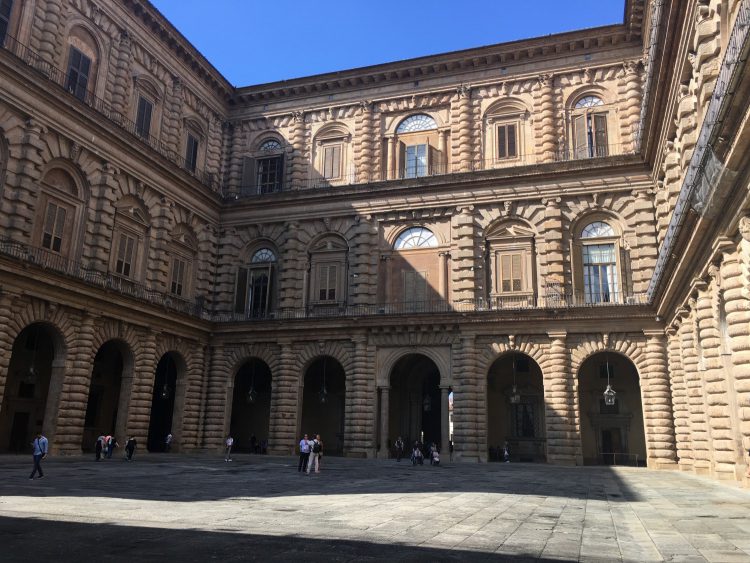
  3. Palazzo Pitti is known for the sprawling Boboli Gardens, however, these gardens are not the most enticing in the cold. What you may not know is that the Pitti Palace is a series of 6 museums and gardens, not just the Boboli Gardens. Take an afternoon to explore these museums: The Palatine Museum, The Gallery of Modern Art, The Costume Gallery, The Medici Treasury, and the Porcelain Museum. Among the galleries and museums that range from jewels to plates, there is a wonderful little restaurant and café on the entrance floor to relax, do homework, or write in your journal. To explore Pitti Palace is to absorb all facets of Florentine culture from art to history.
  4. The new Museo degli Innocenti is something interesting and unusual to check out. The former abandoned children’s hospital established in the Renaissance still continues to help Florentine families today through social services and educational programs. The new museum in Piazza Santissima Annunziata will highlight the building’s works, architecture and documentary records which make the Institute’s heritage so unique. The institution’s history and many original paintings tell of the people who lived in the Hospital, so this is a great, unique spot to visit in order to discover a different perspective of Florence.
  5. The Salvatore Ferragamo Museum is another great spot to explore art and fashion, with multiple exhibits that not only focus on the shoes of the stars but also experimental and international fashion and art. Along Via de’ Tornabuoni there are endless shopping opportunities to stop in on your way back from the museum. The list includes Valentino, Burberry, Tiffany, Co., Fendi, Montblanc, Giorgio Armani, Prada and even Gucci again. Not only do these high-end shops stretch seemingly a mile long starting at the Salvatore Ferragamo Museum, but there are also more manageable spots to shop Tod’s, Olfattorio, and more. Take an afternoon or evening to window shop and explore one of the coolest and most progressive museums I’ve ever seen.
  6. La Specola, the Museum of Natural History in Florence, is another great spot for a day indoors. This museum features Medici collections of fossils, treasures, animals, minerals, exotic plants; there are 24 rooms of zoology and 10 of wax modelling. There is also the Hall of Skeletons featuring over 3,000 archaeological finds! Open year-round and on Via Romana near the Pitti Palace, this museum is definitely worth a look inside for a totally different view of Florence’s scientific findings and discoveries.

Obviously, these are not the only indoor activities to do in Florence: you can see a movie at the Odeon Theater or even take a single cooking class at FUA’s culinary department facilities. However, these piazzas, streets and museums offer a range of possibilities for a lazy afternoon on a cold day in Florence. Take the time to explore new museums and places, and don’t forget to bring a hat and scarf!
See more of Florence at FUA’s FB, Instagram, and Twitter.

Farm to Table Focus: Vivanda

Photo courtesy of FUA

By Anastasia Finney

A typical student living in Florence has likely already seen many of the famous sights, tasted their fair share of Italian food, and interacted with a good amount of locals. However, classes at FUA often include field learning sessions around that city in order to take students off of the usual pathways and into experiences they might have otherwise missed.

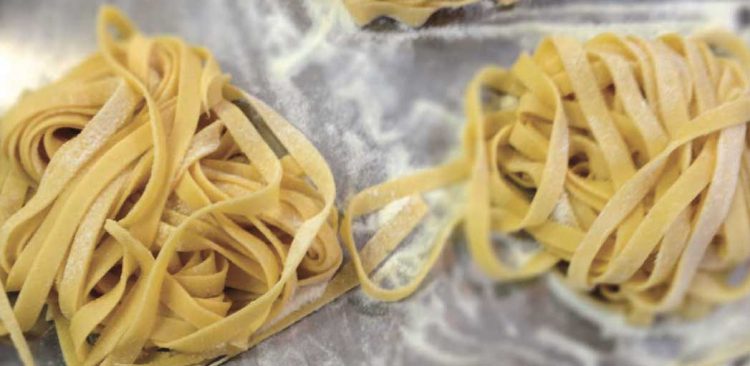
During the “An Introduction to Italian Food Traditions,” taught this past fall semester by Prof. Cecilia Ricci, students often incorporated real food experiences into their learning. Rather than simply receiving long lectures about the food and culture of Italy, the class conducted tastings, cooking projects, and visits to relevant food locations in the city. One such visit took place at a local restaurant in order to analyze fresh pasta. Before embarking to Vivanda, the students first learned about the differences between and characteristics of fresh and dry pasta through a lecture component in class.

Vivanda is a small and cozy restaurant located in Oltrarno, on the other side of the Arno River. It prides itself on organic ingredients, natural wines, fresh pasta production happening right in the restaurant, and options that can please meat-eaters, vegetarians, vegans, and gluten-free people alike. At the restaurant, the class was given three types of pasta to taste: gorgonzola gnocchi, traditional spaghetti, and ricotta and spinach ravioli. They were also served Arialdo wine with the meal.

Student Nick Tyndall shared that the tasting helped his understanding of Italian pasta traditions. “The restaurant had an authentic and inviting ambience, consistent with the best establishments I’ve visited in Florence,” said Tyndall. “We got to see how the staff made the fresh pasta and learned about the company’s food philosophy. The pasta was probably the best I’ve ever had.”

The class had time to enjoy and experience both the food and setting, while also listening to the owner talk about the restaurant. Professor Ricci also talked with the class during the visit about the food tasted and the way it paired with the wine. The students were encouraged to think critically about what they were consuming, in regard to production, presentation, and longstanding Italian traditions. Naturally, the group also got to enjoy the conviviality of delicious food too.

Experiencing a guided tasting in close contact with industry professionals gives a different perspective to daily activities that we all experience, such as trying new restaurants. “I wouldn’t have even known this restaurant existed without this class,” said Tyndall. “Now I definitely want to go back for a full meal!”

Vivanda
Via Santa Monaca 7 (between Pz. S. Spirito and Pz. del Carmine)
For further details visit the restaurant’s website.

See more of Florence at FUA’s FB, Instagram, and Twitter.

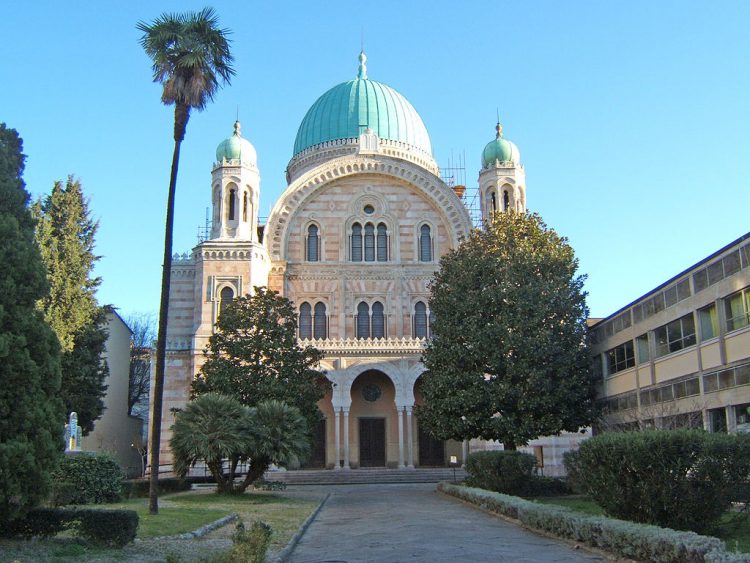
The Great Synagogue of Florence

Image by Wikimedia Commons user Toksave

By Caroline Angelini

Though Italy is a predominantly Catholic country, its religious landscape represents other traditions as well. The relationship between the Jews and the city of Florence dates back hundreds of years, and this community is one of the focal points discussed during the FUA course “Shoah: The Holocaust in History.”

This course, taught in Fall 2016 by Valentina Nocentini, focuses on the history of the Jews, specifically in Italy, and how their treatment eventually led to the the Holocaust. To give her students a better grasp on exactly what happened to the Jews in Italy during the Holocaust, Prof. Nocentini brought her students to the Tempio Maggiore, or the Great Synagogue of Florence. Based on the experience and how it helped to contextualize the treatment of Jews in Italy, students wrote a reflective assignment as an outcome of the visit.

The Synagogue dating to 1882 is truly breathtaking. The intricate detail of the hand-painted walls, and the ornamentation of the women’s balcony were like nothing else that students had witnessed both in Florence and beyond. The mosaics and frescoes are reminiscent of Christian art, but have their own character that makes them unique to the Jewish culture of the Synagogue.

While the artistic ornamentation was magnificent, the mood that most students had while in the Synagogue shifted once they reached the museum. The Synagogue separates a portion of its space dedicated to the Florentine victims of the Holocaust. There are stone slabs with each victim’s name and videos depicting the lives that they carried out while being exploited during the Shoah. “It was something difficult to experience—the contrast from first seeing the beauty and grandeur of the Synagogue to then learning about how the Jews were treated during the Holocaust,” commented student Emma Dunleavy.

The visit to the Synagogue helped the students of the Shoah course gain a deeper understanding of the past lives of Jews in Florence. It also provided insight into how Florentine and Italian citizens in general aided those in need of protection especially during WWII, which gave students food for thought as they themselves experience daily the hospitality of a foreign host city with whom they must forge a new relationship, one day at a time.

To visit:
The synagogue is located in Via Farini 6, near the Sant’Ambrogio church. Details about visiting hours, synagogue history, and much more can be found on the website of the Jewish community of Florence – moked.it/jewishflorence

See more of Florence at FUA’s FB, Instagram, and Twitter.

My Journal: A Priceless Souvenir

Photo courtesy of the author

By Amber Wright

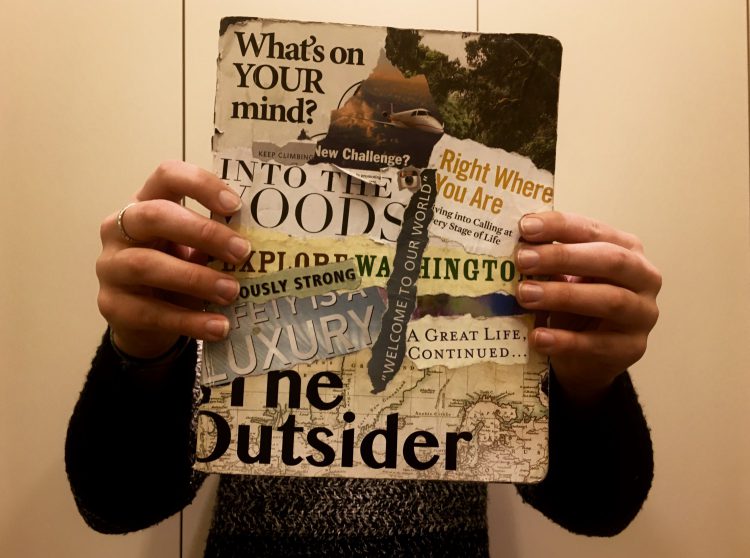
“I’m a fickle girl who falls in love easily. It’s happened about a million times since I started my study abroad journey four months ago. I get off the bus/plane/train and it’s love at first sight. No matter where I am, every street, corner shop, and coffee bar seem as if they’re covered in gold. In Siena, I fell in love faster than the horses ran in the Palio di Siena, and in Cinque Terre I could feel the warmth of the sun all through my body – at least for the ten minutes it was out. I’m in love, and I can’t imagine leaving this feeling behind.” – A reflection from my personal journal.

It wasn’t until a month after arriving in Italy that I realized I hadn’t actually bought any souvenirs. At first, I was a little bummed I didn’t buy a bunch of things from the places that I had been exploring, but as I thought about it more, I was thankful I didn’t. Being abroad did not have to be something I did to acquire things. I didn’t have the budget for that, nor did I want to have to carry pointless souvenirs. Instead, I had accumulated memories, feelings, and stories. I hadn’t wasted any time in souvenir shops, instead I was just present where I was spending money on museums and experiences rather than keychains.

I’m one of those individuals who has always kept a journal in some form or fashion. I also have a problem because when I see a new one that catches my eye, I have to have it – which also means I have about a hundred half-finished notebooks. My travel writing class here at FUA requires you to keep a journal for class, which I’m very thankful for. I get so caught up in the exciting day to day, that I often don’t take a breather or moment to reflect. Being held accountable on a constant basis, to journal makes me sit every so often and really reflect on what I’m seeing, doing, and encountering. I have a running list of “things I’ve learned traveling,” “places I need to go back to,” and “favorite memories.” I also have multiple entries about things I’m missing from home, things encountered that I dislike, and general grievances from that day. It’s me and my thoughts put down onto paper, and nothing could accurately represent my time abroad more than this journal.

My journal has actually become the best souvenir I could have asked for. In it now holds the memory of when I went wine tasting for the first time in beautiful Vinci in Tuscany, and I absolutely did not like the glass I had. In addition to my memories of living and studying in Florence, it contains the story of when I went to Portugal with my best friends and walked home in the rain, lost, but somehow wound  up in front of a beautiful monastery. It holds the account of each outlandish costume I ran into in Barcelona on Halloween. My journal is also full of visuals – i.e. funny photostrips from the photobooth across from a favorite pizza slice stop in Florence – every photo features at least one friend taking an overly ambitious bite.

Other than the photostrips, I would say you can’t buy memories. Your thoughts and memories will last longer than any tee-shirt or key chain would. Invest in a journal and constantly reflect and write down what has been happening during your studies abroad. Keep a list of your favorite spots in Florence and jot down the funny moments you have with your friends on the train. Write down how the interior of Santa Croce made you feel, and what you thought about the view from the Duomo. Instead of just being able to say you’ve been to this place and purchased a trinket, a journal will reveal the true fruits of your experiences. It will safeguard your memories, thoughts, feelings, and lessons all associated with a new place, and it will be completely priceless.

See more of Florence at FUA’s FB, Instagram, and Twitter

ACF Fiorentina: Florence’s Soccer Team

Photo by Beatrice Santini

By Karla Silva

I grew up in a Brazilian family – we live and breathe soccer. It is like a religion. My parents would set their lives around a soccer game, adjusting their work schedules to watch an important match. There was no such thing as DVR to them– the game always had to be experienced in real time. Soccer games were a time of celebration, where family and friends got together. It was one of my favorite things growing up. And to see that embedded in the Italians, especially the Florentines, is a way to reconnect to my family.

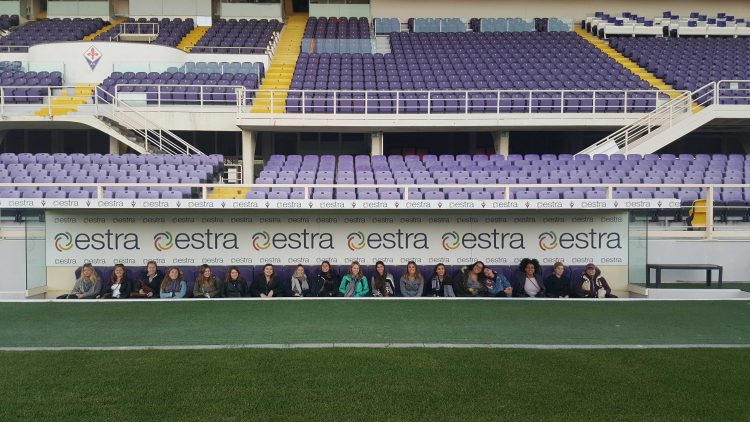
I recently had the honor to go on a special tour of the Stadio Artemi Franchi, home of the ACF Fiorentina soccer team thanks to my Writing for Digital Media course at FUA. You can feel the pride of the stadium’s management team as you walk through the VIP entrance, with its bright white walls and the elegant symbol of the team adorning them: a purple fleur-de-lys inside a gold-lined diamond.

We quickly made our way to the media room, where the press gather together after each match. You can imagine the intensity of representatives of different media outlets fighting to get their questions asked, one jumping over the other to get their burning questions asked for their article.

It takes a lot of work to get a team popular enough for there to be a need for the media room, let alone an audience to watch the game, and we have the team’s Digital Media department to thank for that. To get the word out via countless social media channels and put out content that will appeal to fans of all ages isn’t an easy task. It takes hard work that many do not realize. It made me wonder how much effort truly goes into getting a game to run smoothly, or to construct a large fan base for the team as we make our way out of the media room and into the stadium itself.

I’ve always felt that the locker room is a sacred place for the players. It’s where they get ready, prepare for the upcoming match. They talk strategies, spread words of encouragement. It’s their home. Their private space. And entering that space allowed us to see a personal side that no other fan is able to see. It felt like we were in on a secret that everyone wanted to know.

The Florentines value the sport of soccer, which goes hand in hand with family. It’s impossible to walk down the streets of Florence without seeing a splash of purple here and there. To have the opportunity to walk on the field that the Florentines value so much was an experience I’ll never forget. Though the stadium is on the smaller end, seating around 45,000+ fans, it felt expansive underneath the glowing setting sun. Back home, whenever there was a game, it was always a party. Family and friends, friends of family and even neighbors get together celebrate. The spirits are always high, the energy constantly flowing.

Seeing the stadium empty and quiet, was a new feeling for me. You visualize the loud and high energy of a full stadium in comparison. The lack of cheers and chants made the stadium seem almost peaceful, like the quiet before the storm. We were even given the chance to sit on the players’ bench, which was the perfect end for our visit. Being able to experience the field from the player’s angle was unforgettable, a viewpoint that only a certain select few get to see.

One thing that I noted during our visit was the amount of people it takes to operate the stadium. The fans don’t always know, and neither did I, that the game consists of so much more than just the players. From the coach to the stadium manager, the commentators, the digital media specialist, even the workers who keep the field in top conditions – all of these individuals support the needs of the players and the game itself. The backbone of the stadium is just as important as the team.

I am forever grateful for this opportunity that I have been given. Soccer is a big part of my life and to be able to walk through the inner workings of a stadium and witness how the entire range of stadium workers connect to put on an amazing game for fans was a unique experience that I will cherish.

See more of Florence at FUA’s FB, Instagram, and Twitter

What to Do in Florence with only a Few Days Left

Photo by the author
Photo by the author

By Jess Pitocco

I have only a few days left here in Florence and I am starting to panic. What have I missed? What else can I do? What sights have I not seen? How can I make the most of the short amount of time I have left studying abroad? I know everyone says that time flies by, but I don’t think I really understood that feeling until now. As cliched as it is, I do feel as though this semester went by in the blink of an eye. So how do I savor the tastes, views, and people of Italy with a short amount of time left? After brainstorming, I’ve come up with some solutions for when it feels like it’s too soon to go home.

  1. Revisit your favorite places! Take a couple days, in between studying for finals of course, and revisit your favorite spots. Don’t take them for granted. Give yourself time to appreciate each and every store, restaurant, and museum that touched your heart. Commit them to memory, even take pictures, so that these places will never leave you. My favorite restaurant, Ristorante Il Paiolo on Via del Corso, will be my first stop; their fare is the most authentic that I’ve found in Florence! Plus, every time I go I’m greeted with the warmest of smiles and the most gracious service.
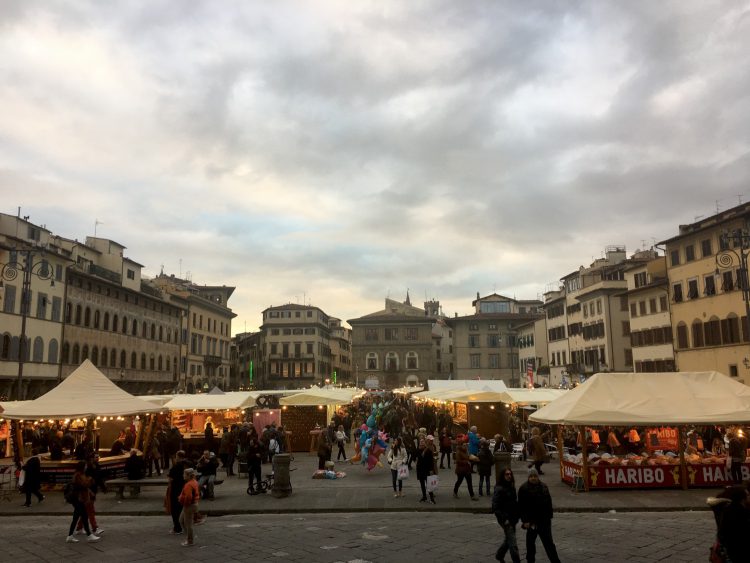
  2. Do something you aren’t able to at home; take an Italian cooking class, visit an enoteca that you haven’t ventured to yet, visit that famous museum you’ve missed. Give yourself a day to explore where you haven’t explored, and find a store you haven’t entered, maybe even taste a new dinner entree you haven’t tried yet! The Christmas market in the Piazza Santa Croce is a perfect place to spend some quality time exploring; not just for the food, but for the lights and the Christmas/winter season spirit.
  3. Speaking of trying new things, try and get lost in your city. Florence, for me, has plenty of side streets filled to the brim with cute boutiques and galleries to discover. Every time I find a new area of the city, or a new street I haven’t walked down, I get excited. On the side street Borgo Pinti, finding the small Mrs. Macis clothing boutique lead me to one of the most creative fashion finds I’ve seen in Florence. Carla Macis, the store owner, makes gorgeous dresses with prints on them from 1980s Italian stamps; truly unique! In these last weeks, I will not hesitate to go off the beaten path and explore what I haven’t yet.
  4. Take a chance; get a haircut, buy that dress you’ve been eyeing for weeks in that store window, or even write that blog you’ve always wanted to start. Give yourself something to remember Florence by; whether that be a journal, a piece of street art, or a pair of shoes, don’t forget to give yourself some kind of souvenir. My recommendation is not to buy yourself a magnet of the Duomo, however, it is to find something that means a lot to you. My souvenir will be spending a Saturday at the San Ambrogio market: getting a meal there, relaxing with coffee, and exploring the wares and produce. That entire day will be filled with journal writing and picture-taking. It was the first thing I visited in Florence and was in awe of Italian culture. Now I will end my study abroad experience in the market, like a bookend to my amazing experience. So whether you find an object that reminds you of a certain day or memory, or even going to get your nails done with your closest friend you’ve made abroad; give yourself something to take back with you, you won’t regret it.

I am realizing how important Florence has become; it has been such a huge part of my college experience, and I will miss it tremendously. I will miss complaining about the steps on the way to Piazzale Michelangelo, I will miss getting a gelato at La Gelateria dei Neri, and I will miss walking in the shadow of the Duomo and Palazzo Vecchio every day. However, I can’t dwell on how much I will miss a place while I’m still here; starting to miss Florence while still living in Florence is a paradox of the mind that I am not interested in traversing. For now, I will live in the moment and give myself the opportunity to make as many positive, fun and awe-inspiring memories as I can in my final days here.

See more of Florence at FUA’s FB, Instagram, and Twitter

Home is Where the Heart Is

Photo courtesy of the author

By Amber Wright

If you asked me how many places I’ve called “home,” I would say four – I grew up in California, now live in Washington, worked in Northern Ireland for a few months, and am now studying for four months in Italy. I’ve had to make a home where I am three times since I’ve left where I grew up, and each time my concept of home has changed.

When I first moved to Seattle, it was easy. My close friends in California had all moved, so it was generally painless for me to leave. I found all the things that made me feel comfortable and things that were familiar to me. I found my groove, and I made as many new friends from school as possible to surround myself with.

When I moved to Belfast, it wasn’t so easy. I was very secluded and separated from people where I lived, and the most familiar place I could go was Starbucks thirty minutes away. I hardly met anybody my age while working there and often spent days alone.

As excited as I was to be in Florence for a semester, I was nervous about moving to a new country again. With moving to Florence, I would be here longer and there was an added challenge of the language barrier in trying to make friends. How was I going to meet anybody? I was afraid that I wouldn’t be able to make a home for myself here like I wasn’t able to in Belfast.

Three months later, Italy now feels like home just as much as Seattle does. When I first arrived, I had no idea what to do. I went the first week eating out every night and using a tee-shirt to dry off because I had no idea where a supermarket was or where I could buy a shower towel. Now, after traveling to amazing places like Germany, Croatia, and Spain, I get a sense of comfort, something I never got in Belfast, arriving at Santa Maria Novella Station, walking past the Duomo, and entering my apartment.

Italy has been very different from anywhere I’ve lived before, landscape, language, and climate-wise, but it has become normal and comfortable for me. However, this sense of comfort hasn’t come from knowing where to buy food or from decorating my room, it’s come from the community I’ve been lucky enough to form here. “Home is where the heart is,” “home is where your family is,” and my mother’s personal favorite, “home is where your momma is,” are popular phrases for a reason. Feeling at home is about the people surrounding and supporting you in that place, whether that be friends or family.

My study abroad program staff and the institution have done an excellent job of bringing students together and creating a community that people feel at home in. From taking day trips to having Thanksgiving dinner together, my program has become my family who I lean on for support.

The relationships you form over study abroad are quick and wild. You form friendships immediately because you all know you’re in the same position – a new country where you don’t know anybody. You go to dinner together that first night, then to Piazzale Michelangelo the next day, and then before you know it you’re exploring Florence with these friends every weekend. These friends will be the ones you climb to the top of the Duomo with and also get lost trying to find that one osteria in the far outskirts of city center. You’ll struggle though your Italian language class, and celebrate together when you have your first successful conversation with a local. You’ll discuss the culture you’re immersing yourself in, and also reminisce about the few things you miss about home. Finally, it’s three months later in December, still with two weeks to go, and you’re already crying thinking about leaving these people and leaving what and who has been home for the past few months.

Home isn’t a thing or a place, but a feeling that you get from the people by your side. My time here in Florence is intertwined with the people I spent it with, and I won’t be able to think about Europe without thinking of them. When I’ll look back on living in Italy and how much I felt at home here, it won’t be because of my apartment on Borgo Pinti. It will be because of the amazing friends and community I had surrounding me here making it feel like home.

See more of Florence at FUA’s FB, Instagram, and Twitter