A Day Alone in Florence (Winter Ed.)

winter-day-alone-in-florence-fua

By Kevin Coccoluto
Photo by David Weiss

Every so often, I have found myself all alone in Florence for a day and struggled to figure out what to do with my time.  Either my roommates were away or friends would have different class schedules, and I would have time off by myself.  For the few times that this may happen to you, and I have some great suggestions that I’ve tried myself when planning for a day alone in Florence.

If you haven’t fully walked around the city by yourself, I strongly recommend doing so.  Go discover new parts of Florence that you haven’t seen before (I promise there are hundreds of them).  The best part about walking throughout the city alone is that you get to follow your own path and instinct, and you don’t have to follow others.  It is really fun just getting lost within Florence and seeing where you end up.

Florence can be enjoyed any time of the day, during any season of the year. If you’re a warm beverage lover, I suggest stopping in several coffee or tea shops along the way and picking a favorite place that you would want to come back to. The same idea applies for restaurants, relaxation areas, or anything else such as bookstores, shops, a monument… There are thousands of choices in the city.  There is no way you are ever going to see them all in an entire term, but time alone will definitely help shorten the list in one of Italy’s most beautiful cities!

***

FUA Student Life suggestion: Whether for art history classes or city excursions planned with friends, you probably have already planned to see major museums such as the Galleria dell’Accademica, the Uffizi, and Palazzo Pitti. A day alone in Florence is perfect for smaller discoveries, so here’s a winter edition mini-itinerary from our staff as a starter. Create your own and share it with us!

Am: Visit a lesser-known monument such as the Biblioteca Laurenziana at the San Lorenzo complex, designed none other than Michelangelo for the Medici family. Or any of the “small but big” museums of Florence, starting from the La Specola natural museum that features not only animal and mineral specimens but ancient Florentine human anatomy wax models.

Lunch: The Sant’Ambrogio market is smaller than the central San Lorenzo market and features several lunch options inside the market and around the area. Inside the market, Da Rocco is an inexpensive local favorite.

Afternoon: Browse a teahouse such as La Via del Tè or Tealicious or a boutique bakery like the Cantinetta for a warm snack.

Pm: Head over to a bookstore early pm around 5 or 6 to browse titles. Larger bookstores include Feltrinelli Red and IBS, but also check out smaller and artsy spots like Todo Mondo or the Gucci Museum bookshop. Afterwards, you’ll just have to decide where to dine, or you can have a cozy meal at home with roommates and friends on their way back:)

See more of Florence at FUA’s FB, Instagram, and Twitter

Smart Spending Abroad

budgeting-while-abroad-florence-fua

By Kristyn Laviola

Studying abroad in a whole different country is one of the most exciting experiences you will ever have. For those still in college, we are on pretty tight budgets and money can fly out of our pockets if we’re not careful. Specifically in Florence, there are so many new things to discover such as the extraordinary cuisine, beautiful architecture, the multitude of museums, world-famous and niche fashion brands, and many more. So how can you fully enjoy the experience without breaking the bank?

Here are some helpful tips that I have made and followed throughout my semester abroad:

1. Understand the currency exchange rates. It is helpful to know how much your country’s currency is worth compared to the European Euro. Exchange rates can always be changing so it’s important to keep a look out.

2. Talk to your bank. Don’t forget to let your bank know that you are studying abroad. Most banks will shut down your debit/credit card if they notice that you are spending money in a different country. Also, speak to them about international fees when withdrawing money and if they recommend certain ATMs that correspond to yours at home.

3. Create a general budget. Take a look at your bank account and decide how much money you are willing to spend total during your term(s) abroad. This number can range from high to low, it all depends on how comfortable you feel about spending while abroad.

4. Segment your budget into categories. Once you’ve calculated your general budget, decide how you want to spend your money in regards to eating, activities, shopping/gifts, travel, etc. The allotted figures will vary depending on your personal interests and how they evolve during your time abroad. I personally decided to spend more money on food and activities rather than souvenirs. It’s up to you but it’s important to take the time to reflect prior!

5. Stick to your budget. Don’t just buy something because it’s there. Spend your money on the most important items/activities you want. It may seem challenging, but it will be worth it in the end so you don’t break your bank!

See more of Florence at FUA’s FB, Instagram, and Twitter

How Do I Pack?!

Travel-packing-for-study-abroad-FUA-finding-Florence-blog

By Ayumi Ranucci

The entire process of preparing for studying abroad can be long and tedious, but it is completely worth it! Once all the paperwork has been filled out and you are days away from leaving, the last thing you need to do is pack your bags. At first I thought this was going to be extremely difficult, how was I going to pack one suitcase for 4 months? The first thing you should do is check your airline rules and see how much an additional suitcase would cost as well as the weight limit for one suitcase. Some fees can get pretty hefty for a second suitcase – which I was not willing to pay – and decided I would only use one – in addition to my carry-on bag. This was surprisingly easier than I thought.

1. Only pack what you need! One of the most difficult parts of packing is figuring out what clothes to bring. Make sure you think about what the weather will be like while you are abroad and pack for the correct season.

2. Pack light – for example, try to bring only a few pairs of pants and a variety of tops that can be used to make different outfits.

3. Think hard about shoes! With one suitcase, it is important to really think about what shoes that may weigh down your baggage. Bring comfortable shoes because Florence is a walking city – you will be surprised by how you easily can get around the city – and the last thing you want are feet covered in blisters! Instead of stiletto heels, an alternative could be ankle boots that are both pretty and utilitarian.

4. Consider seasonality – Make sure to bring items that will go with a variety of outfits and that are appropriate for the weather. Italy is often seen as the sun-soaked land of Fellini’s Dolce Vita, but Florence can get cold and damp in the winter and extremely humid in the summer so always check the weather pre-departure!

5. When preparing your beauty case – Think about the most important products that you use on a daily basis. There are plenty of pharmacies, beauty stores like Sephora, and well-stocked beauty sections in department stores like Coin and Rinascente in Florence but bring your essentials made by a brand that’s not carried by stores in the city. If you use prescription medicines, see the note* below.

5. Pack for the experience! In the end, remember that you are here for the experience and to really enjoy where you are. Focus on the essentials, you may want to purchase some nice clothing items while in Italy, as well as save room for all the souvenirs and gifts you will be taking home.

*If applicable, get informed about prescription medication and make sure to bring copies of your prescriptions. Usually the same medication can be prescribed and purchased in Italy, but note that certain medications (current example, Adderall) are illegal in Italy and will not pass through customs. Shipping medicines are NOT a good idea due to factors such as customs. If you have any further questions, write to the FUA Student Life team at sld@fua.it.

See more of Florence at FUA’s FB, Instagram, and Twitter

Spring Semester Packing

bastah-fly-florence-fua

When coming abroad to Florence for the spring semester, there are a few fashion do’s and dont’s that can come in handy for packing. In every country, dress codes are distinct from that of other cultures and in Italy, well, style has always been a celebrated element! When living abroad, a part of your cultural immersion can also benefit from observing customs related to dress and style habits.

Some general packing tips can be find in our “How Do I Pack?!” post. As for the spring season, here are some tips from fellow FUA students to dressing practically while looking stylish in one of the most iconic Italian cities over the next few months:

1. No workout attire when out of the house: Sweats are a no-no. Locals tend to wear workout attire when they are actually going to exercise. Ladies: during cold weather, stores like Calzedonia carry inexpensive tights with a cashmere blend to pair with a skirt or dress!

2. Shirts with logos: You may feel the urge to bring your favorite club organization or sports team shirts abroad but leave all of that at home. The Italian style is simple but sophisticated; shirts covered in logos will be a huge giveaway.

3. The first portion of the semester may be extra cold. Fitted down jackets/coats are perfect for the cooler weather in Florence, which can get pretty damp in the winter. They keep you warm while still looking stylish like the locals. Streamlined winter wool coats thrown over a nice sweater is always chic as well!

4. Scarves and layering: Bring your favorite scarves from home to throw on with a cute winter sweater or cardigan. Scarves as well as hats add an extra pop to any outfit. Layering also comes in handy as often it can be very cold outside but warm inside school buildings.

5. Once February and early March pass by, the city starts to warm up. Springtime can be fickle so an extra-light umbrella will be handy for the last few months of the semester.

6. Light slacks or springtime pants and jeans are comfortable and stylish choices when paired with a good shirt. Shorts are usually worn in the summertime and in casual situations such as going to the beach rather than in the city. If it’s just too hot and you really want to wear shorts in the late spring, then we advise tailored versions paired with clean-cut sneakers or spring sandals.

6. Flipflops are immediately associated with tourists. When the weather gets hot as summer approaches, open-toed shoes, lighter sneakers, and elegant sandals are some options to consider.

And remember, it’s not too late to tweak your wardrobe once you’re here. You’ll be receiving the FUA student manual that also includes tips on where to shop:) Once in Florence you can also check out the FLY store managed by the students and faculty of FUA’s fashion department FAST where you can find high quality vintage, professional emerging designers, and items designed by FUA students.  The coat in the featured image is from Bastah, a recent emerging designer that exhibited at the store.

See more of Florence at FUA’s FB, Instagram, and Twitter

David’s Right Hand

david-michelangelo-florence-fua

By Jess Mitchell
Photo courtesy of FUA

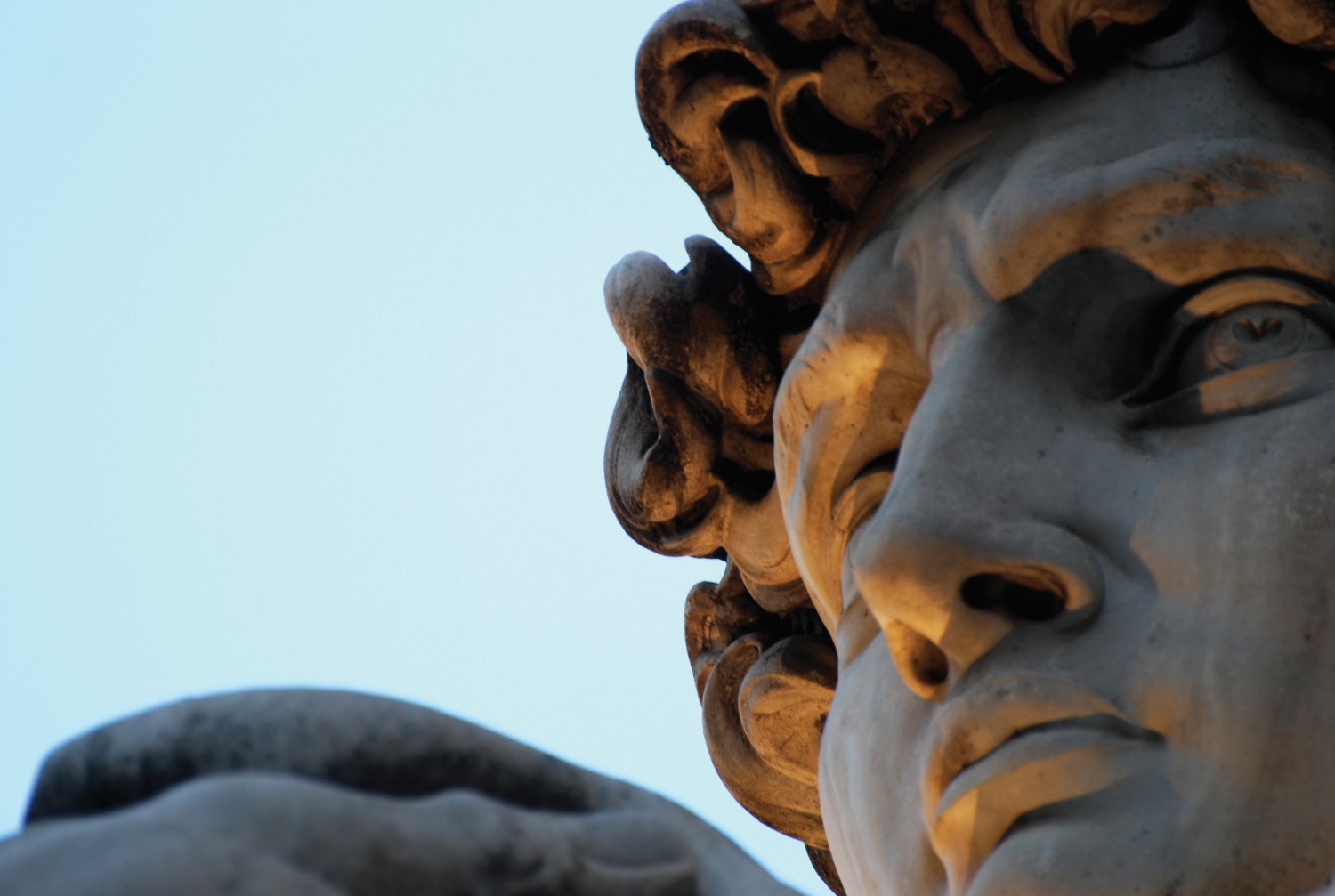
More than the paintings, more than the architecture, nothing fascinated me more than David’s right hand.

It was the veins that interested me. They slithered down his arm and bulged around his knuckles. They were different from the veins that popped out of the papery skin of the elderly. These veins were visible because of strain, I thought, the work of a shepherd. I wanted to run my finger along the hand and feel the life that pulsed from it.

Art is like magic. It draws on the life we know and adds elements from another place or dimension or world, so that when we walk past a piece, the familiar and the alien work together to capture our attention.

It took a while for that magic to work on me when I went to the Uffizi and Academia. But then I met David. The hand, the veins, the eyes that you wished would glance at you, they wove a story together. There was a sense of life, of a miracle, right before me, and it demanded a response.

My response was to become a photojournalist.

Throughout the Academia and Uffizi, I began to see the statues and paintings as snapshots in time. They were the best types of models because they never sneezed or blinked. I could shoot around them, stare at them for uncomfortably long periods of time, and dig up their stories. David’s story was that he had arrived at the stream to pick his stones to fight Goliath, and he paused in his work to survey his home as he prepared for battle.

Art asks us to meet it halfway, in a special place between reality and imagination. I met art through a right hand, a camera, and a story. And through them, I saw beauty.

Suggestions:

The original David statue sculpted by Michelangelo is housed at the Galleria dell’Accademia. Copies of the statue can be also admired in panoramic locations such as Palazzo Vecchio (where it was originally placed) and Piazzale Michelangelo.

Details on the background, creative process, and historic currents of Michelangelo’s David provided by the Accademica can be consulted before visiting the statue.

See more of Florence at FUA’s FB, Instagram, and Twitter.

Street Art: Letting Go

girl-balloon-finding-florence-blog-fua

By Patricia Hoban

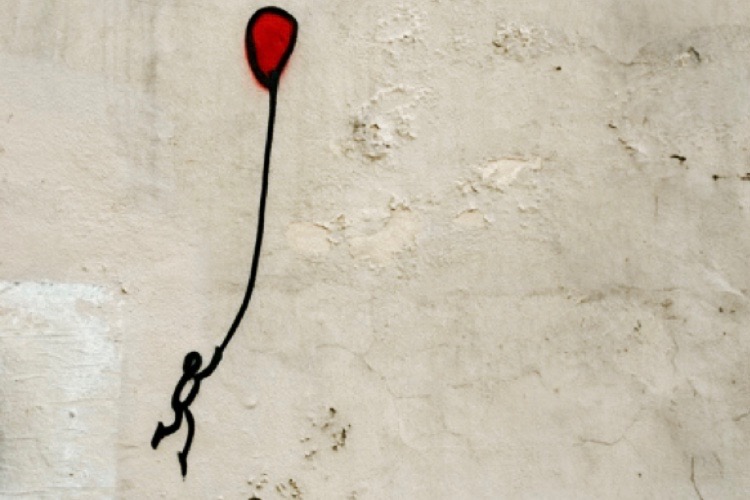
In the Renaissance city of Florence, home to the Uffizi, one of the largest and most famous museums in the world, and pilgrimage site of artists and art lovers alike, I was impressed not only by the greats such as Michelangelo, Masaccio and Masolino, or Giotto, who I was able view just a few minutes from my apartment. I was especially fascinated by street art, and specifically with an example that I attributed as “the girl with the balloon.”

As I walked to class, I often passed by the image of a stick figure with a hand outstretched, grasping at a red balloon. I have studied Banksy at my home university, and know this to be a copy of his work. Banksy, for those of you who are unfamiliar with him, is an anonymous street artist who uses the city as his canvas. The art he creates sends a message to its viewers and brings attention to the problems that are silenced or ignored by society. What does the balloon symbolize, and is the stick figure reaching for it, or letting it go? Each day as I walked by the piece, I juggled with possible meanings.

I, a student who was studying in a foreign country, interpreted the piece to be a girl lost somewhere between holding onto her cultural habits, childhood, and comforts, and letting them go to adopt a new Italian lifestyle. In the beginning of the semester in Florence, I almost always saw the girl reaching for the balloon and holding it tightly. However, as the semester progressed and as I became more confident in providing tourists with directions and grocery shopping at my neighborhood supermarket, what I saw was not a girl reaching for a balloon, but one letting go.

See more of Florence at FUA’s FB, Instagram, and Twitter.

Duomo: Stories Unseen

museo-opera-del-duomo-firenze-fua-finding-florence-blog

By Lauren Fromin
Photo courtesy of Erica Kavanagh

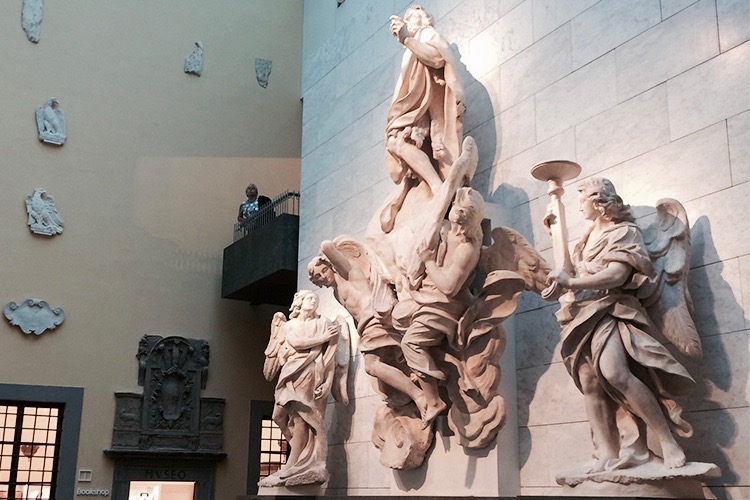
We all visit the Duomo in Florence but did you know that the museum dedicated to the cathedral has bene recently renovated? The new museum is a breath of fresh air that recounts Florentine history in a beautiful contemporary setting. Flowing through the halls of The Museo dell’Opera del Duomo are stories unseen by most visitors.

As you enter the main hallway to pass through the Museo’s winding exhibitions, you come face-to-face with a smooth, marbled wall with famous Italian names listed gracefully from floor to ceiling. As is familiar in other flagship museums internationally, a similar wall can be found listing the names of that country’s or time period’s greatest artists. Generally, these walls contain 50-100 names. Behold, the wall of greats in this Florence museum. After having a list of over 1,000 names to engrave, due to space constraints…and financial considerations…(engraving is manual labor) a couple hundred of Florence and Italy’s best were etched into the modern design. This depicts the importance and magnitude of Florence’s talents at the height of some of history’s most important art periods.

A surely breathtaking instance is entering the room housing the original facade design of Santa Maria del Fiore. Having to cut four meters from either side to fit into the exhibit, the rendition holds in place replicated statues in their original positions. However, the original statues are placed at ground level directly underneath the replicated version. This placing is intended to offer the viewer an up close perspective of the body of work in its natural, original form – while respecting the perspective of placement high-up on the facade. The Museo hopes to give off two different observations to understand the artists’ creations.

You will definitely have to take a few steps back to admire the facade’s structure completely, but if you step back too many times, you might run into Ghiberti’s bronze Gates to Paradise. The first set of doors engineered by the young artist at the time, in his early 20s, are displayed in glass protectors, adding an even more ‘heavenly’ appeal. The story goes, Ghiberti beat out Brunelleschi in a competition to sculpt the doors for the Battistero (Baptistry). Supposedly Brunelleschi gave up sculpting due to this and went into architecture. Why are they called the Gates to Paradise, you ask? This other story goes that later on in time Michelangelo walked up to them and at first site declared them the doors to heaven. The doors in turn inspired the young Michelangelo to become a sculptor.

Finally, you enter the Pietà room. On display, isolated on one side of this room, though in its full glory, you come across an original Michelangelo masterpiece. Not to be confused with La Pietà, the statue situated in St. Peter’s in Rome, but Pietà Bandini. An equally remarkable piece of work, with an interesting analysis. Michelangelo wanted this sculpture to dress his tomb, in Rome, where he planned to be buried. As you may know, Michelangelo is buried in Florence instead. An old Michelangelo was so keen to perfect this piece, that in the end he forgot one major component to most human forms. One of the legs of Christ is missing entirely in the sculpture. The extremely informed and witty director of the Museo dell’Opera del Duomo, Monsignor Verdon, synthesized in one of his own papers on the subject, that Michelangelo had spent all of his life being the best and creating the most amazing, perfect works of art. But by the time he reached an old age, he had began to question his entire life’s work and wondered if he had lived a life of any real worth. Indirectly, his art suffered under this mindset and this statue now famously represents Michelangelo’s own tribute to his death.

These are just a few of the stories waiting to be heard while visiting Museo dell’Opera del Duomo. Never settle for the work of art itself, but alway seek to understand where is came from and how exactly it came to be what it is. The stories will not only humor you, but surely inspiration will find its way to you as well.

Find out how, when, and what to visit at the Opera del Duomo website (in English).

Tip: A special joint ticket for the current Palazzi Strozzi exhibition also includes entrance to the Opera del Duomo until January 24th!

See more of Florence at FUA’s FB, Instagram, and Twitter.


5 Best Views of Florence

piazzale-michelangelo-florence-best-view

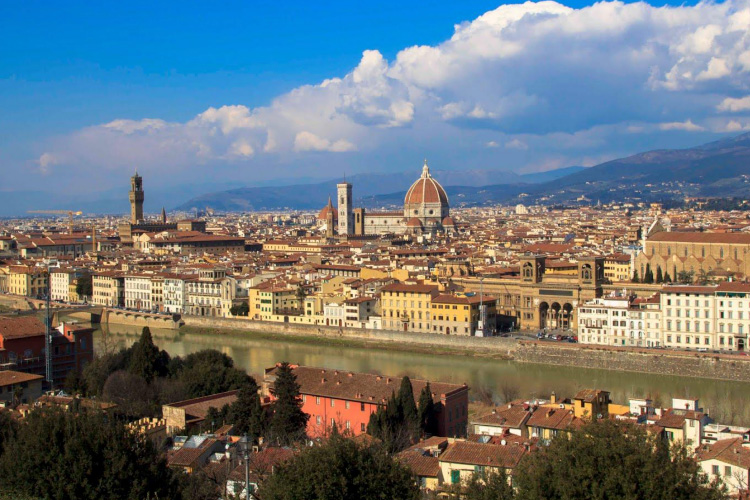
Florence’s city center is full of beautiful architecture and art history. Sometimes you need to get a complete sense of the city from above, to truly see how it’s surrounded by valleys and divided by the Arno river. Luckily, several places offer fantastic views of the city. This week our Social and Web Marketing class shares both well-known and more hidden spots in town for beautiful views. Some of these views will cost a small fee while others are completely free. Which are the best views of Florence that you’ve found during your time in Italy?

1. The most popular and free place to get a great view is from Piazzale Michelangelo (above image), known as the “balcony of Florence” and completed in 1869 when Florence was the capital of Italy. This large piazza is on the south side of the river. It overlooks the city, so be prepared for a bit of a hike. It might take some legwork, but this view of Florence is totally worth the walk.

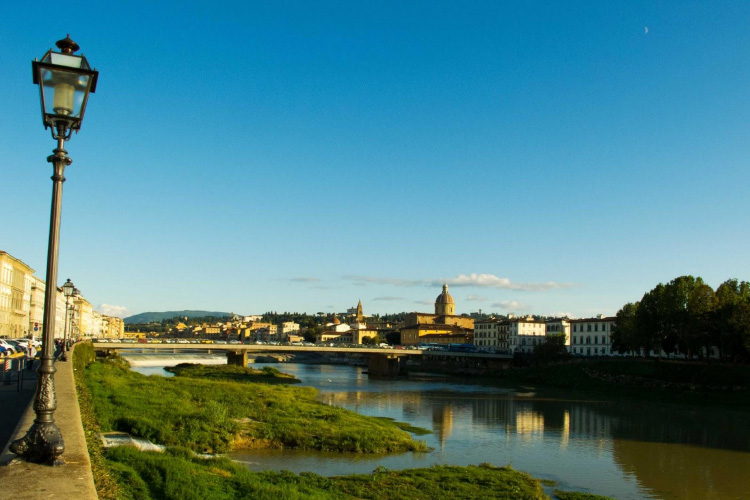
2. A less touristy place to get a view of the city is from Cascine Park. The park runs parallel to the river on the north side and is west of the city center. Founded by the Medici family, it’s Florence’s largest public park and offers beautiful views of both the city and the Arno River:

cascine-park-florence-best-views

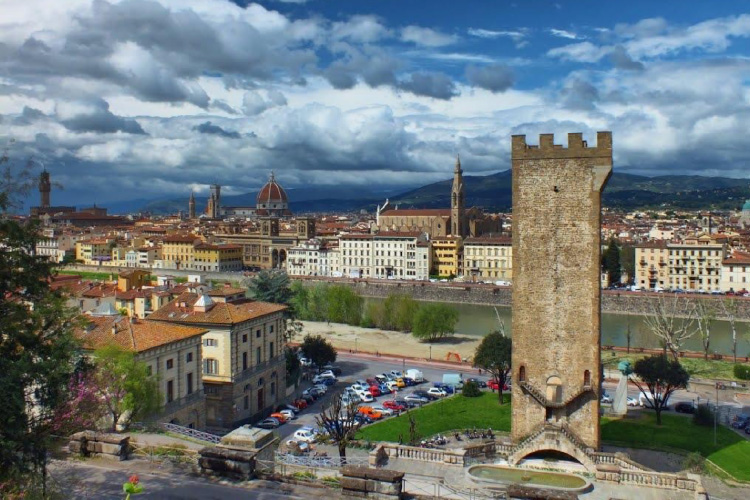
3. For a small fee of €4 you can see Florence from atop the newly renovated Porta San Niccolò, a tower that is part of the ancient city walls located on the south side of the river in the neighborhood of the same name. It is the only medieval tower that wasn’t “shortened” according to city wall standards because the hills framing it provided enough height for protection during times of warfare:

torre-san-niccolo-florence-best-views

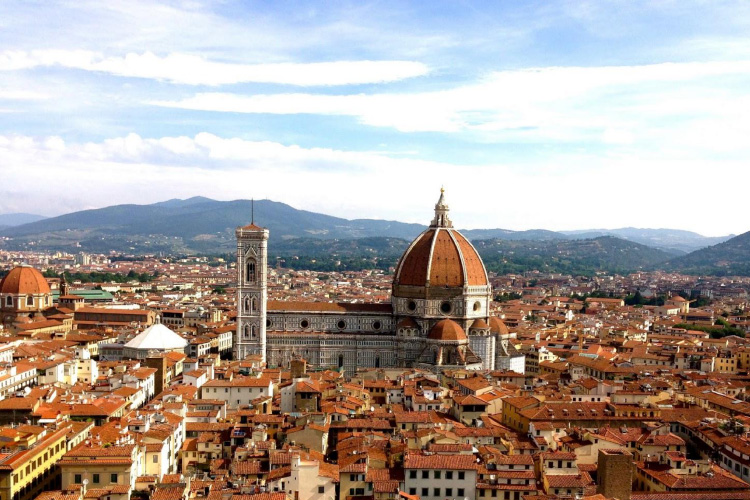
4. The Duomo, Florence’s most famous church monument, offers two unparalleled views from Brunelleschi’s dome, a revolutionary feat of architecture and engineering, and Giotto’s bell tower. From the top you can see a 360° view of the city. It’s definitely worth purchasing the complete admission fee of 15 euros, as you are able to visit the church, climb the dome and the bell tower, and the newly renovated Duomo museum. For any in Florence from now until January 24th, a special joint ticket is being offered for access to both the Duomo and Palazzo Strozzi museums!

best-views-duomo-florence

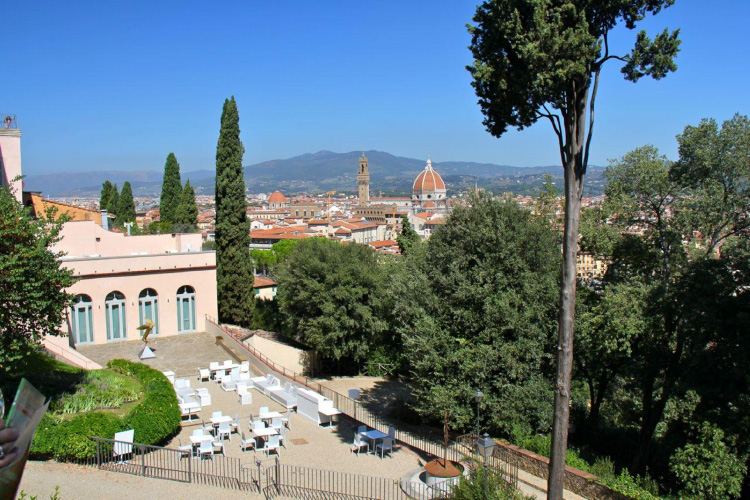
5. The Bardini Garden on the south side of the river offers a wonderful and different view of Florence for an €8-10 admission fee. The beauty, serenity, and calmness of the garden, combine with the great view makes it well worth the price. It is very relaxing to walk around and enjoy the various sculptures and garden areas while soaking in the Florence skyline. Secret: Did you know that this garden is connected to the grounds of Palazzo Pitti? If you opt for the complete Pitti / Boboli ticket, the Bardini garden is included! The Villa of the Bardini complex also hosts temporary exhibitions that are always worth checking out.

best-views-florence-bardini-garden

See more of Florence at FUA’s FB, Instagram, and Twitter.

From Da Vinci to Mac: Creative Connections

Untitled-2

Tuscans like Leonardo da Vinci created a connection between the arts and sciences that continues to inspire global brands like Apple.

Leonardo da Vinci was one Tuscan who blurred the boundaries between the worlds of science and art. Little did he know that the world would be referencing his great work well into the 21st century.

His influence on brands such as Apple began with his use of the “golden ratio,” a ratio that dates back to the 3rd century BC. The “golden ratio” is a concept used to achieve, what is considered, perfect balance and beauty. This concept is still used today in order to create precise and relative designs. Apple is known to have used the ratio in several of its products, such as the iCloud logo. The company logo is also thought to have been designed with the ratio in mind but a Quora  discussion online seems to debunk this theory.

Leonardo Da Vinci, Dante Alighieri, Brunelleschi, Michelangelo, and Galileo, are some Tuscan names that can be identified internationally through their renowned works that have all held an impact within the modern-day use in the arts and sciences. These individuals were able to blur the boundaries of cultures by studying profusely and realizing the subtle connections between the inspiration that had been sought by artists, and the teachings that are required for educating oneself. Their ability to wonder, think, and ponder the scientific ideas they were posed with, broke barriers and created bridges between two very different disciplines.

The culture of art and science that Italy has to offer has made a strong impact for the world and its future. Maybe you too, during your term abroad, can develop such studies that will break boundaries and bridge the two worlds of arts and science. Inspiration is everywhere, even in FUA’s very own DIVA campus where Michelangelo’s Tondo Doni was originally housed before its permanent installation at the Uffizi!

See more of Florence at FUA’s FB, Instagram, and Twitter.

Image credit: Venn diagram image courtesy of the Imaginary Foundation.

A Walk a Day: My Firenze

Untitled-2 (1)

By Katherine Meis

Surprisingly, my favorite part about living in Firenze was my walk to class. I took five classes in three different buildings spread across the city. The first building was home to my food and wine classes, the second my Italian class, and in the third, the main campus, I took my writing courses. I lived on Via di Santo Spirito on the other side of the river, so each walk to class took approximately 10-20 minutes. For each building, I had a different route that I gradually learned to take without the use of a map. Though the path I took to each building was different, each route had something in common: I got to walk over the Arno River and pass by multiple beautiful and historical landmarks along my way. This is why my favorite part of living in Firenze was walking to class. It produced a unique experience every single time.

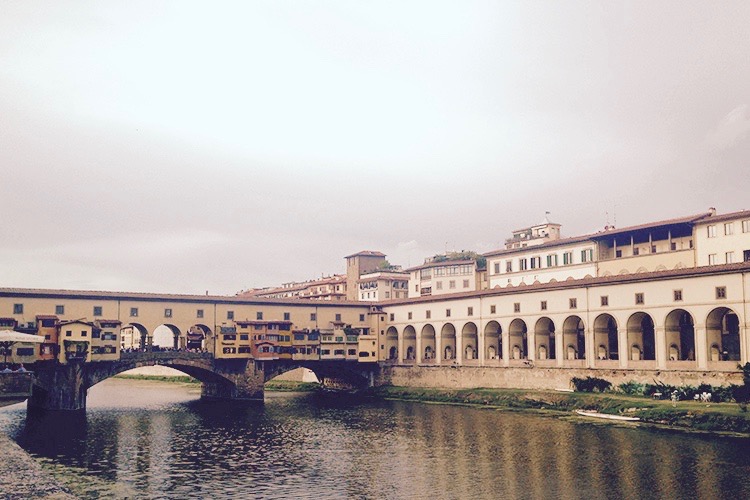
On my way to class on Mondays, I crossed the river and was rewarded with the view of the Ponte Vecchio backdropped by hills in the distance. I then walked through the Santa Maria Novella square and got to see the masses of Italians and tourists coming and leaving the city. Just the other day, I was walking through the square when a group of approximately two hundred Italian soccer fans (as I deduced from their jerseys) walked by me, singing boisterously. I thought to myself, what an exciting place I live in – everything is happening here!

On Tuesdays, I walked along a similar path as Monday and I was treated to the same sight of the mist rising over the Arno River that seems to come straight down from the hills. I usually stopped in a small café to practice my Italian in a short conversation with the barista while ordering a cappuccino and blueberry muffin. While enjoying coffee in Italy is already such a different experience than having a coffee back home, it is made even more unique by the sights and smells of this city that I absorb while sipping my cappuccino.

On Thursdays I took an entirely different path to class. While crossing Ponte Vecchio, it is easy to forget that you are even on a bridge, unless you are in the center where you can see the water on both sides. A thought that has always astounded me while crossing this bridge is how my simple and direct walk to class takes me over the only bridge in Firenze that survived World World II. A simple walk to class became so much more to me, each day of the week.

See more of Florence at FUA’s FB, Instagram, and Twitter.