Observations on Culture, Tourism, and Community Dynamics in Florence
written by Emerson Farrow
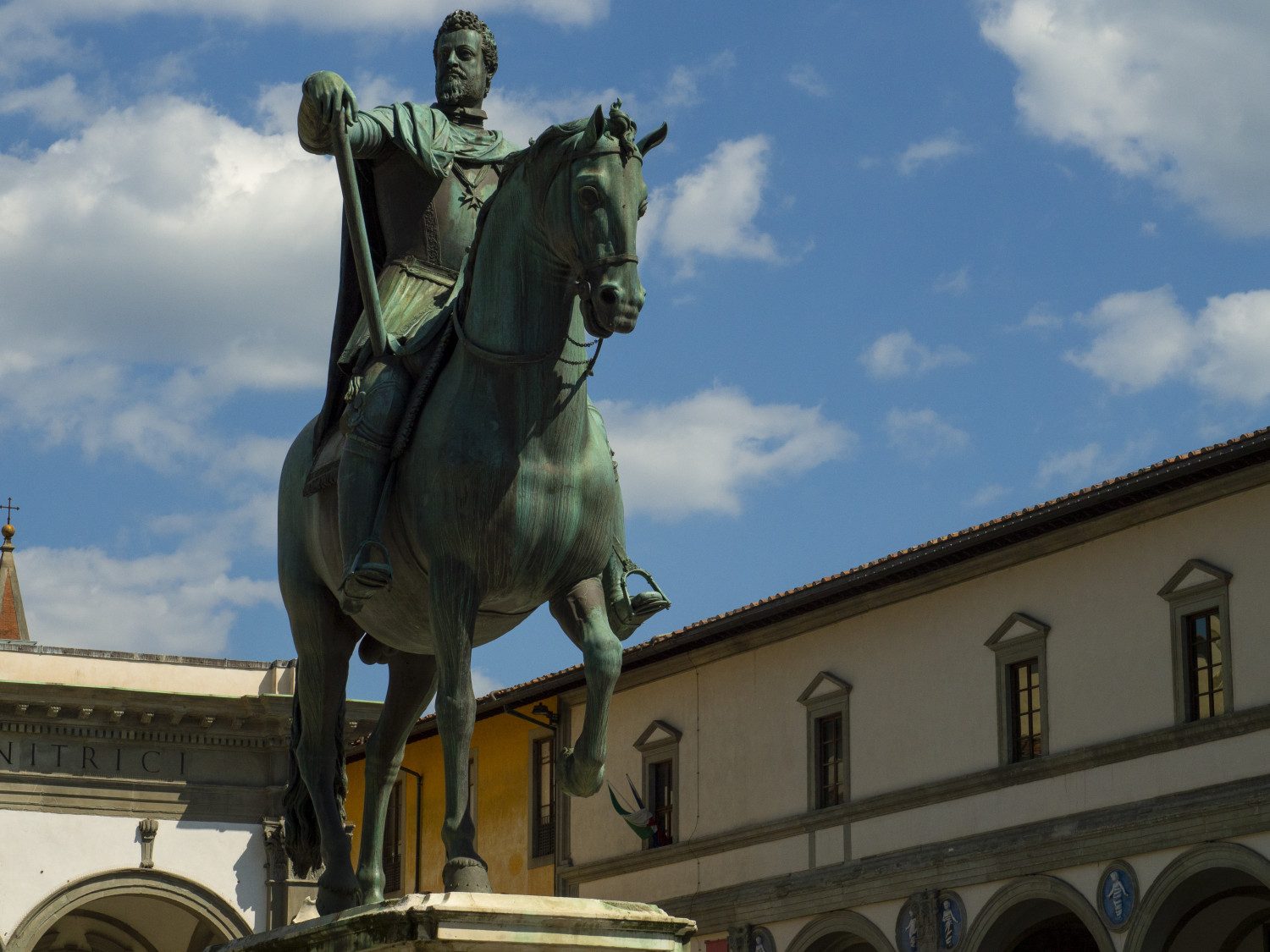
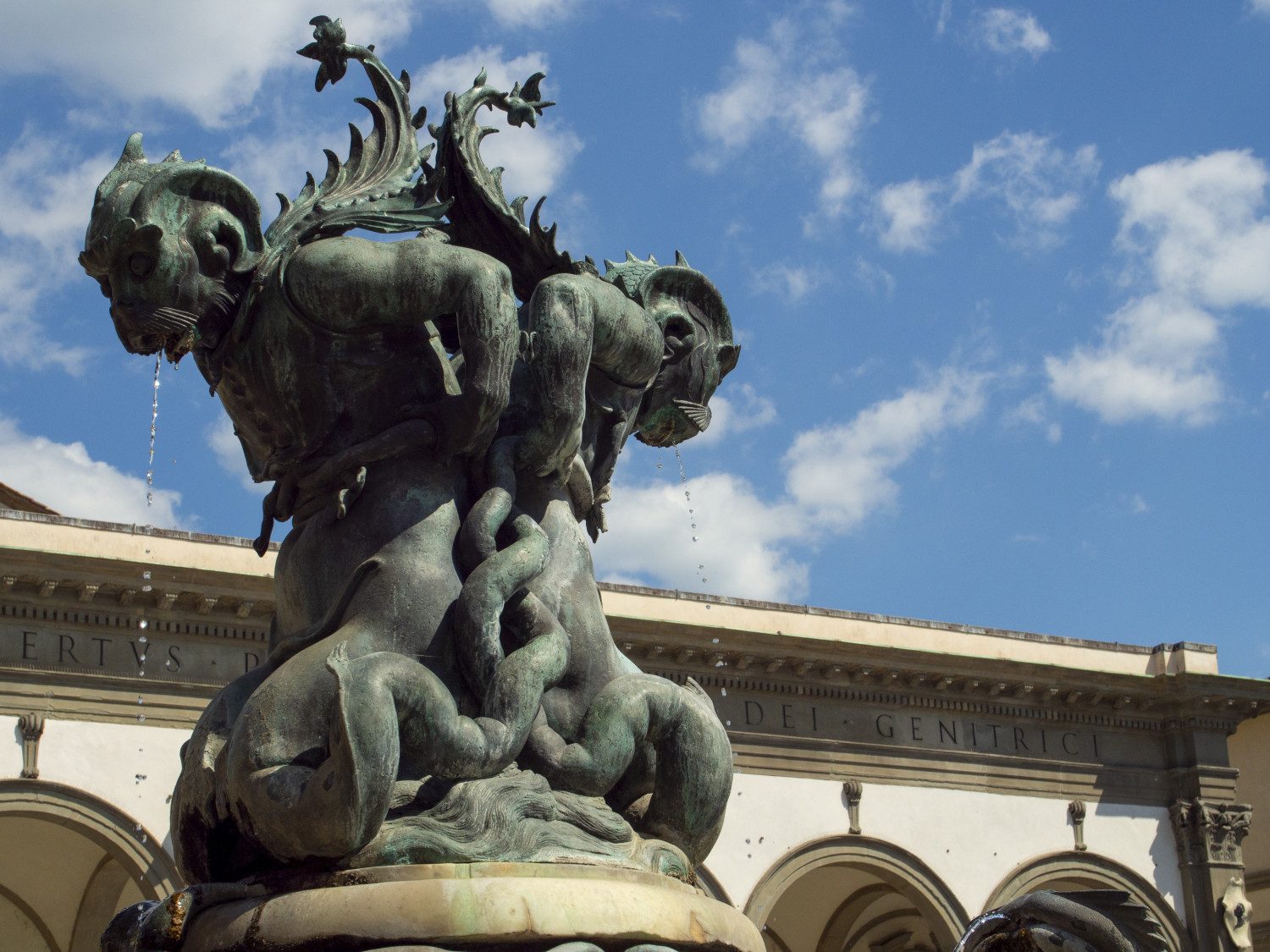
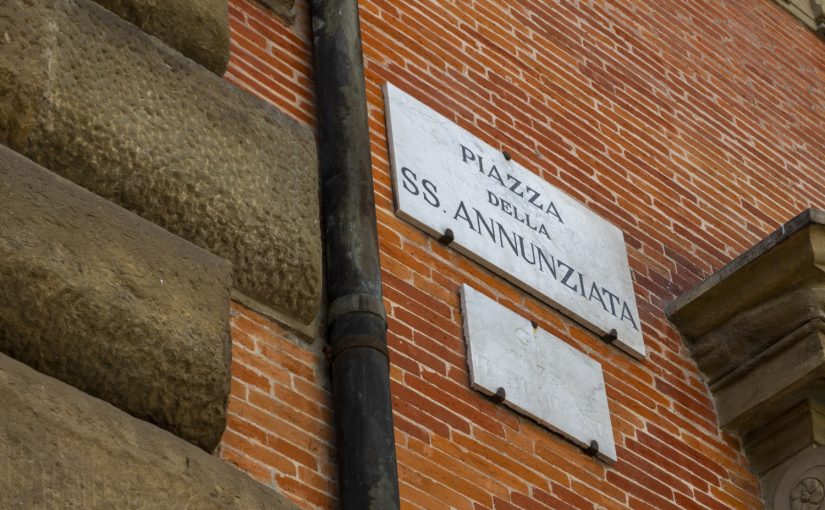
While visiting Piazza Santissima Annunziata, I went early on a Monday around eight in the morning and sat outside on the steps of Museo Archeologico Nazional di Firenzi. Within the square there are three statues in an open concrete “field” with no natural aspects within proximity. The plaza is surrounded by buildings, two sides being a museum and one side a church. The other side contains two apartment houses with streets in between them. The placements of the church felt out of place to me because of the tourist attractions swallowing its presence and taking away the importance of the value of a church, especially in Italy.
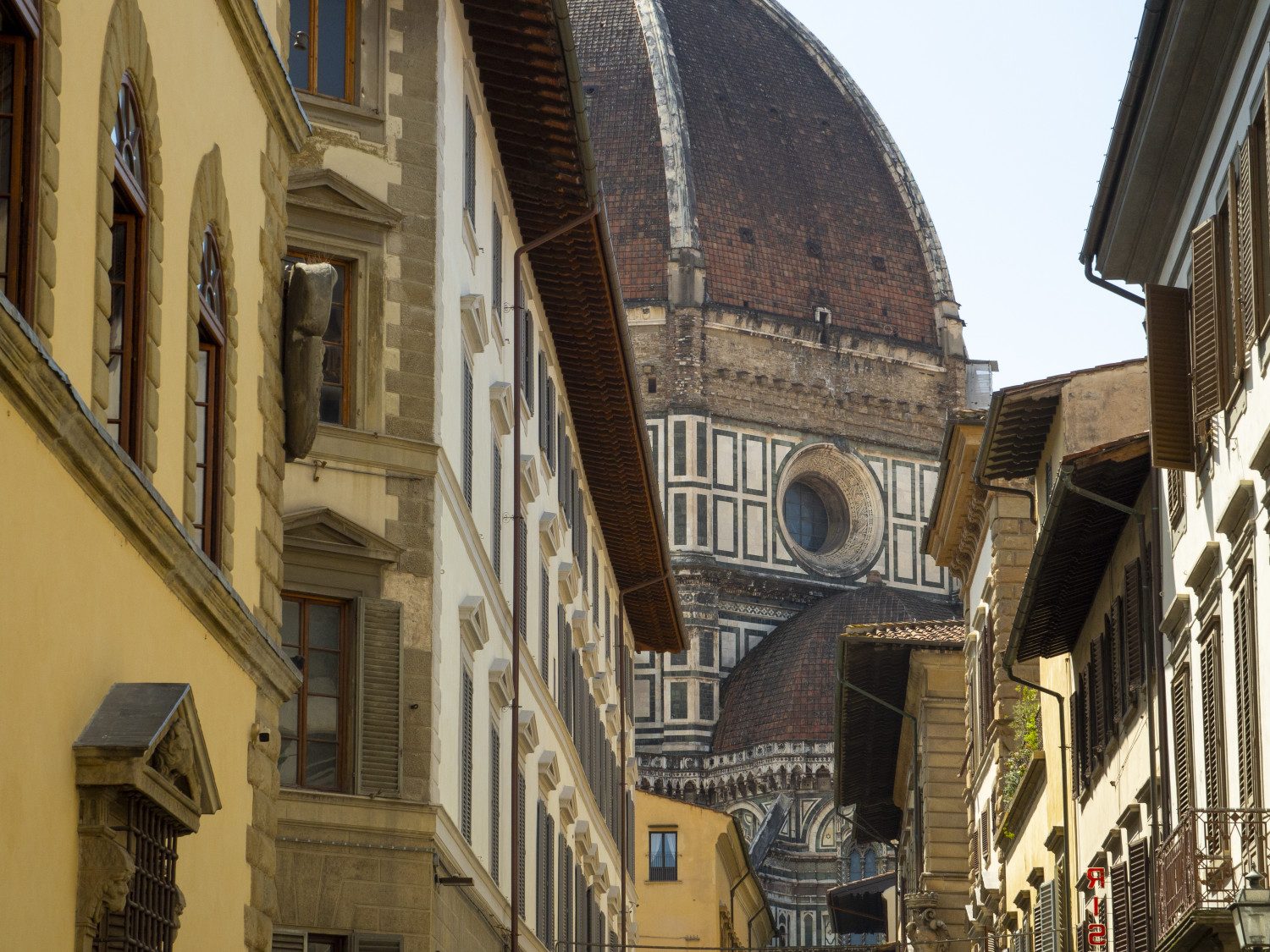
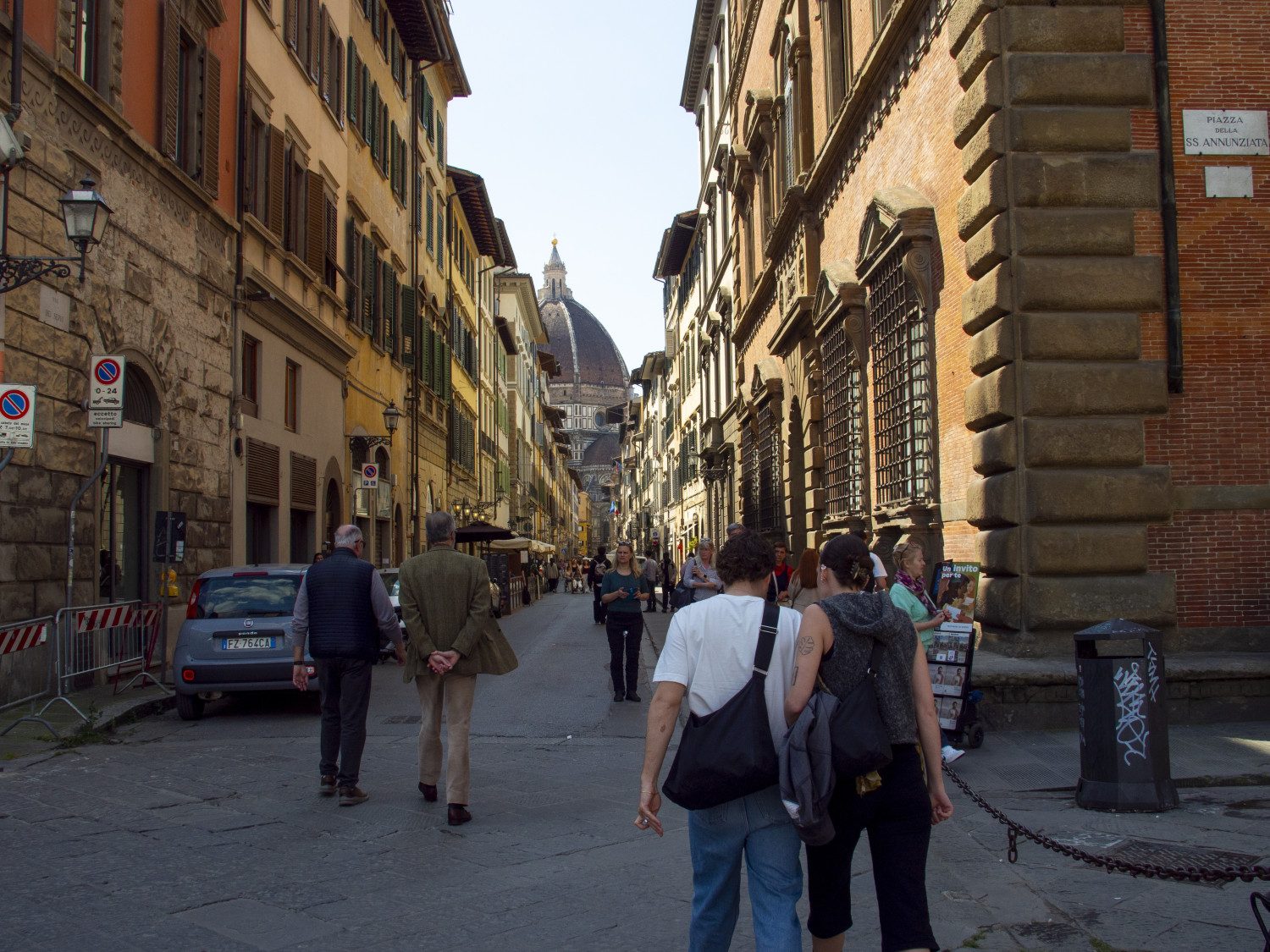
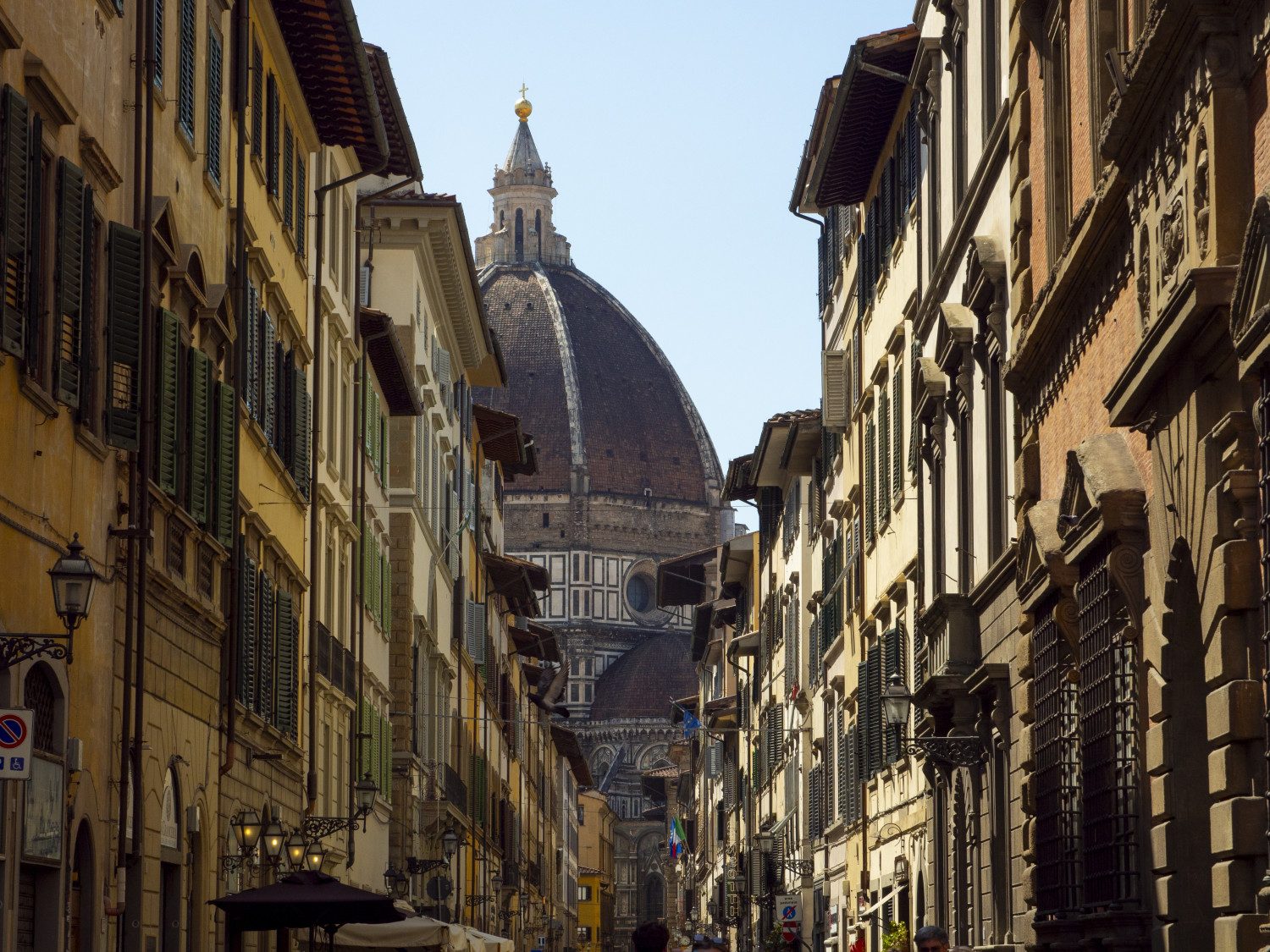
Within about 20 minutes of my observation I saw a group of people come into the middle of the plaza, with the center of the circle being a tour guide standing in the middle and talking about the history of the plaza. The tourists listened and looked around the center admiring the buildings and the streets. I noticed all of them taking pictures of this certain street, so immediately I was curious; what was so special about that street? I noticed outside of that group, there were other people walking around the group that were minding their own business trying to get to their destination. These people, I assume, were locals or people that have been in Florence for a while since they are so used to the appeal of the plaza that they don’t take the time anymore to stop and look around. When the tour left, I decided to get up and look at the street, revealing that it faced directly at the Duomo di Firenze. It was an alluring sight, with the sun reflecting off the Duomo and shining down the street off the buildings. It was perfectly in view of the plaza. I now knew why everyone was looking down that street, and of course I had to take out my phone and take a picture. This made me realize that this street itself is a big tourist attraction because of the beauty looking into the direction of the Duomo. This was the first observation I made on how people use the plaza; tours and taking pictures, while other people use the plaza simply as a shortcut towards their destination.
After I sat back down and over time, I noticed people going into the church that is located in the plaza; Church Alexander ET Robertvs Pvcii Fratres Dei Genitrici. Having a church there seems to bring the beauty of a community whether it’s with locals or tourists who want to visit the church to see the beauty or practice their religion. When some people were going into the church, they were holding hands, showing religion bringing people together no matter what their ethnicity is. Along with the attendees of the church, a group of kids that looked almost like a school trip went inside the building with an adult which I would assume was their teacher. The church brought both locals and tourists together within a building. This sense of community felt the square to be welcoming especially since there was a mix of locals and tourists. There is also a bus stop that is in front of the church dropping off people that attend the church, so it is also accessible for people that live far away.
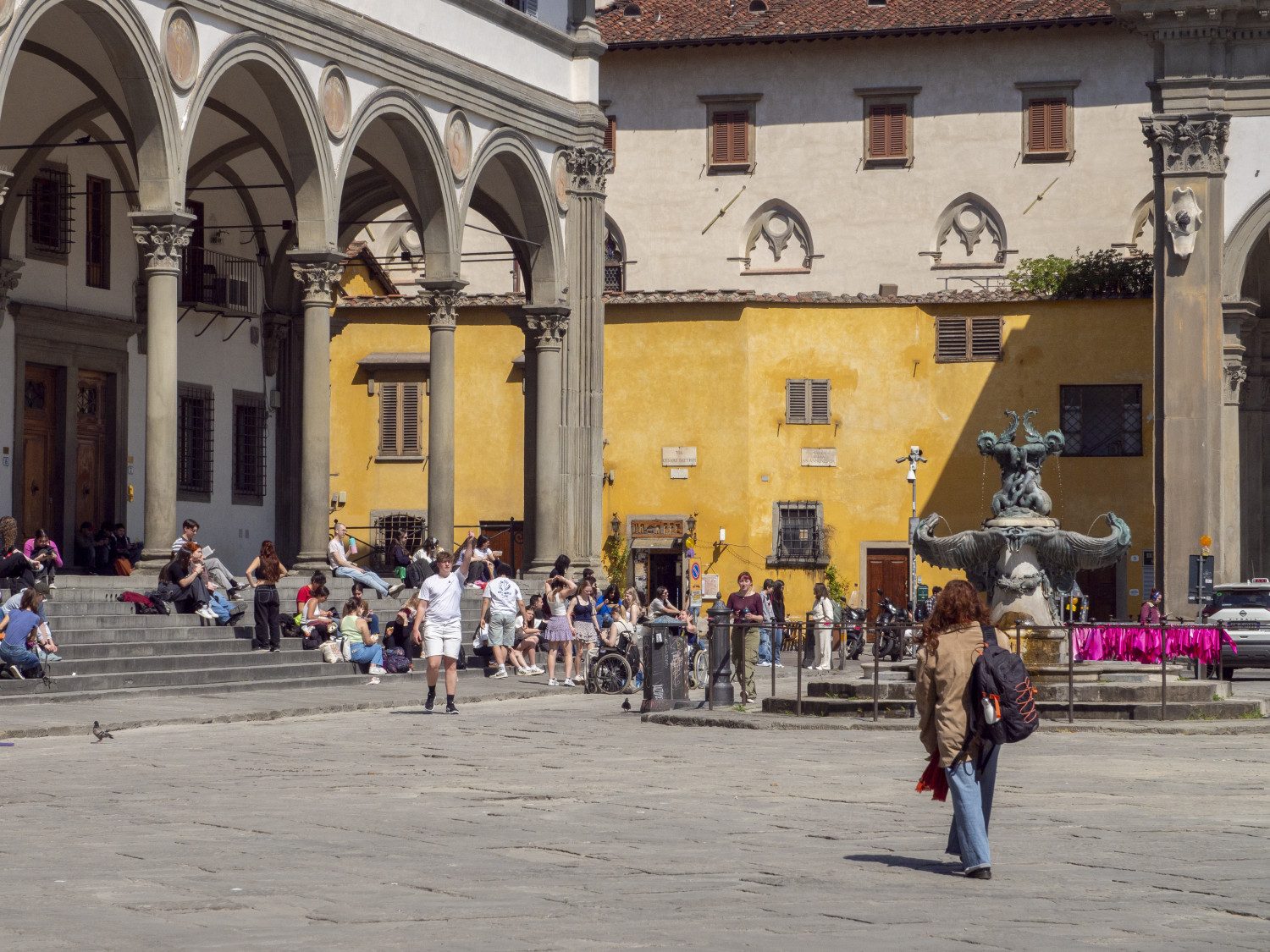
At one point while I was there, there was a group of students hanging out on the other end of the stairs who were sitting down and talking amongst each other. They were all speaking Italian so I assumed they were students waiting for class to start and they were meeting up before so they could talk. As a person who isn’t fluent in Italian, sometimes I will feel isolated within a local spot. However, there was a mix of English speakers and Italian speakers so I didn’t feel left out, and because of all the communication happening around me, it didn’t make me feel isolated within the square which was an enjoyable feeling. Everyone felt included in the square because there were a lot of tours happening and then friends were with each other. Since there was a mix of English speakers and locals, it didn’t feel marginalized or that there was an exclusion of certain groups.
With the time I was sitting there, two tours happened in total. This made me wonder if the tours ever get annoying for the people who live in the apartments or even the people in the church. One of the tours went inside the church, and it made me think if the tourists were interfering with locals inside the church trying to worship and practice, especially since the locals had cameras out. I didn’t notice any locals using the church as an exhibit, which felt better because it is a church which can sometimes be seen as disrespectful, especially seen from a local’s point of view. Since living here in Florence, I’ve noticed the importance of religion here, and how it’s such a sacred part of Italy’s culture that is proudly incorporated into daily life. I wouldn’t assume the locals were going into the church to use it as an “exhibit” or even a “museum” because of this.
Other cultures aren’t surrounded by religion so they might not think much of looking inside the church. Religion is such a big practice in Italy that it gives disrespect to the locals that tours were disrupting a religious place of worship. The different interactions with the church shows the indecency of tours interacting differently between the locals and themselves.
I believe the biggest thing that attracted the tourists to Piazza Santissma Annuziata was the street that looked directly at the Duomo and the museum that I was sitting in front of. I later learned that the exact street is famous for the view and of course, the Duomo being a big tourist attraction being a historical beautiful church, it lured many people in to take photos. There were no businesses around besides the museum but I noticed no one went into the museum, I do think the only reason for this however was because it was closed for the day. The museum is a perfect example of gentrification because it’s asking money to enter, and with museums, the biggest community is attracting tourists.
The biggest gentrification example however, were the apartments surrounding the plaza. The apartments were located on the street that people were taking pictures of and the apartments itself overlooked the Duomo. Those apartments would be a prime location for Airbnbs because of the location and view; it checks all the points tourists want to see when they stay here so it would attract them. The owner of the apartment room would buy the apartments just to rent it out so they can obtain money from tourists who seek a perfect view of the Duomo for the time they were staying in Florence. Having the owners of the apartment within the building just to rent it out for tourists disrupts housing for actual locals searching for housing, decreasing the housing availability in Florence. Locals can actually make use of the apartments and use them year-round and not just for money use. Situations like this lead to housing problems for locals. It can increase the rent money and then the locals within that building can be kicked out of that building because of money problems and the rise of rent. Airbnbs take up opportunities for people looking for housing which can cause a rise of homelessness. Over time, the more the Airbnbs, the more the population decreases and the city turns into only a tourist attraction.
This is what I took out from sitting on the steps observing the environment. There was a great mixture of use of the plaza for locals and tourists. Tourists being so popular just in that spot may become a nuisance for the people that live around there because of the noise they make or the constant photos around their apartment, making it feel like they are never alone or in peace. The Airbnb opportunities around are the biggest example of gentrification I noticed. Not many people think of the long term effects of tourism but it’s a constant problem especially in Italy, causing disputation across the country. Overall, the plaza was a beautiful place that invited everyone and a place everyone can use but there was a big notice of tourist interactions.