Studying abroad is no easy feat. You are dropped into a brand-new world with different etiquette, standards, expectations, and languages. It’s an overwhelming feeling, to say the least. My first week here, I think I saw every one of my new friends cry at some point.
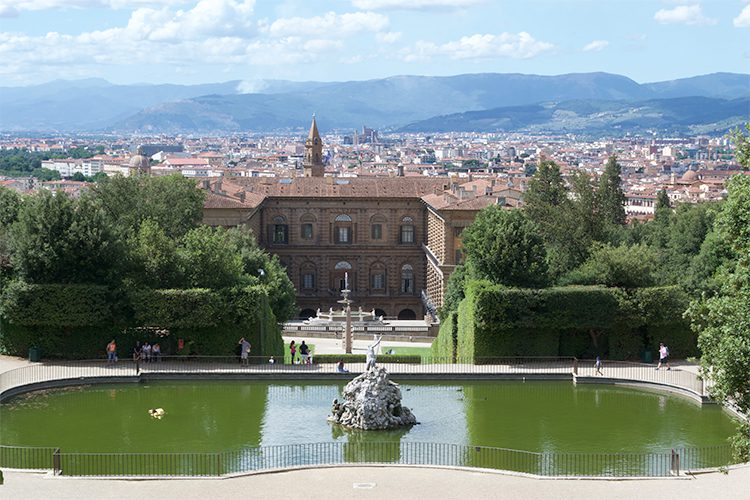
This mini photo essay explores the great and small details of one of Florence’s most magical green spaces, starting from the above panoramic shot that fully captures how the garden and the city are entwined. Created for a Street Photography course by FUA study abroad alum Stanley Chen, these gorgeous shots show a resplendent and luminous Boboli Gardens.
The Boboli gardens, a site that formerly housed the famous Medici family of the Italian Renaissance era, is a large open-air museum that contains many forms of green architecture and represents what many would consider an ideal Italian Renaissance garden.
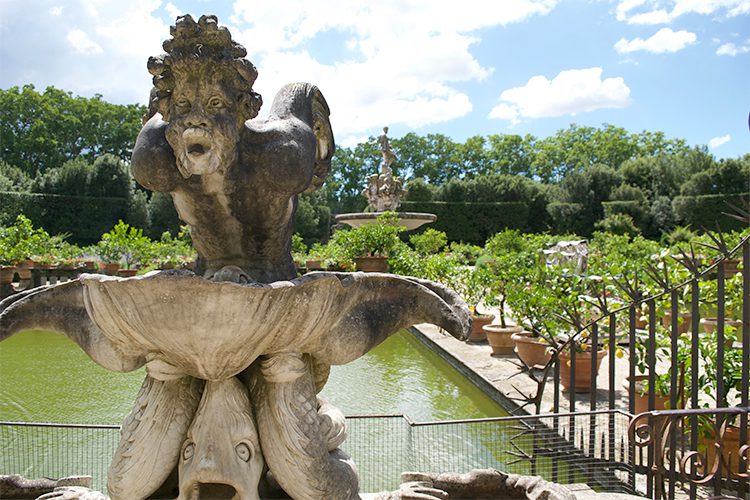
Though Neptune’s fountain, also pictured above, is one of the principal fountains, the garden is abundant with sculptural surprises such as this grotesque male harpy on top of sea creatures in the Isolotto section:
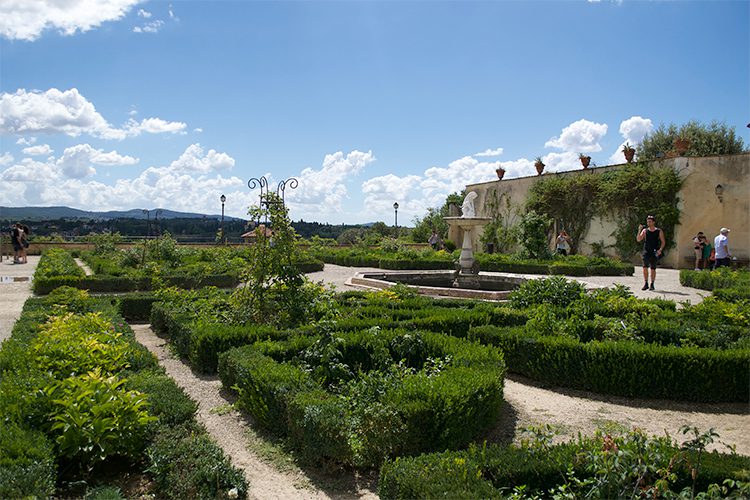
Another site of interest is the Giardino del Cavaliere, which sits atop of a wall built by Michaelangelo. A lovely hedge maze arranges flowers and shrubbery in sprawling yet geometrically harmonious deigns:
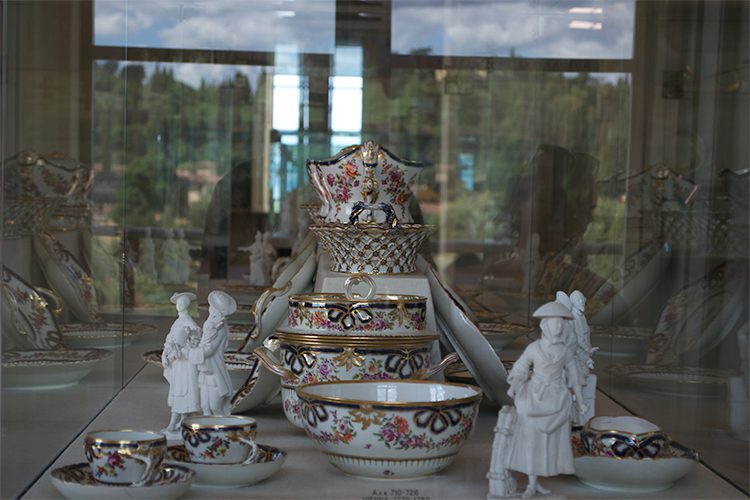
The hedges leads to the entrance of the main building, the Casino del Cavaliere built in 1700 and where the last Grand Duke Gian Gastone de’Medici kept rooms. The building today hosts the Porcelain Museum of the Pitti Palace museum complex, a showcase of porcelain works from many of the former ruling families of Tuscany:
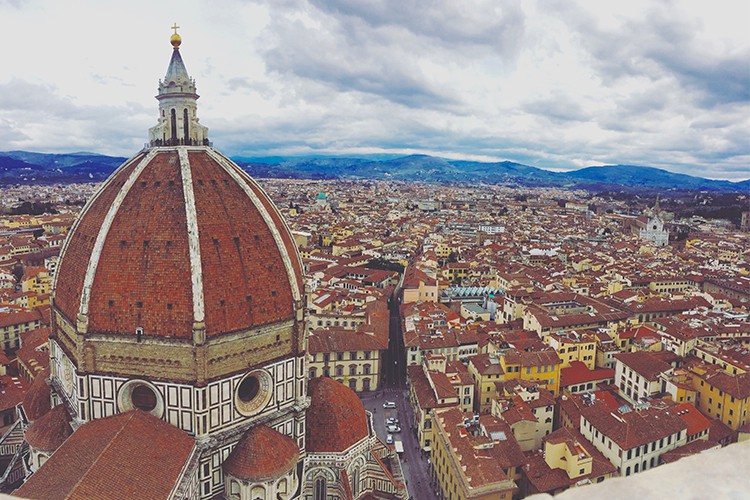
Throughout my time in Florence, I was not only able to discover the nooks and crannies of the city but make new and at times peculiar discoveries about the large, main monuments everybody knows and loves. I entered what I would call the “tourist phase” and saw anything and everything there was to see but reminiscing on my stay in Florence, I really didn’t know a lot about the places I was visiting. For example, did you know a ball-shaped decoration fell off the Duomo and there is now a marble slab to commemorate it? Me neither.
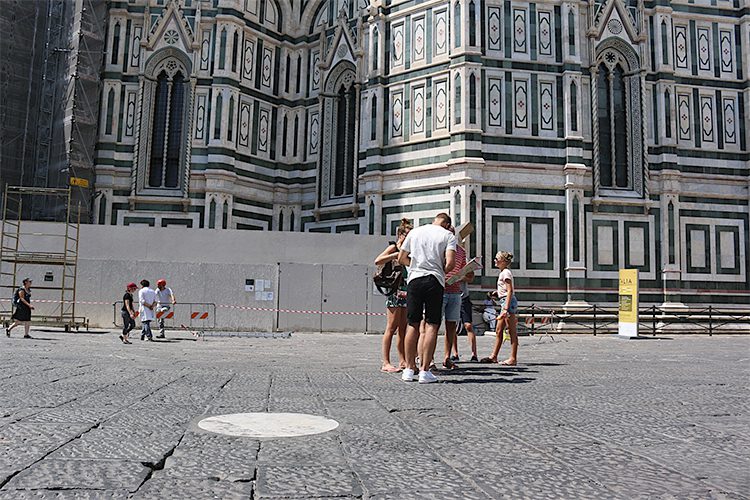
In January of 1601, Florence experienced a thunderstorm and lightning struck the golden sphere on top of the Dome’s lantern, causing it to detach and land right next to the church. To this day, there is a circular marble slab to signify where the ball landed when it fell off. The sphere, commissioned to Verrocchio in 1468, was made of bronze and weighed almost 2000 kilos (approx. 4409 lbs). Andrea del Verrocchio, it should be mentioned, ended up inheriting the Duomo’s architectural project after Brunelleschi’s death in 1446. The weight itself can show the large impact this ball had upon touchdown. Prior to falling off in 1601 and definitely restored in 1602, the ball had proved be unruly on other occasions – electricity-related problems due to thunderstorms had already been documented at least twice in the 1500s.
Turns out I was not the only one who didn’t know about this “fallen ball.” I decided to visit the Duomo to see the marble slab itself and watch if anybody else would notice it. During my hour of sitting there, not a single person stopped to look at it or take a picture. Rather, I was getting weird looks for taking a picture of this random circle on the ground. This taught me that when you are visiting an important monument, there is so much more to see than its beauty and you should learn everything you can beforehand.
Next time you are visiting the Duomo or simply walking past it, make sure to venture to the back side of the Duomo to check out this marble slab. It may just be a circle on the ground but it holds much significance and you may be one of the few that knows about it. If you learned one thing from this, remember to research the places you are visiting beforehand because you may learn something the tour guide doesn’t tell you.
Sound Postcards from Florence – How does the city sound throughout the day? Jordan reports from different Florentine locations – including a parade, a soccer game, and the city at sunset – to give listeners an audio postcard of city moments.
Sometimes, envisioning your life in a new country can be a bit difficult to imagine until after you’ve arrived. Whether you are getting ready to come abroad or already in Florence and in need of inspiration, below are some itineraries of a typical day of FUA semester students. Semester classes are usually held once a week and students typically take anywhere from 4-6 courses. If you’ve signed up for any 3-week short session courses within the 15-week semester, remember that classes will be held daily from Monday to Friday.
Day 1 Leanora shares an example of her typical day that coincides with when she has one class and has some extra time to explore locally while balancing coursework.
9:30am – Wake up.
10am – Grab a cappuccino and chocolate croissant at Fedora, the pastry shop operated by FUA hospitality students and faculty.
10:30am-12:30pm – Check out a new museum. Already seen the major ones? Then try these smaller gems.
1-2pm – Browse through the Sant’Ambrogiofresh food market and purchase some groceries for the week.
2:30pm – Grab lunch from my favorite panino place. Grabbing a panino is something quick and easy to eat before class. There are many options in the area, so try a few before deciding which one you like best.
3-5:30pm – Travel Writing class at the FUA journalism building near the Duomo.
6-8pm – Cross the street from the J School towards the Oblate Library to do homework.Pack up my backpack. Enjoy the great view of the Duomo with a pastry from the cafe.
8:30 – Dinner out with friends.Meet by the Duomo and head over to the Santo Spirito area. Walk by the Arno River along the way.
Day 2 Morgan shares her typical day when she has two classes scheduled.
9am – Wake up.
10am – Grab a cappuccino and a pastry at specialized coffee bar such as Ditta Artigianale. There are many spots around Florence for a coffee and a quick bite to eat, both traditional and from newer generations. Being a barista myself, love checking out new coffee places on my way to class and discovering different coffee drinks.
10:30am – Read a book or paint in the Rose Garden.
12pm-2:30pm – Intermediate Drawing class at the FUA main building near Piazza Santa Croce. If you want to take an art class at FUA, this class focuses on human anatomy through Florentine sculpture. You learn how to improve your technical drawing skills while applying them to your own drawing style.
3pm – Grab a fennel salami panino with pecorino and pear jam at Sandwichic and sit on the steps of the San Lorenzo church.
3:30pm-5:30pm – Do some homework in the top floor, open-air courtyard of the Oblate Library.
6pm-8:30pm – International Marketing class at the main building. Learn marketing techniques on a global scale through lecture and real world application to a multinational company.
Other Activities? FUA offers a series of extracurricular activities so students can become more involved in the community and fellow peers. Here’s a selection of some of our favorites.
Taste Italy Culinary Workshops – The classes are fun and interactive, held at FUA’s hospitality school, Apicius, and you can meet FUA students over some delectable food.
FUA’s Gym Classes – These are a fun and social way to stay motivated and healthy as you explore your way through Italian/Tuscan food culture:). The gym also has regular hours for workouts.
Ganzo Themed Dinner –These are delicious and so much fun. They also happened to be prepared by FUA culinary classes so you can check out what your hospitality peers are up to. Check out the calendar for upcoming Thursday themes, put your reservation in early, and enjoy interesting, delicious courses with wonderful wine pairings.
Visit the Student Life department’s website to learn other ways to become involved in your new home. Curious about what fellow students suggest? This blog regularly offers ideas, suggestions, and explorations so keep checking back for updates!