by Jessica Rowe
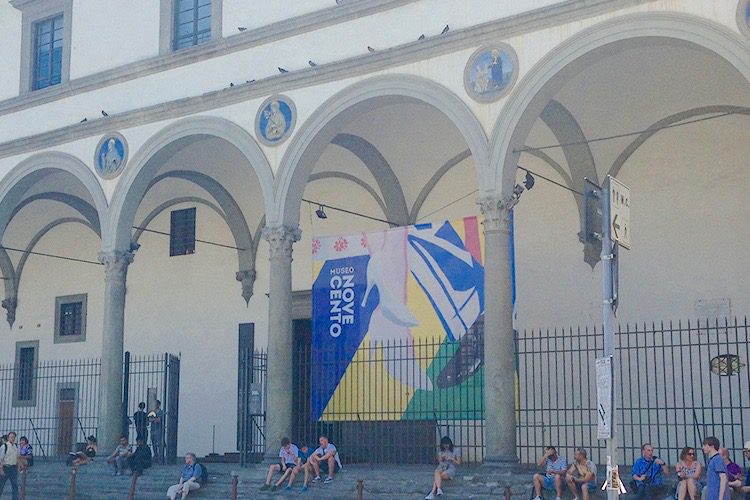
The Museo Novecento is a 20th century Italian art museum in Florence. While we tend to focus on the Uffizi and Galleria dell’Academia, it is just as important to appreciate the work of modern artists.
Recently, I had the chance to visit the Museo Novecento in Florence. In a city full of historic art, this museum, which focuses on 20th century Italian art, is often overlooked. While the older works are widely known and beautiful, it is important to consider more modern contributions and movements in art.
Art in the 20th century was greatly influenced by the events of the time. Known mainly for the rise of modernism – a movement to revitalize the way society saw art – the 20th century brought with it expressions of nihilism and art so abstract as to make the viewer question what really counted as art. At the same time, this period marked a break from the past. Artists wished to move forward and acknowledge contemporary work instead of just that of the greats.
In 1945, Arturo Martini published an essay entitled “Sculpture: A Dead Language” which incited a new generation of artists to push back through the 1950s and 60s. This response included sculptures made out of new and odd materials, such as various types of metal. These sculptures also explored uglier sides of life and the perspective of the artist instead of displaying a perfect subject. This matched the feeling of the time as young people were beginning to separate from their parents’ ideals and values in order to make up their own minds.
The century progressed with the creation of Gruppo 70 in 1963, an artists’ group that focused on the meshing of language with visuals. They did this in order to analyze how advertisements and propaganda affected people. These artists wanted to take back the medium, to figure out how it worked in order to be less affected by it themselves and to effect others with the meaning of their own works. At this time the political atmosphere was split due to the Cold War so it is easy to understand why artists would try to find their own voices outside the influence of the government.
Groups like this gave way to movements that tried to get new, contemporary artists on the scene. From 1964 until 1974, the municipality of Florence had a bursary to help young artists pursue their studies. It granted one million lire each to four students – two in painting and two in sculpture. This inspired new work in the 20th century and new voices. It also gave a place for young artists to compete and show off their work.
During this time, in November 1966, Florence flooded and hundreds of ancient works of art were damaged. So called “mud angels” worked to restore the works but out of this came the 1967 “Artists for Florence” exhibition, which focused on contemporary work and its importance to society. This further shows contemporaries trying to pull away from the past and make names for themselves. The desire to do this is what made the 20th century a period of change and originality.
20th century art has greatly influenced the art that we see today. Many new techniques and styles were born in this period and continue to be used today. Artists now have much more room to grow and explore their own ideas than they did before modernism. While the greats will always have a place in art history, it was the 20th century that allowed contemporaries to find their own voices and branch out from what others had done in the past.
Museo Novecento
Complesso dello Spedale delle Leopoldine – P. Santa Maria Novella 10, FirenzeSummer opening hours (1st of April – 30th of September)
Mon – Tue – Wed – Sat – Sun | 11.00am – 8.00pm
Thursday | 11.00am – 2.00 pm
Friday | 11.00am – 11.00 pm
The last entry is one hour before closing.
www.museonovecento.it/en/