Jazz Revival Amongst the Youth

With the recent closure of Florence’s Jazz Club, allow this to be read as an ode to a staple in past study abroad students’ daily lives, with hopes of bringing back fond memories. In addition, this blog feature is an exclusive bonus installment to our Fall 2025 issue of Blending Magazine. After you finish reading, be sure to explore the rest of the magazine online—just follow this link to download the full Fall 2025 edition:
https://jschoolfua.com/images/BM/BM_151.pdf

written by Clara Koster, Hailey Kookaby, Tess Letendre & Peri Raczynski

“Going to Jazz Club felt like being at home in New York,” said Colleen, a student at Florence University of the Arts (FUA). For many students, the Jazz Club offers a familiar, intimate vibe — a break from the usual bars and techno nights of Florence. The dimly lit venue, tucked into a side street, draws students in with the promise of soulful music and a warm, relaxed atmosphere. 

Despite being an older style of music, jazz is finding new resonance among the city’s youth. A sign of its relevance is when a place appeals to students, who have consistently driven cultural trends. The sound of jazz now drifts through the streets of Florence, played by street performers and live musicians, sparking curiosity and excitement for a nightlife experience that emphasizes listening rather than dancing. 

The Jazz Club opened in 1979 and has consistently offered live performances. While jazz is the primary style, rock, R&B, and blues are also commonly heard. The club is small, and lines begin to form about a half hour before doors open, mostly made up of students eager to see what the venue has to offer. Guests are greeted at the desk, pay cover, and receive a membership card — their first drink included, with future visits covered by the card. 

Reactions to the club vary. “I thought it was kind of boring,” stated Harleigh, another student. “It’s not like the other bars I usually go to.” Devon, a classmate, described her experience as “amazing,” citing her deep love and appreciation for jazz. Maria, another student, elaborated on how she prefers Thursday nights for blues sets, saying, “It’s slower, moodier and fits the atmosphere better than Wednesday nights, which are more crowded.” Despite the differing opinions, one thing is clear: the Jazz Club leaves a lasting impression on those who seek it out. 

For our own visit, the ambiance was immediately striking. The room was filled with resonant bass tones, the wail of the saxophone, and a sense of focus on the music. Students swayed gently to the rhythm, some closing their eyes to fully immerse themselves, while others held quiet conversations without shouting over the music. The atmosphere was comforting and welcoming, creating a space where anyone interested in music could feel at home. 

The Jazz Club’s blend of historical charm and contemporary appeal illustrates Florence’s ongoing artistic legacy. Students like Tatum Park appreciate the club as a break from conventional “college” music, feeling connected to the city’s long-standing appreciation for music and art. Similarly, Colleen finds nostalgia and familiarity in the experience, while Devon finds inspiration and awe. The club demonstrates that even older musical forms, when presented thoughtfully, can engage and excite a younger generation. 

While most students gravitate toward techno-heavy clubs and crowded bars, the Jazz Club offers something different: a revival of old-fashioned musical reception. It’s a space where students can experience live jazz, blues, and other genres in a way that emphasizes presence and connection. In Florence, a city steeped in artistic and musical heritage, the Jazz Club has become a bridge between past and present, giving students a new way to engage with the timeless power of music.
Mystery Meets Mixology

The Evolution of Florence’s Hidden Bars and the Art of Underground Mixology

written by Trinity Conner, Molly FitzGerald, Olivia Adams, Lila Williams & Marisa Jones

This blog feature is an exclusive bonus installment to our Spring issue of Blending Magazine. After you finish reading, be sure to explore the rest of the magazine online—just follow this link to download the full Spring 2025 edition:
https://jschoolfua.com/images/BM/BM_151.pdf

Florence’s artistic spirit isn’t confined to its galleries and historic cafés; it also spills into the city’s underground secret bars—modern-day echoes of Prohibition speakeasies—where secrecy, craftsmanship, and storytelling converge into a singular drinking culture. The hidden bars, like the literary cafés of the past, create an underground atmosphere of exclusivity and creativity, elevating mixology to an art form.

The evolution of Florence’s modern hidden bar scene highlights how these establishments mirror the city’s avant-garde movements by reinventing tradition. Behind unmarked doors and secret entrances, guests enter spaces that showcase both history and innovation.

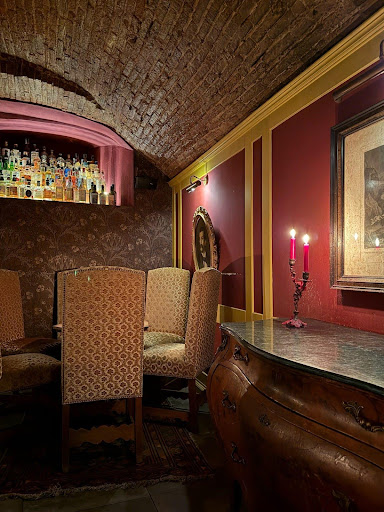
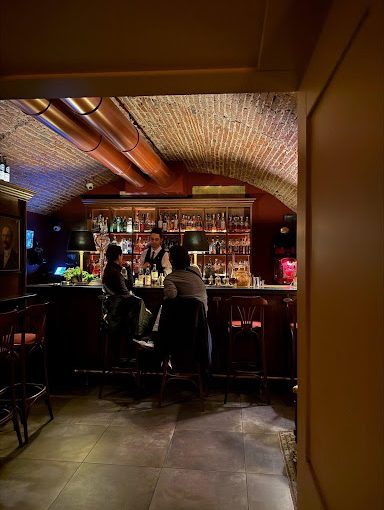
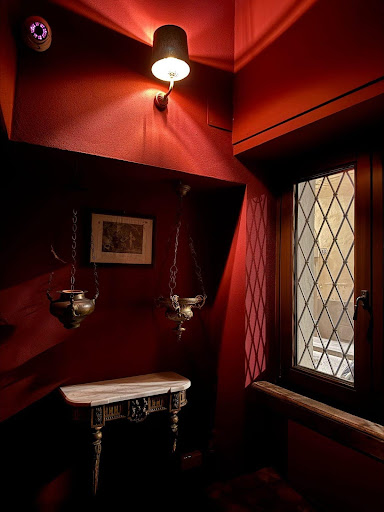
The underground nightlife of the 1980s has evolved into today’s hidden bar scene, shaped by the rise of cocktail culture and modern mixology. One key example of this evolution is Rasputin, Florence’s first hidden bar, discreetly tucked away in Santo Spirito. This underground cellar, with its candlelit tables, antique furnishings, and a rules page on the menu, transports visitors to a vintage atmosphere where handcrafted cocktails strike a balance between tradition and innovation.

Taking a visit to Rasputin feels like traveling back in time, allowing individuals to feel immersed in rich history. Maintaining a strict no-phone policy, discouraging excessive phone usage, and flash photography to keep the experience authentic. These policies enforce full presence, something that is rare in today’s digital world. The hushed conversations, the clinking of glasses, and the soft jazz music in the background make it feel like stepping into another era.

Marco Vinci and Ghermai Zerazion, the co-founders of this hidden gem, came up with the idea to bring a seamless combination of America’s past and present to Florence, Italy. During Prohibition in the United States, the production, sale, and transportation of alcoholic beverages were outlawed. As a result, clandestine bars, now known as speakeasies, sprang up across the country. Therefore, these tucked-away spots were places where people could socialize, dance, and drink bootleg whiskey and gin, despite the looming threat of raids, arrests, and jail time. The consequences were harsh, but the desire was irresistible. Rasputin allows individuals from all over the world an immersive experience of life during this time.

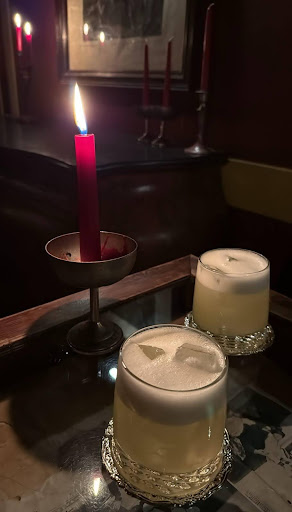
The cocktail menu is as thoughtfully crafted as the space itself, offering a mix of classic recipes with modern twists. The standout for us is “Our Bee’s Knees,” a drink that combines honey, lemon, and lavender into a refreshing and balanced flavor. The foam on top added a nice touch, making it feel both indulgent and relaxing.

The bar also has an impressive selection of over 300 labels, including a wide range of whiskeys, which made the menu feel like more than just a list of drinks—it is an opportunity to learn and explore. Overall, it is a place where the drinks and the atmosphere come together in a way that feels both approachable and special.

Rasputin isn’t just a speakeasy; it’s a hidden world that combines history, mystery, and artistry. If you are looking for a night that blends sophistication with a touch of secrecy, this is a must-visit while in Florence.

Beyond Rasputin, other hidden gems like Vanilla Club Speakeasy capture the charm of the Prohibition era with its password-protected entrance, dark wood interiors, and soft jazz music. The bar’s strict no-phone policy encourages people to experience expertly crafted, Italian-inspired cocktails in an intimate setting.

Beneath Grand Hotel Cavour, The Secret Bar offers an underground lounge experience framed by exposed brick arches and antique chandeliers. Florence’s culture inspires The Secret Bar’s menu, so they transform cocktails into stories that reflect the city’s artistic evolution.

Florence’s hidden bars are more than just places to sip cocktails, they are doorways to another time, where history lines the dimly lit walls and mixology becomes an artful performance. Like the literary cafés of the past, these speakeasies craft narratives with every pour, which blends tradition with innovation in a way that holds Florence’s charm.

Whether you find yourself behind the unmarked doors of Rasputin, sharing secret passwords at Vanilla Club, or uncovering the meaning of The Secret Bar, each visit is an invitation to step beyond the normal. In a city known for preserving its artistic heritage, Florence’s underground bars prove that history isn’t just something to admire; it’s something to taste and experience, one cocktail at a time.