By Emma Vallelunga
Photos By The Author
Inside the Gucci Museum, an exhibit dedicated to Italian artist Ketty La Rocca showed visitors a look into the art of visual human expression beyond verbal communication as part of this year’s L’eredita delle Donna Women’s Heritage Festival in Florence.
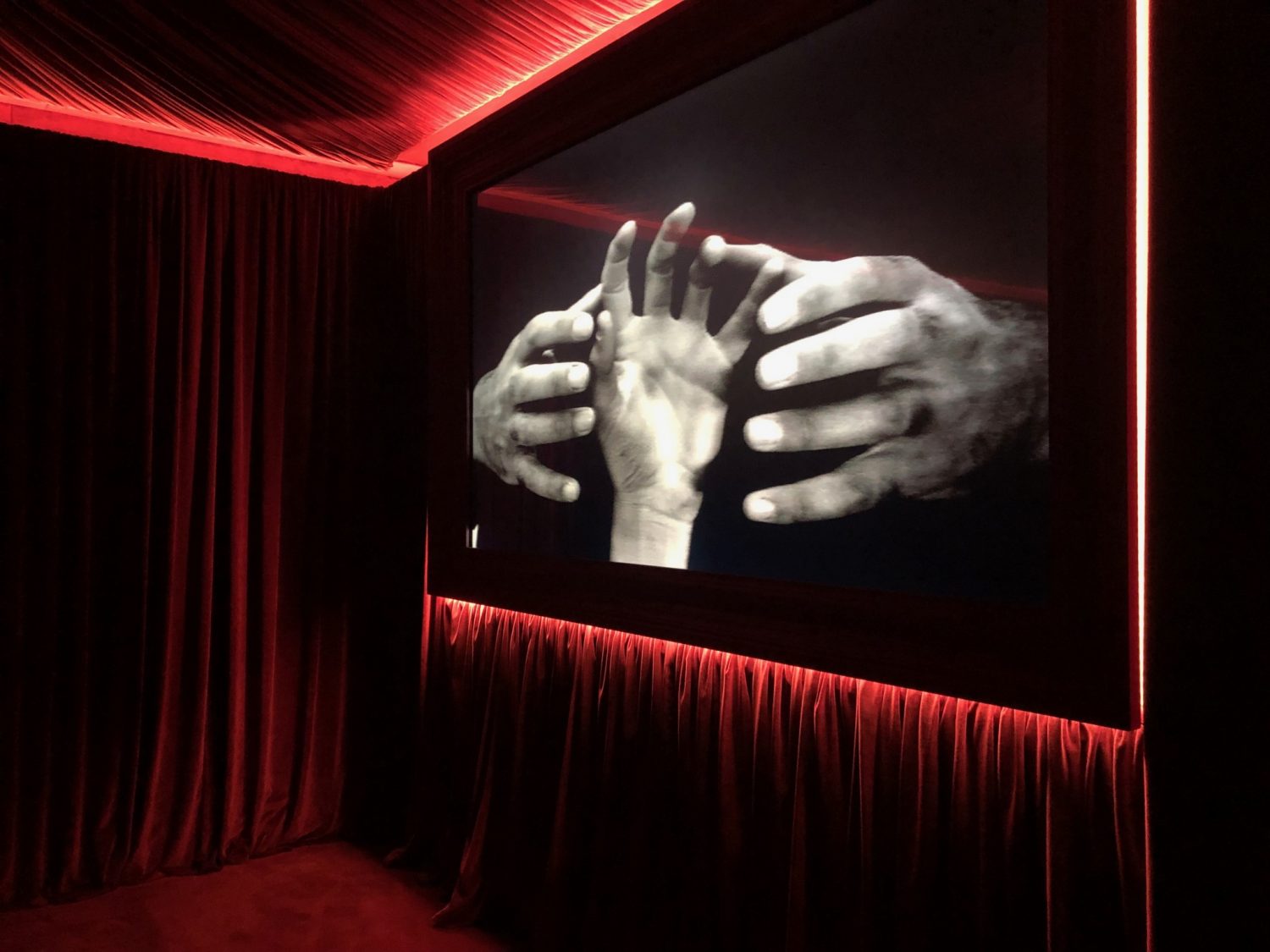
Ketty La Rocca used her own hands to open my eyes. For nine minutes and 30 seconds, there was no sound in a dark room with plush red-velvet walls. All I could see were large hands dancing between each other, telling a complex story using simple hand gestures without the need for verbal communication.
For this weekend’s L’eredita delle Donna Women’s Heritage Festival, “Appendice per una supplica,” or Appendix for a plea, by Italian artist Ketty La Rocca was available for public viewing at the Gucci Museum Oct. 4. Under the artistic direction of Italian celebrity Serena Dandini, Florence became “the city of women between meetings, readings, guided tours, previews and tributes to brave female personalities that in general have left for the progress of our society and therefore of humanity.”
Presented at the 1972 Venice Biennale, La Rocca’s video was the first of its kind for contemporary art made in Italy – and the first video made by a woman. For me, the video was difficult to watch with no sound or words on the screen to guide me. However, I did notice some interesting metaphors. The video begins with a pair of male and female hands, dancing together with palms touching and fingers intertwining, becoming more unified and intimate. Then, the male hands surrounded one female hand that moved stiffly and almost uncomfortably. To me, this symbolizes a metaphor of how women feel unrelaxed in the presence of male dominance. Finally, the sequence ended with only the male hand making counting gestures and strong motions, which told me the male has triumphed over the female. I learned that La Rocca’s work was influential to the visual poetry movement during the ‘60s and ‘70s, focusing on deeper reflections of human communication using videotapes and performance art. Her vision was to create a body-language, or a body turned into language. Other expressions of La Rocca’s art remain in museums across Tuscany and all over the world. A video of hands isn’t captivating for everyone, but this tribute to La Rocca and her influence on the art world was interesting to learn about, experience and appreciate.