By Rachel Santos
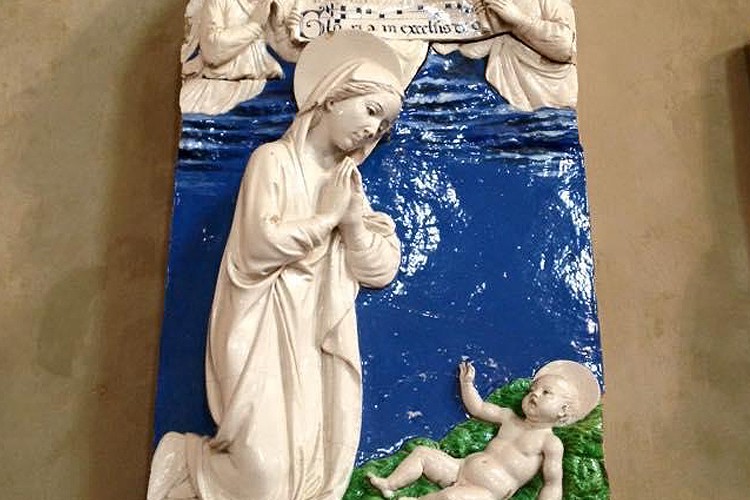
Ever run into gorgeous bursts of ceramic color in Florence or around Tuscany? Tinged with cobalt blue, intense yellow, verdant green, the glazed sculptures of the Della Robbia laboratory are entwined with the history of Florentine craftsmanship. Thanks to a class visit at the Bargello, Rachel Santos digs into the techniques of a family whose origins were documented in the 13th century and whose fortunes transformed in the 1400s when Luca Della Robbia, who trained as a sculptor alongside Donatello, discovered the glazed terracotta technique.
The distinct blue glazes used by the Della Robbia workshop instantly catch your eyes as you enter the first and second floors of the Bargello Museum. The Della Robbia family receives credit for being the first to use the glazed sculpture technique in hopes of creating more distinct and vibrant glazes. Although most known for their blue and white glazes, the Della Robbia family also used green and yellow hues to add even more color to their reliefs. The uniqueness of these glazes came from their chemical compositions; the Della Robbia altered the chemical balance of the glazes to include higher levels of tin and lead in order to increase the durability and opaqueness of the hues. Additionally, chemical studies lead artists and art historians to believe the famous blue glaze came from cobalt pigments. No one, however, can be sure, for these glaze formulas have been kept secret by the Della Robbia workshop. As a result of these special formulas, this family business flourished during the Renaissance, leading to great respectability and prosperity for the family. Be sure to visit the Bargello Museum to see their glazes, their pristine attention to detail and their masterful technique of relief work!
Bargello Museum
Via Proconsolo 4, Florence
Visit the museum website for hours and tickets.
Other places to check out Della Robbia work locally:
Museo dell’Opera del Duomo, Florence
Spedale degli Innocenti, Florence
Day trip ideas in Tuscany:
1. The Santuario della Verna is a medieval sanctuary in the countryside near Arezzo dedicated to Saint Francis that contains several important examples of the Della Robbia.
2. Pistoia is a town only a 35-minute train ride from Florence. You can check out Della Robbia works at San Giovanni Fuorcivitas (only 3d sculpture in existence) and the facade of the Duomo. Make sure to stroll around the town while you’re there.