Allergies, Ailments, and Ancient Pharmacies

 Photo by author

By Gregg Casazza

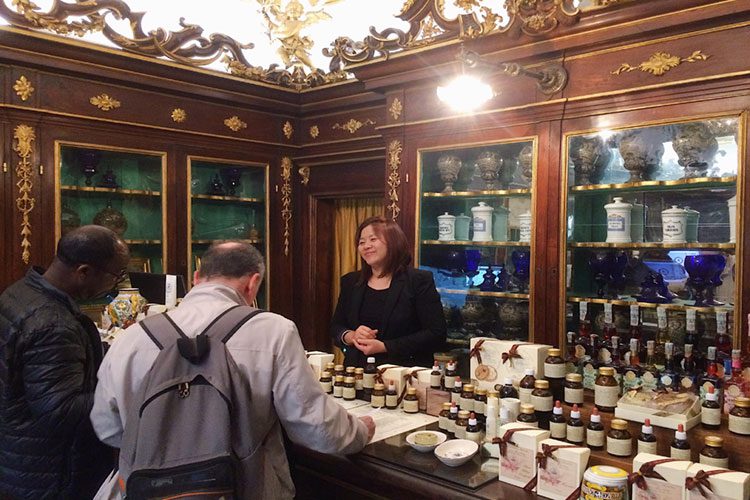
If the thin layer of yellow pollen that covers the city isn’t already enough of an indicator, allergy season is now upon us. Scratchy eyes, sore throats, and stuffy noses seem to plague the entire city. Thanks to the city’s storied past, you can now easily stop by the local farmacia to get the appropriate modern medicine for nearly any ailment. The history of Florence is forever tied with that of the ancient pharmacies, which housed herbal remedies for anything from heartache to the black plague. What is perhaps most astounding about these ancient places of healing is that many are still open and operating today!

The Officina Profumo Farmaceutica di Santa Maria Novella is frequently touristed, and for good reason. This farmacia is the “oldest historic pharmacy in the whole of Europe, active without interruption for almost 4 centuries” as well as, “one of the oldest commercial establishments ever,” according to their website. This establishment began as a convent, with Dominican friars preparing essences, elixirs, ointments, and balsams using high quality ingredients and recipes that can still be found displayed today. The pharmacy is now a luxurious shop, specializing in perfume, as well as a free “museum of tradition.”

Another lesser known farmacia is the Ancient Boar Pharmacy, or Antica Farmacia del Cinghiale. Looking at the earliest official documents, there are mentions that this farmacia dates back to 1752. However, it is believed that it is actually much older. Similar to that of Santa Maria Novella, the early pharmacists made their own remedies, and the first documented pharmacist working, Girolamo Nicolò Branchi della Torre, prepared his own remedies in his private laboratory. His contributions were so notable that he has been accredited with moving the science of healing past the “magic of alchemy” to the science of chemistry. These contributions were so widespread that the Grand Duke of Tuscany asked him to open the first School of Chemistry in Pisa in 1757.

Many ancient pharmacies make up the history of Florence. There is Farmacia SS. Annunziata, which is also still in operation as well, and has been in operation since roughly 1561. They continue to utilize older traditions of preparing products such as tooth paste, shaving lotion, products for hygiene, skin, and galenic prescription (the combination of multiple medecines to increase their potency.) While these ancient pharmacies have changed a great deal in the many centuries since their inception, they have stayed largely the same as well. They may no longer be run by the Dominican monks however, many of the same recipes and natural ingredients are still being used to create their products. These pharmacies might seem ancient, but in a lot of ways they are rather progressive as well by not using animal-testing for their products. Ancient pharmacies are part of Florence’s strong heritage, and with so many still open today, perhaps consider checking one out the next time you suffer from allergies.

See more of Florence and Italy at FUA’s FBInstagram, and Twitter.


An Exhibition With a View

Photo by author

By Samantha Bedell

Samantha Bedell shares her experience visiting Villa Bardini in Florence. Villa Bardini is located in the Bardini Gardens and currently exhibits one permanent and two temporary exhibitions.

Villa Bardini (not to be confused with the Bardini Museum, please learn from my misunderstanding) is on the “other side” of the Arno. Located in the Bardini Gardens, this building exhibits Pietro Annigoni, a variety of artists for the children’s show, and Kang Woongu. The Villa was abnormally quiet, but expected on a beautiful Florentine day. Walking through the space, the only other people I encountered were two security guards. It was quite relaxing to have two floors to myself.

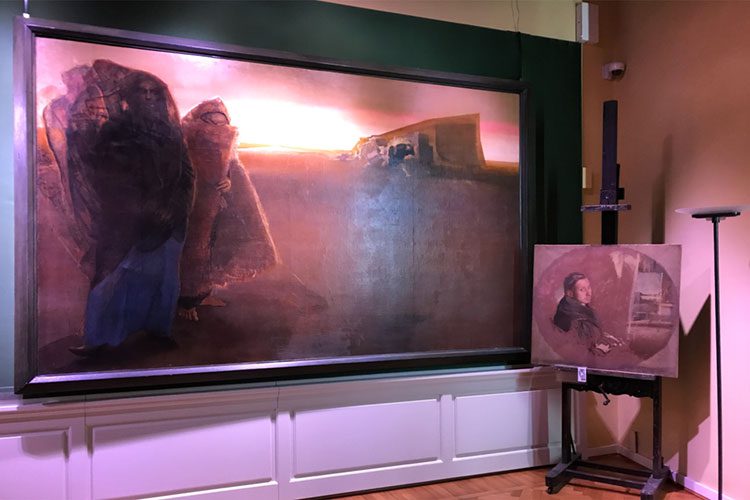
On the second floor is the Villa’s permanent exhibition by artist Pietro Annigoni. Housing many of his important works, its clear Annigoni focused much of his career on portraiture. Many of the portraits are larger than life and command the space. In the final room of Annigoni’s work, the viewer is greeted by a rather intimidating portrait of a man staring at the viewer. Behind the portrait are tattered dummies that look as if they’re simply lounging on the staircase. Personally, I found this room slightly uncomfortable, especially by myself.

The third floor displays two temporary exhibitions. The first exhibition Pinocchio Harry Potter Topolino Heidi e tutti gli altri… is seemingly aimed at children, but adults will equally enjoy the artworks. There are images inspired by Harry Potter, the Three Musketeers, and the Tortoise and the Hare. The dozens of works will remind anyone of their childhood. Down the hallway is the second temporary exhibition by Kang Woongu. The photographs were taken forty five years ago and highlight the lives of Koreans in every season before the country’s industrialization. Woongu‘s photographs provide an intimate look at a country that is completely different today.

Villa Bardini is open year round and opening hours are 10:00-19:00. The gardens are also open with varying times throughout the year. Both are absolutely worth visiting during the spring and summer when all the flowers in the garden are in bloom.

See more of Florence and Italy at FUA’s FBInstagram, and Twitter.

Esselunga Supermostra

Photo by author

By Samantha Bedell 

Samantha Bedell shares her experiences of visiting an Esselunga supermarket in Florence and the exhibition Esselunga Supermostra. Esselunga Supermostra details the rich history of the supermarket chain throughout the last sixty years.

Esselunga has been a part of Italian culture for sixty years. First established in Milan in 1957, and later introduced in Florence a few years later, this supermarket chain has been at the center of Italian culture since its inception.

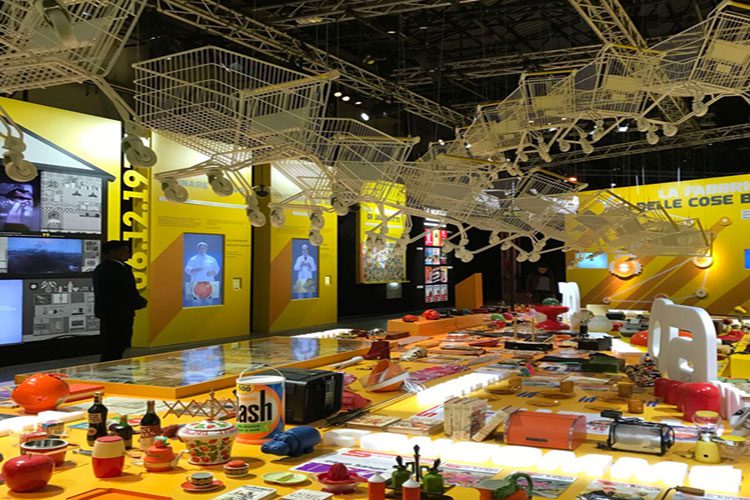
Esselunga on Via Masaccio in Florence is reminiscent of a typical supermarket. There are aisles of products like one may expect, but the charm of Esselunga is in the details. Looking up there are products hanging overhead that don’t necessarily correspond to the aisles below. For example, an aisle may have boxed cookies, but above are slippers in a plethora of sizes. Turning a corner, one may expect a display with fruits or vegetables, but in Esselunga there could be a display of popular novels. To understand Esselunga’s uniqueness, there needs to be a look back in time.

To celebrate Esselunga’s sixtieth anniversary, there is an exhibition titled Esselunga Supermostra at Stazione Leopolda. I will fully admit, I did not know what to expect at an exhibition about a supermarket chain.

Walking to the exhibition, you’re greeted by large iron gates and banners detailing the dates of the show. Security opens the door for visitors to enter and a few rows of cash registers from the fifties transports you back in time. Through a sweeping black curtain is another wall replicated to look as if it were the original 1957 entrance to an Esselunga. Once through the fringe, the visitor is taken back to the sixties and seventies. The walls are a bright yellow and the ceiling has a sculpture of grocery carts that lead the eye from one end of the room to the other. Below the sculpture is a large platform full of products Esselunga would have sold at the time and other items that were culturally relevant. Most of the walls are interactive to engage visitors of any age. One wall details where Esselunga has imported its products from while another lets visitors discover different recipes used by the supermarket.

The next room highlights the architecture of Esselunga and the eighties. The architecture of the chain is described in a series of models, watercolor paintings, and photographs. On a large yellow wall hangs items that are quintessential of the time like leg warmers, Rubik’s cubes, and Walkmans. At the center of the room is a “behind the scenes” of an Esselunga warehouse and a small dance floor complete with a disco ball, lights, and music.

The following room highlights the ad campaigns in the mid nineties. I have never seen a similar campaign full of whimsy. Each sculpture and poster in this room relies on taking the product it is featuring and turning it into something else. For example, one poster asks “mappamondo o melone?” and the image is of a honeydew melon shaped as if it were a globe. There are dozens of ads similar to this throughout the room, and each has the ability to make the viewer smile.

The next section of the exhibit stands out the most. Mirrors cover the ceiling and floor to mimic a kaleidoscope while a video plays on the walls. The videos that play take the visitor from the beginning to end of the production of some of Esselunga’s products like pasta and desserts.

The final room of Esselunga Supermostra wraps up the visitor’s experience by declaring the chain’s continued support for the arts and always providing convenience and the lowest prices for their customers. The exhibition ends with an actual Esselunga delivery truck that visitors can sit in for a selfie using #SuperMostra. While heading for the exit, visitors receive a keychain, commemorative shopping bag, and DVD to celebrate sixty years of Esselunga.

The exhibit is on view until April 21 and entry is free. The entirety of the exhibition is in Italian, but even if you don’t speak the language, I highly recommend visiting. Walking through the history of Esselunga makes you feel like a true Italian. I never thought the history of a supermarket chain could be as colorful or engaging.

See more of Florence and Italy at FUA’s FBInstagram, and Twitter.

Piazza Massimo d’Azeglio has my heart

Photo by Author

By Gregg Casazza

Piazza Massimo d’Azeglio is a small park just a short walk away from Santa Croce, and I am absolutely in love with it.

There is something truly magical about the parks in Florence. Perhaps it is the fact that you so seldom see grass in the ancient stone city, or the fact that when sunlight streams through the tall slender trees, golden light dances all around the square. The soothing refuge these parks offer from the hustle-and-bustle of the city is much appreciated, and not lost on me one bit. However, finding one of these hidden treasures can be very hard for a casual traveler, and often the parks that CAN be found are just as busy as the rest of the city. So I found it rather shocking that a place as serene and inviting as Piazza Massimo d’Azeglio was only a quick walk from the city center.

This park and its surrounding neighborhoods hardly feel like they are a part of the Historic Center of Florence, and if not for the map, I wouldn’t believe it myself. The park is nestled right next to Viale Antonio Gramsci, and the walls of the old city. D’Azeglio is the best of both worlds, an area that feels different from a city, and more like a small town that you would find in a remote village in Italy, but still very close to the center of Florence. As such there are numerous luxury brands, and expensive places to visit in this area as well, including the Four Seasons hotel and its ancient Renaissance garden.

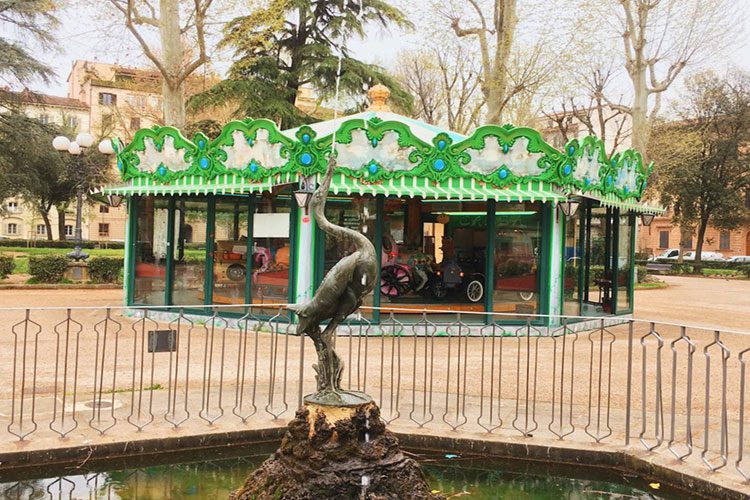
The neighborhood is a mixture of stately apartments, and small parks the likes of which stand in clear contrast to the rampant tourism and chaos of nearby areas such as Santa Croce and Palazzo Vecchio. Children run through the playground free of cares, like loose cannons running headlong past their friends who try to touch the sky on the swings. A group of boys play soccer, occasionally kicking their ball over the fence. Nobody goes to get it, they simply yell for their ball and wait, knowing one of the locals will happily assist. Near the center of the park is a beautiful carrousel. The small green ride lights up, and plays a cheerful tune which wafts through the air in the park, a few children go round and round, you can almost hear their smiles.

Most striking about the park however, is the community which uses the public space as their meeting grounds. Dog walkers stop to talk while their dogs play amongst each other, a daily activity for some. Older men stop to chat with their grocery bags stuffed with fresh produce bought from the nearby Sant Ambrogio market, or perhaps a delicious calzoni from Rocco. Couples sit on the benches, sharing an umbrella as they sit for hours, they wave to their friends and neighbours as they pass by on their bikes.

Named after Massimo Taparelli the Marquess of Azeglio (commonly called Massimo d’Azeglio) this park represents a lot for many people. D’Azeglio, who famously fought against the Austrians for Italian liberation, was also a prime minister and the leader of the movement that advocated an Italian national revival. His legacy is remembered in parks such as Piazza Massimo d’Azeglio.

There are so many places in Florence that are strikingly beautiful, but seem a bit hollow, like they lack the soul of the city. This is not true of Piazza Massimo d’Azeglio which seems utterly lived in, and yet still completely magical. I know that this park has my heart, and will have yours too.

See more of Florence and Italy at FUA’s FBInstagram, and Twitter.

The Artists Behind It All

By Molli A. Browne
All photos by the author

Photography student Molli A. Browne captures meaningful street art in Florence. 

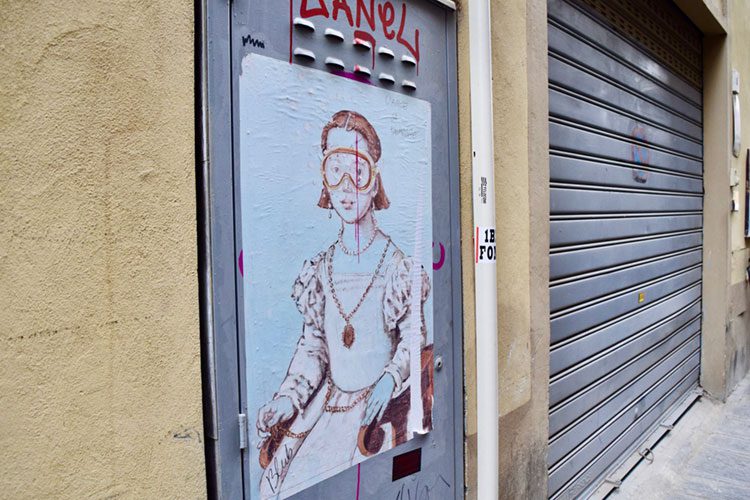
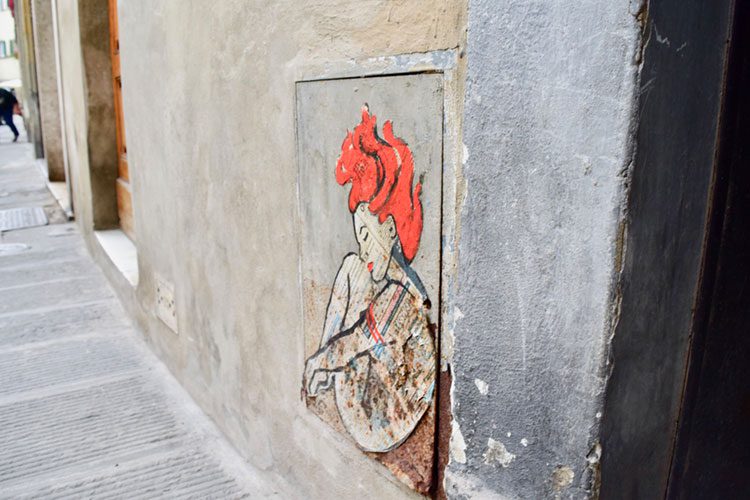
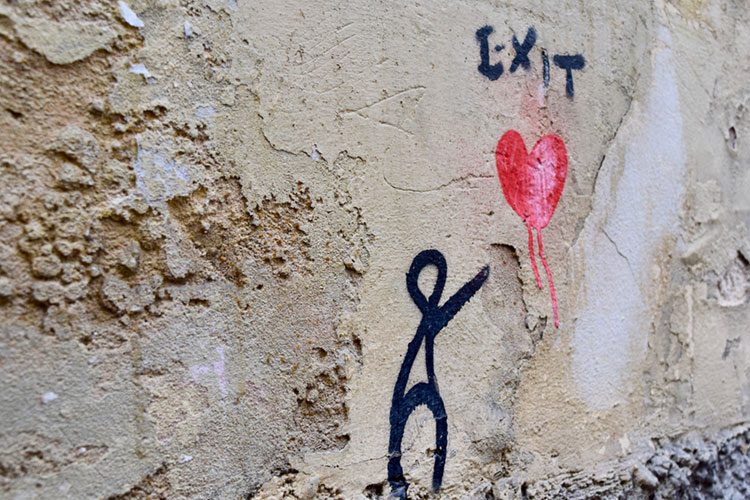
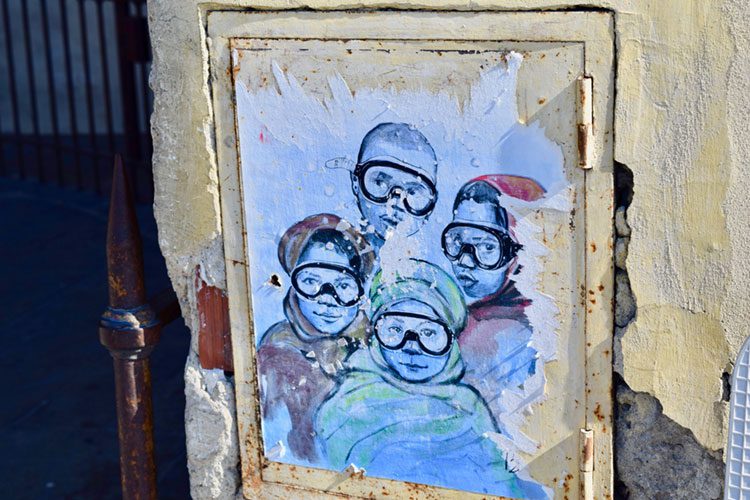
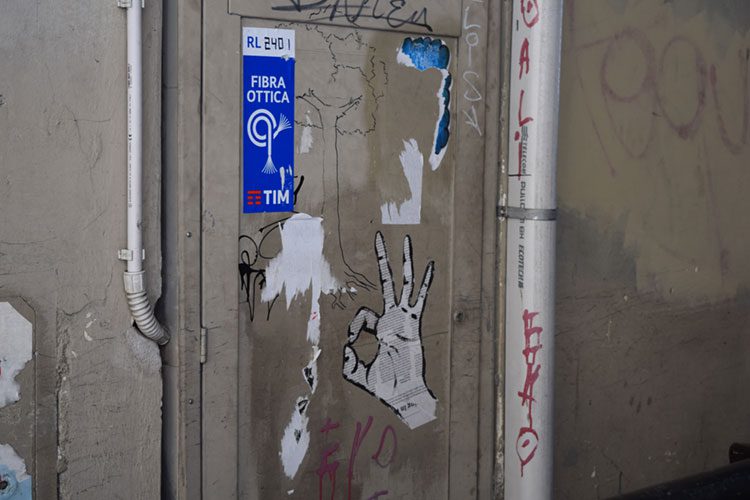
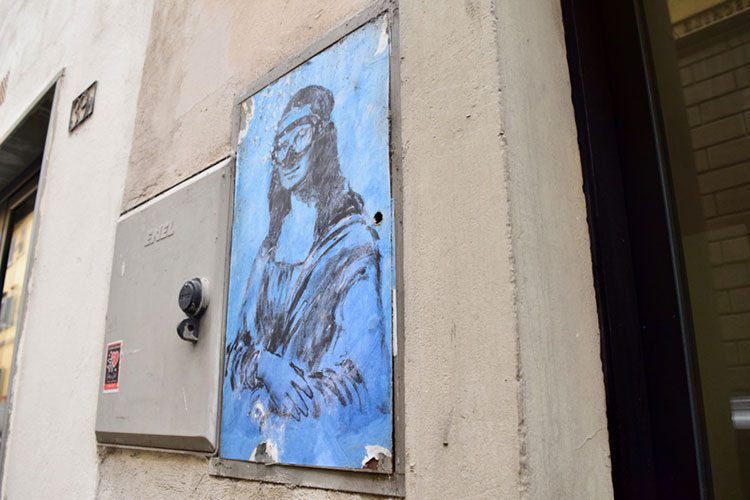
Dhai Studio located on Via di S. Niccolò is home to three of the most popular street artists in Florence. The studio is small in size but filled with inspiring and accessible art. At Dhai studio, you will find art by Blub, Enter/Exit, and Carla Bruttini. These are the artists behind the amazing street art that fills our city. Blub is known for creating underwater paintings, almost all of his figures having scuba masks on. His art is colourful, playful, and filled with imagination. Blub’s identity still remains unknown, which makes him and his art even more interesting. Next we have Enter/Exit, usually found right near or next to Blub’s work. Enter/Exit is most known for their colourful red balloons and small figures. Carla Bruttini is most popularly known for her painting on Via S. Niccolò of the woman with bright red hair. Carla Bruttini’s work symbolizes peace, power, and strength.

See more of Florence and Italy at FUA’s FBInstagram, and Twitter.

Cooking Like A Local

By Molli A. Browne
All photos by the author

Photography student Molli A. Browne shares her farm to table experience cooking like a local.

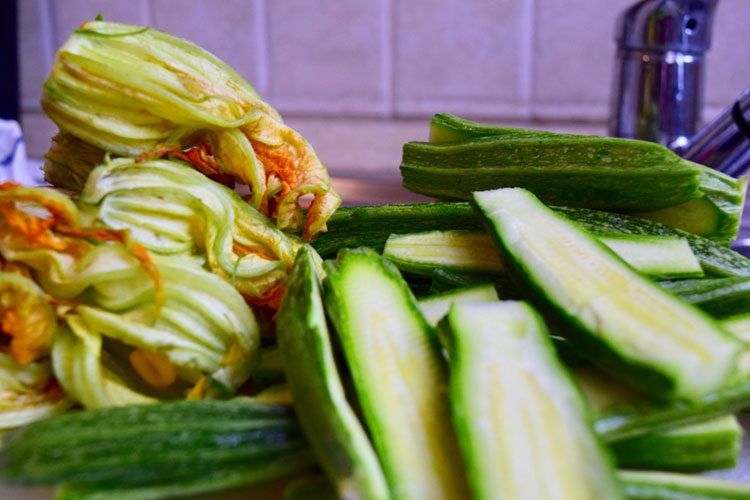
Spring has sprung in Florence and people from all over the world are coming to visit. The streets are crowded and the markets are filled with tourists, locals, and fresh seasonal vegetables. During my first couple of weeks here, I noticed that almost every dish I ordered had zucchini in it. I did my research and quickly realized zucchini is in season from late March to early September. I decided that I should go out on my own and cook a meal like a local. Of course, I had to use zucchini.

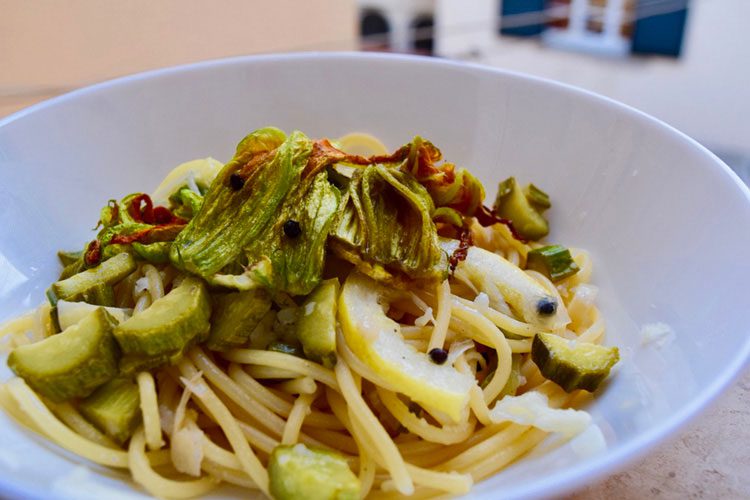
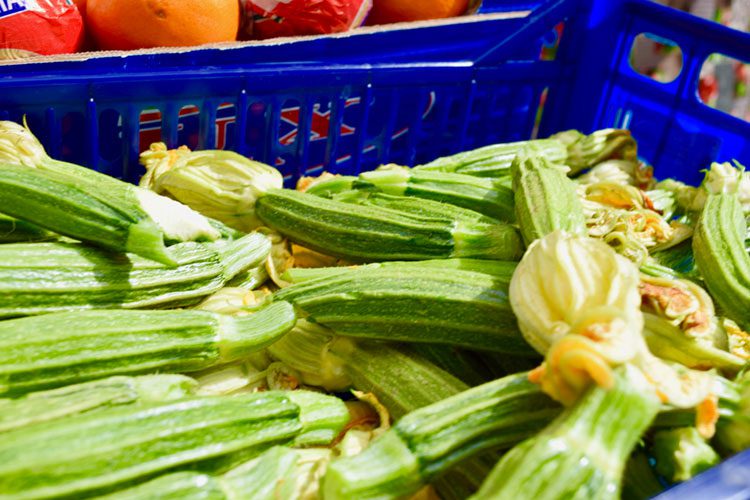
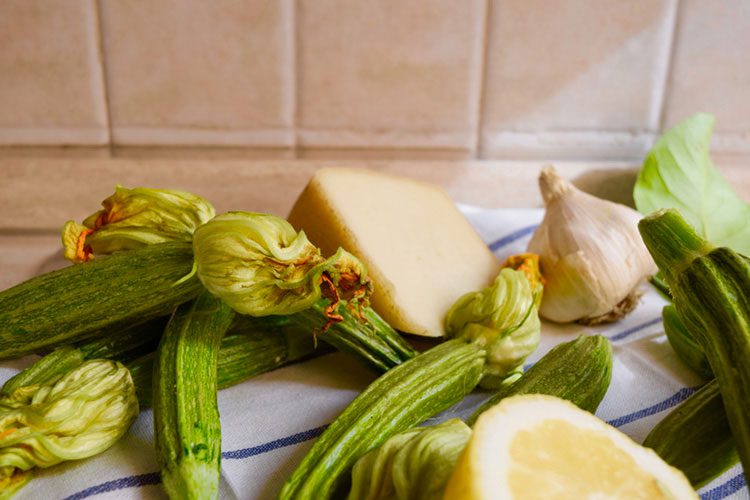
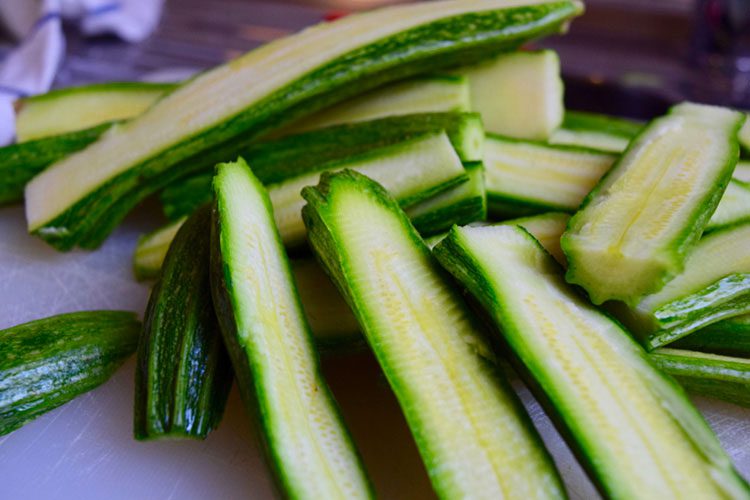
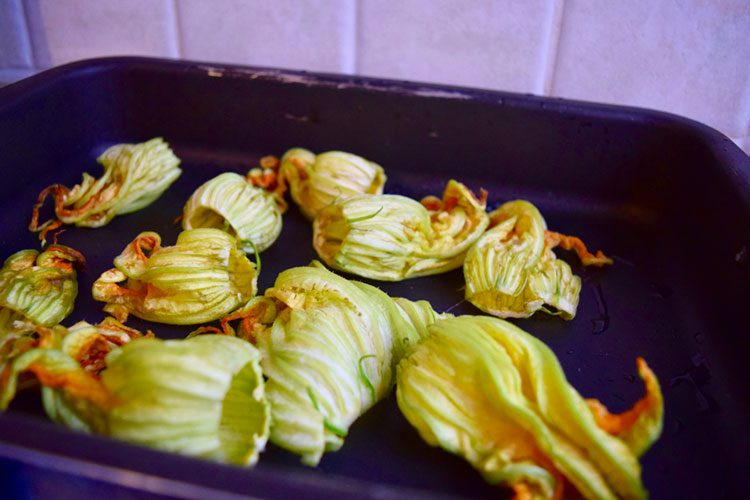
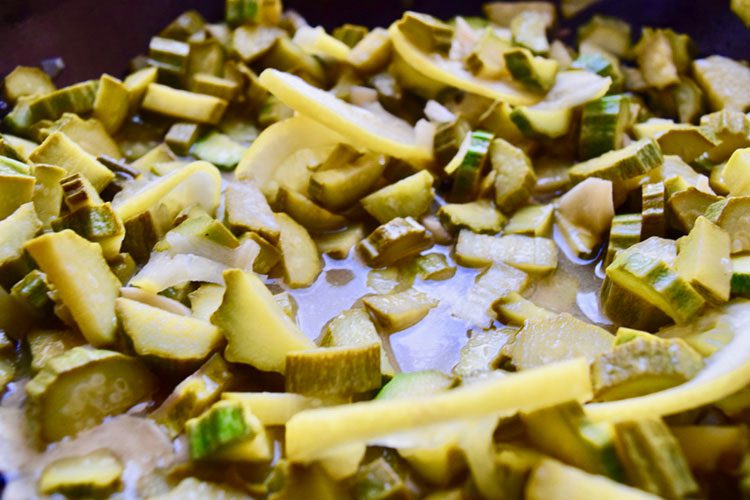
As I was walking home from class, I discovered a small fruit and vegetable stand at the end of Borgo Pinti. They had ample amounts of farm fresh zucchini for an incredible price. They also had fresh garlic, lemon and cheese. I used all of these ingredients to make my pasta dish. This dish is spaghetti in a lemon garlic white wine sauce topped with baked zucchini flowers.

See more of Florence and Italy at FUA’s FB, Instagram, and Twitter.
 

Via dei Malcontenti

Tabarnacle on Via dei Malcontenti

By Molli A. Browne
All photos by the author

Via dei Malcontenti is the street the Florentine prisoners would walk down before being excecuted. Via dei Malcontenti connects Via delle Casine to Piazza Piave. Today, the street consists of apartments, a church, and a school. During the day, the road is quiet and calming. The following set of images are what a prisoner would have seen walking down Via dei Malcontenti before the execution. 

Photography student Molli A. Browne imagines the final moments of a prisoner walking down Via dei Malcontenti.

My time has come.
My darkest day…
I pray for forgiveness, I pray for my sins.
My last chance.
Gone.

See more of Florence and Italy at FUA’s FB, Instagram, and Twitter.

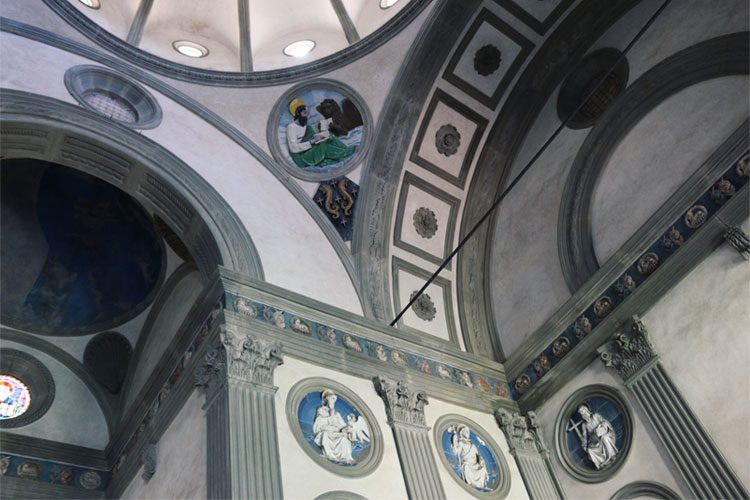
The Pazzi Chapel: Venturing into Santa Croce

Photo by the author

By Shelby Olson

If you venture further into the Santa Croce complex, you will come across many other monuments that hold much significance to early Florentine history such as the Pazzi Chapel. 

When staying in Florence, Santa Croce is a highly recommend spot to visit because it is beautiful but also has fascinating history behind it such as the tombs of the famous. When you enter Santa Croce, the first thing you see is a large church filled with sculptures, paintings, and stained glass windows that light up the room. When you head out of the church, you are met by a large garden and a series of cloisters. If you walk across the garden, this is where you will find the Pazzi Chapel which is not something to miss out on when visiting Santa Croce.

The Pazzi Chapel was commissioned by Andrea Pazzi and built by Filippo Brunelleschi. It was built to show the legacy of the Pazzi’s power and patronage, as well as to show off their wealth and status to the Medici family. Originally, the chapel was a learning area for the monks but also a burial place for the family.

The chapel is a very important project of Filippo Brunelleschi because it was built according to a specific architectural harmony, and he was able to achieve this after studying and measuring ancient buildings in Rome such as the Pantheon. The chapel was commissioned in 1429 and it was opened in 1443, during this time Brunelleschi had passed away and was not able to finish the chapel on his own. There were also many stops in construction throughout the years due to funding as well as conspiracies the Pazzi family made on the Medici family. In 1478, Giuliano de’Medici was killed and Lorenzo de’Medici wounded while attending mass at the Florence Cathedral. Needless to say, the family’s position swiftly fell after the attempted coup to topple the Medici.

Although Filippo Brunelleschi was not able to finish the chapel, he holds much significance within it because of his perspective and ingenuity. Brunelleschi’s works are not limited to the Pazzi Chapel as he had worked on the Florence Cathedral of Santa Maria del Fiore and its famed Dome, the Basilica di San Lorenzo, the Ospedale degli Innocenti and much more. Filippo Brunelleschi is buried inside the Florence Cathedral and continues to be an important part of the city’s history.

Inside the chapel, there are many beautiful works of art created by different Florentine artists. The relief, a raised sculpture representing Saint Andrew, was created by Luca della Robbia. Della Robbia also created the rounds with the apostles and decorated the central dome with sculptures and two paired dolphins. The stained glass window representing the figure of Saint Andrews was drawn by Alesso Baldovinetti.

The Pazzi Chapel is a simple yet elegant chapel. Although the interior colors are dim, the stained glass windows and colors of the paintings light up the room. Not only is the chapel full of history that dates back centuries, but it is a beautiful work of art and architecture that is worth seeing when visiting Santa Croce.

How to Visit:

Basilica di Santa Croce, Piazza S. Croce, 16, 50122 Firenze
Monday-Saturday 9:30AM to 5PM
Sunday 2PM to 5PM
Tickets: €8

Live Music in Florence

Photo by the author

By Shelby Olson

Visiting local music venues throughout Florence is a great way to experience a new form of art as well as the city nightlife. I had the chance to check out three venues in Florence that accommodate to many different styles.  

If you are looking to experience a different form of art in the city, Florence has many live music venues that can accommodate to your style whether that be upbeat, laid back, or a classic feel. I took a look at a few different live music venues throughout the city and had the chance to experience a different side of the nightlife in Florence.

Jazz Club is a great place if you are looking for an upbeat bar full of live music and dancing. They are open late and offer a food menu along with a large selection of drinks. Jazz Club hosts Italian artists and occasionally international artists, and concerts don’t start until later in the evening. The music genre is typically jazz but depends on the band playing and the shows have a very intimate feel. To get into the club, you can purchase a member card at the door for 6 euros (includes a beverage), and you’ll use the card for subsequent visits.

Libreria La Cité is a small cafe and library that hosts live music at night and they occasionally have events on various nights of the week. This is a neat place to check out if you are looking for a relaxing night filled with drinks, books, and music. I had the chance to visit La Cité during the evening and came across a lot of people sitting down with a book and coffee before the music started. The building is not too big but it is packed with bookshelves and even has an upstairs area with comfortable seating. I would definitely go back to this place whether it be for a coffee and book or to listen to music.

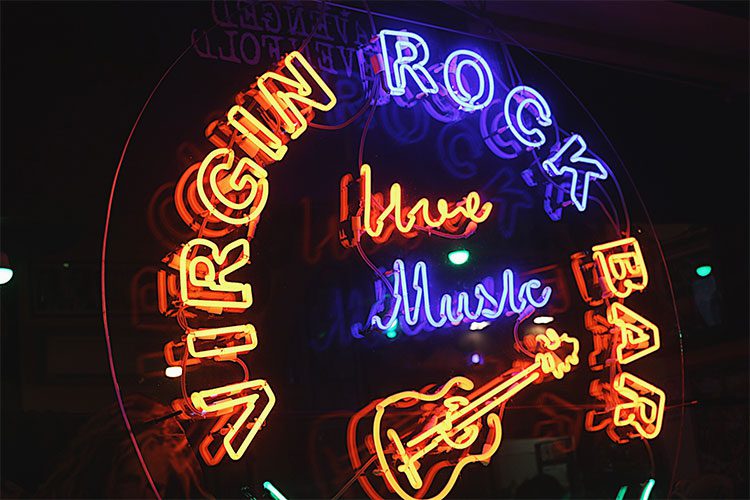
The Virgin Rock Pub is well-known for friendly service, rock music, and a great selection of food and drinks. It hosts events on the weekends with live music and aperitivo. The Virgin Rock Pub also has outdoor seating if you want to enjoy the music while still experiencing Florence’s beautiful weather during the summer. I had the opportunity to attend the Virgin Rock Pub during one of their events and it was a neat experience. The space is small but is decorated with old rock memorabilia, drum symbols turned into lights, posters, and paintings. After 10 o’clock, a band played classic rock music while everyone crowded in to listen.

There are many wonderful places in the city that can accommodate to your style. I recommend visiting these music venues during your time in Florence because it gives you a different taste of Florence at night. Try starting out with these spots and definitely venture out to explore the many music venues to check out while living in Florence.

How to Visit:

Jazz Club: Via Nuova de’ Caccini, 3, 50100 Firenze
Closed Monday, Friday-Saturday 11PM-4AM, other days 11PM-3AM

Libreria La Cite: Borgo S. Frediano, 20/r, 50124 Firenze

Virgin Rock Pub: Via dell’Agnolo, 76, 50122 Firenze
Open everyday 3PM-3AM

See more of Florence at FUA’s FBInstagram, and Twitter.


Buy Fresh Buy Local

Photo by the author

By Shelby Olson 

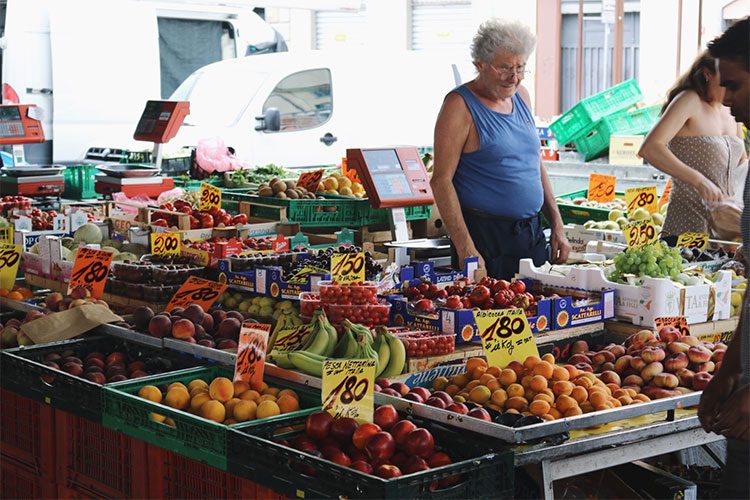
The Sant’Ambrogio Market is an indoor and outdoor market filled with fresh meat, fish, fruits, and vegetables and is a great place to do your weekly grocery shopping if you want to shop locally, inexpensively, and keep up with what is in season this month.

There are many great supermarkets throughout Florence to buy fruits, vegetables, meat, and fish, but you are not always sure where your products are sourced considering supermarkets worldwide favor industrialized products. Luckily, Florence is home to a lot of great local markets that sell all these products that are guaranteed fresh, inexpensive, and locally sourced.

One of the most important things to know when visiting a local market is, what is in season and what is not. During the month of July you can find many fresh fruits and vegetables to add to your pantry. The fruits in season for the month of July are apricots, blackberries, cherries, figs, loquats, melons, nectarines, raspberries, plums, strawberries, and watermelon. The vegetables in season for the month of July are aubergine, arugula (rocket), basil, garlic, lettuce, spanish, swiss chard, turnip greens, beans, carrots, cucumber, fennel, green beans, mint, peas, taccole green beans, tomato, and zucchini.

FUA’s Italian language faculty, Francesca Peruzzi, recommends the Sant’Ambrogio Market because all of the products are fresh and prices are cheaper than most especially when shopping for six people. Francesca goes to Sant’Ambrogio once a week and here’s what she shared when I asked her what’s usually inside her grocery bag:
• Proteins: meat, fish
• Grains and vegetables: bread, carrots, salad, chou, spinach, zucchini
• Fruit: apples, bananas, apricots

I recently had the chance to visit the Sant’Ambrogio Market and after prior research on what is in season, I could tell that Florence takes pride in selling the most fresh and seasonal fruits and vegetables possible. The inside of the market is packed with meat, fish, and bread vendors and the outside of the market is home to the fruit and vegetable vendors. As I was walking around, I decided to purchase apples from a fruit vendor and was astonished that not only were they cheap, but the taste was incredible. In the summer, my favorite thing to eat is a large bowl with an assortment of different fruits. With the fresh produce I found at the market, I am excited to make my favorite summer meal and make Florence feel more like home.

After my visit, I decided that you cannot beat cheap prices and fresh items and that this would be my new stop to get groceries for the last few weeks I have in Florence.

How to Visit:

Sant’Ambrogio Market: Piazza Lorenzo Ghiberti, 50122 Firenze
Monday-Saturday 7AM-2PM

See more of Florence at FUA’s FBInstagram, and Twitter.