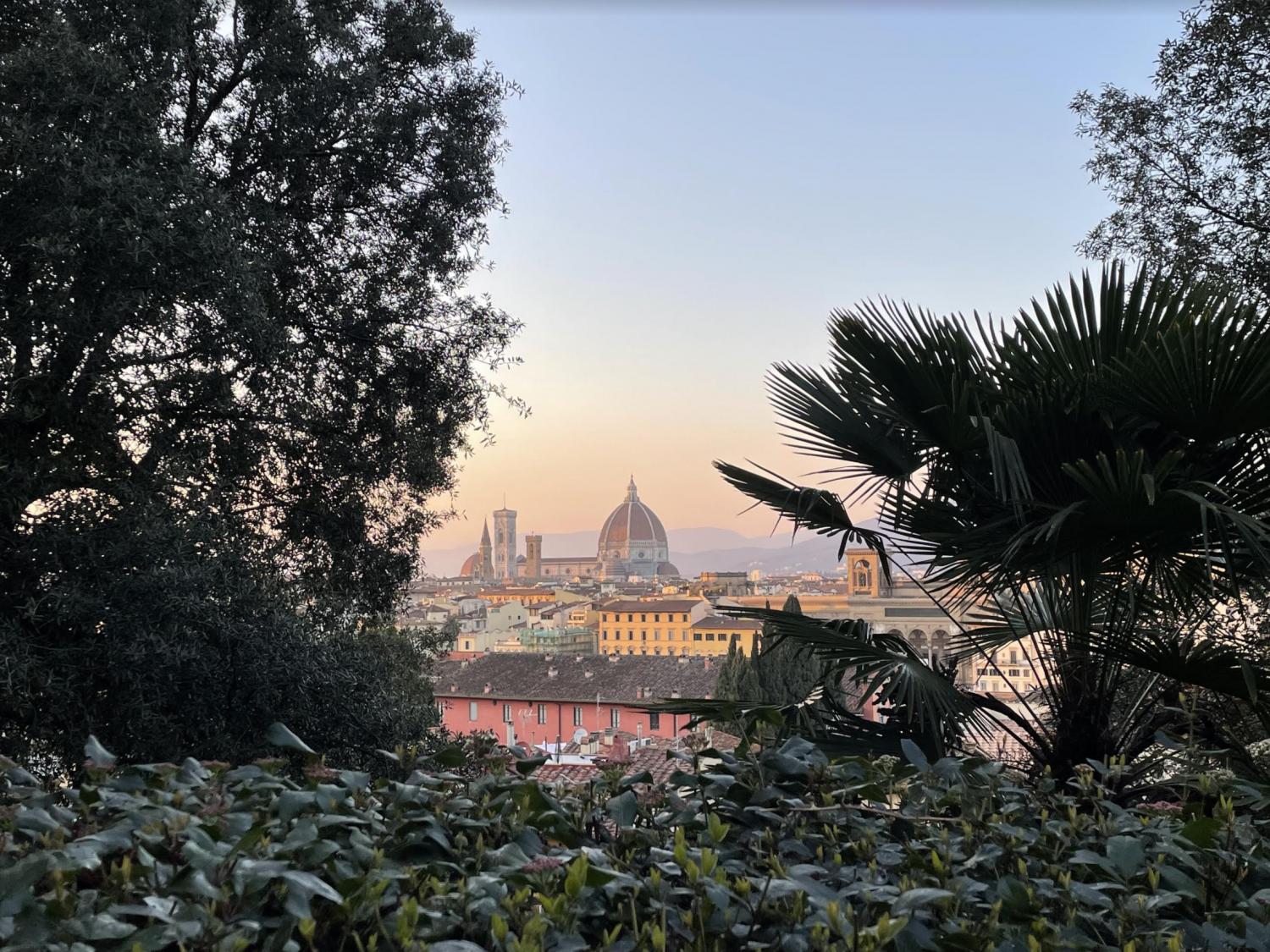
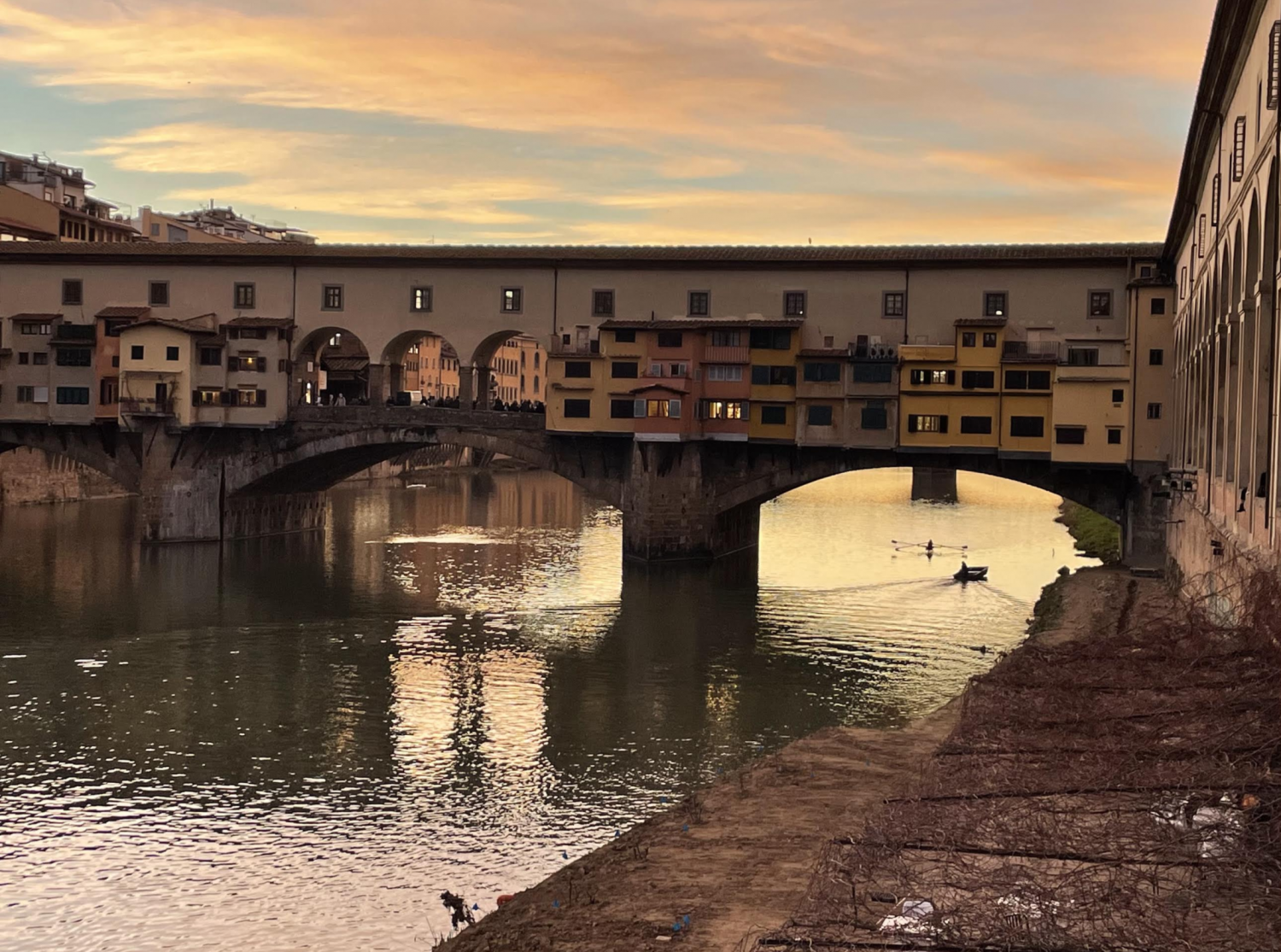
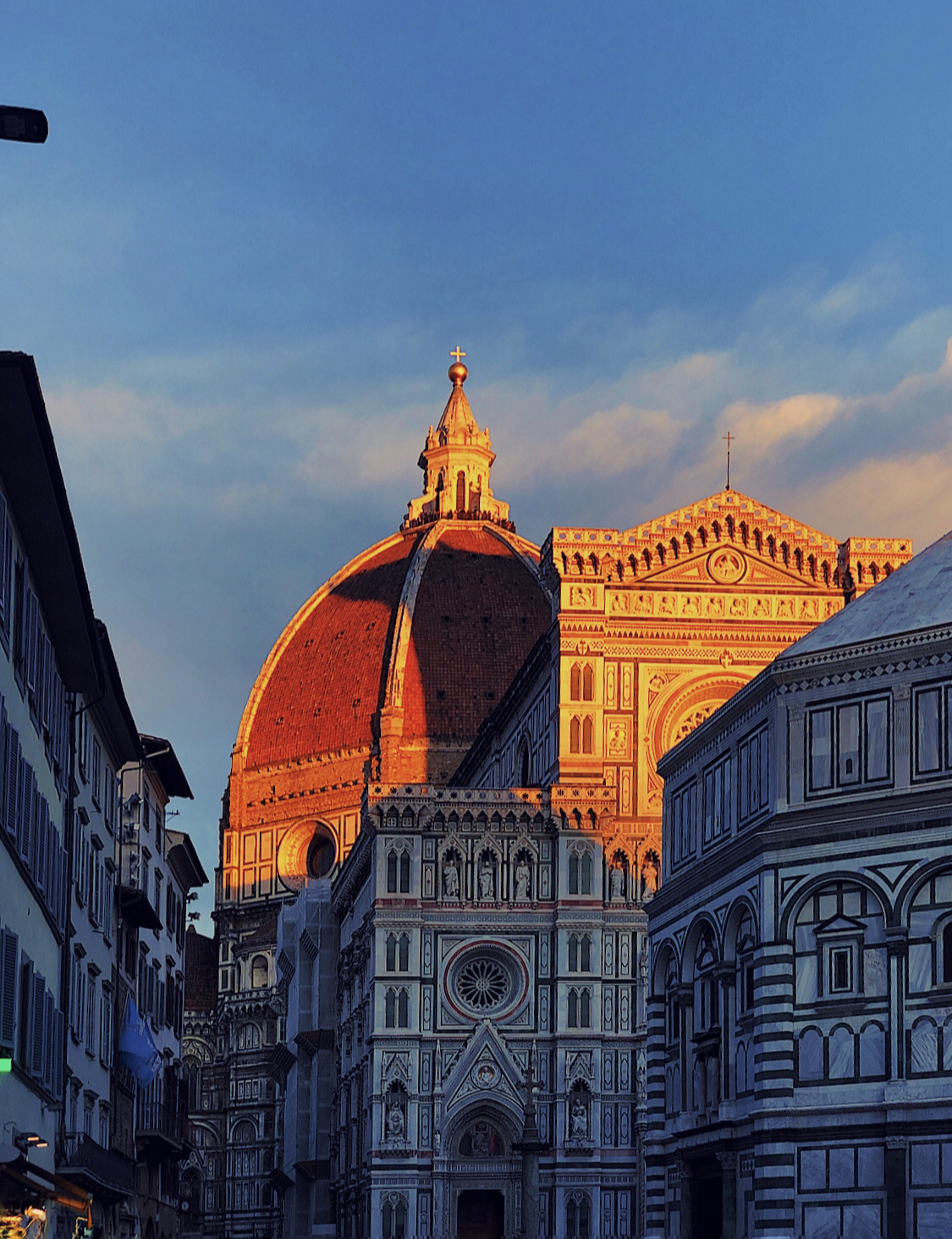
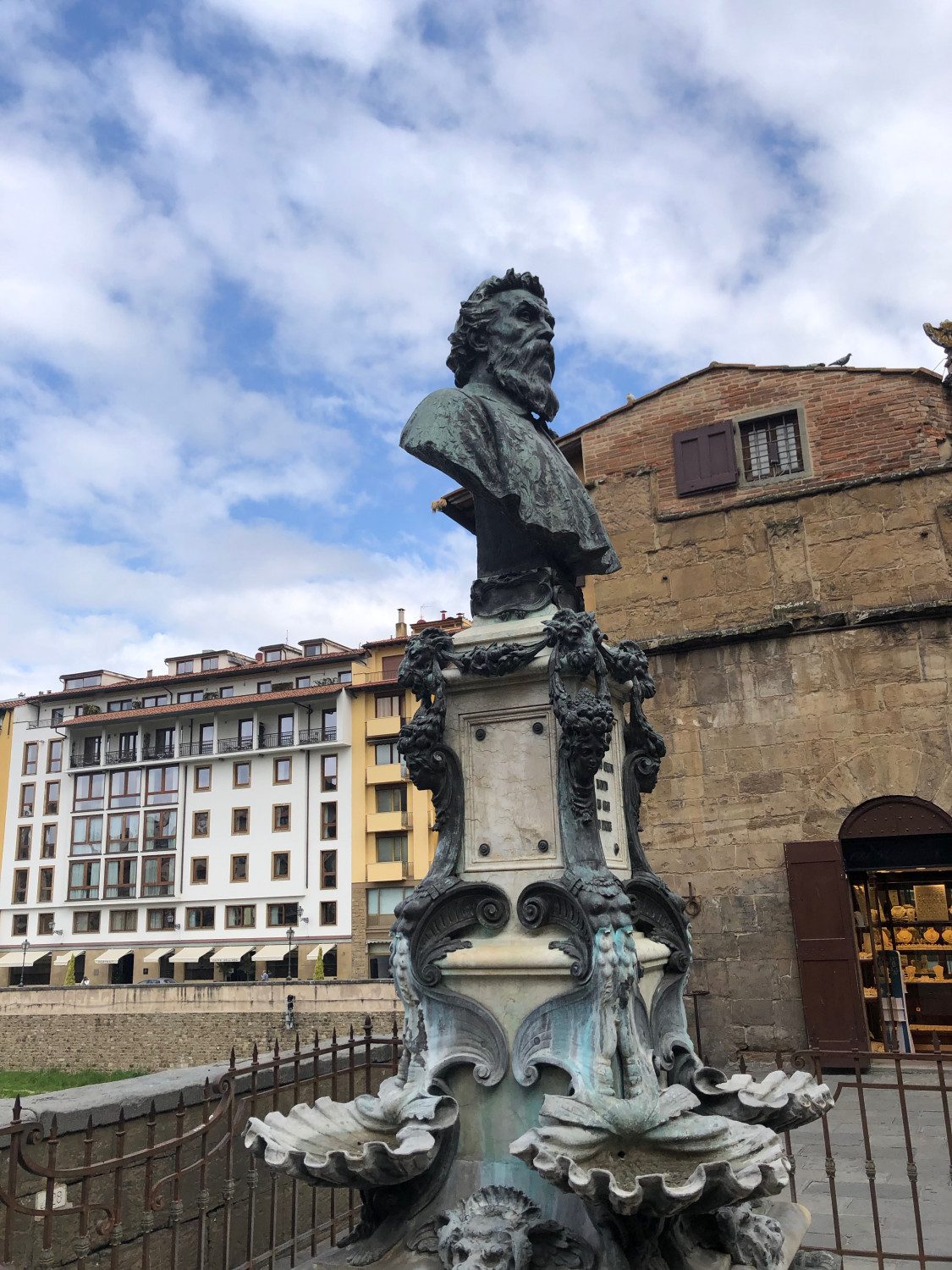
After a brief time spent in Florence, I would like to share with you my experiences so far. I visited several places that are not difficult to reach and are worth visiting. I tried to find places with the most incredible views in this breathing city full of history. This article may help you to avoid the busy places and experience the ‘non-tourist’ atmosphere of the city. Everybody knows that Piazza Michelangelo is one of the most famous places in Florence with beautiful views, but there are also various places with exceptionally spectacular views as well, that you must see. I have chosen 3 places that are quite unknown and unique.
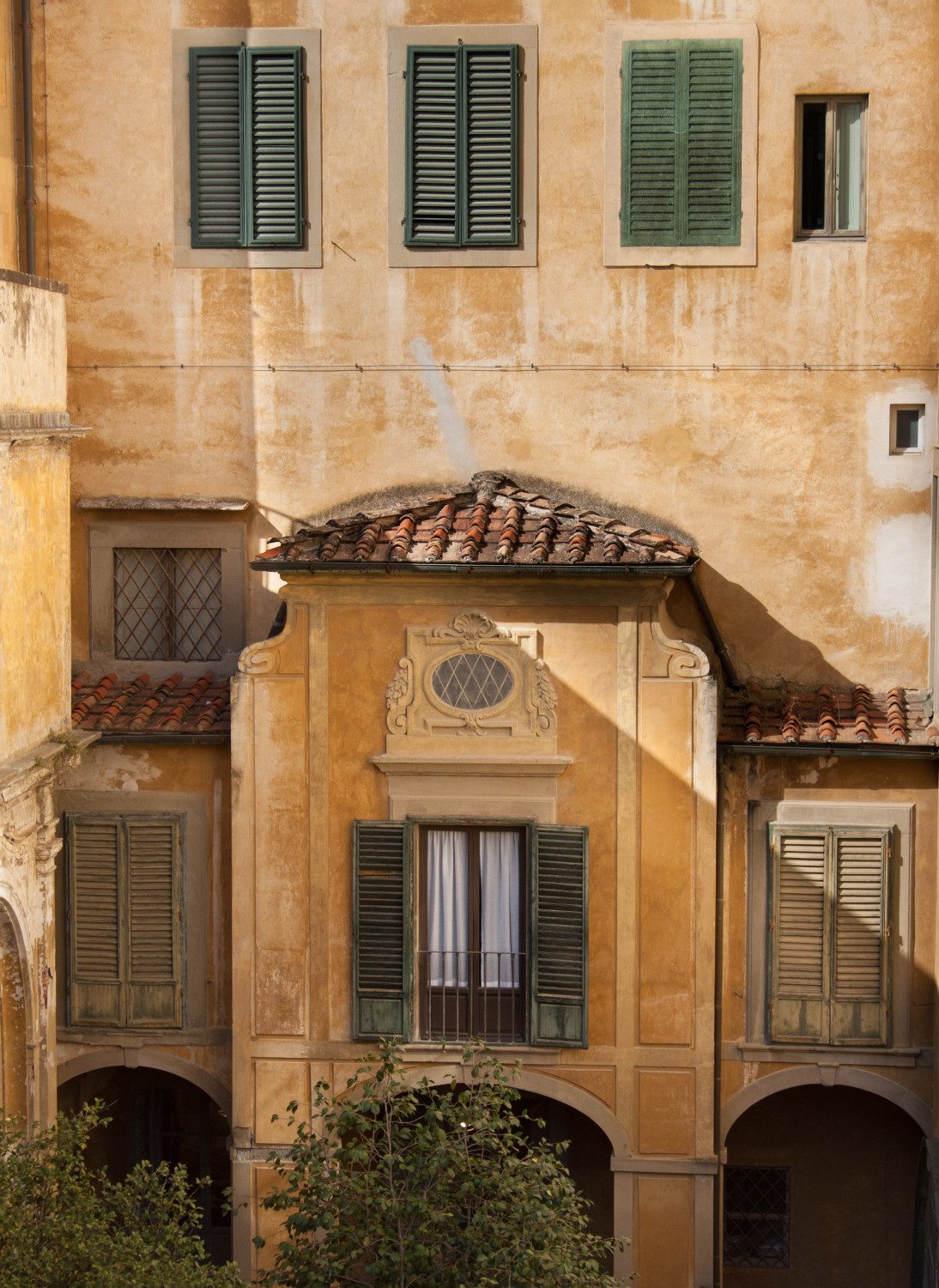
I was first introduced to the Tuscan colour palette accidentally. Having noticed me meticulously editing a picture of my home city, my high school photography teacher approached my desk. With great confidence in his voice, he stated ‘you would like living in Italy’. Without further elaboration, I was baffled at the comment. However, he continued to explain that I had edited the colour scheme of the photo to enhance the warm yellow ochres and oranges, inevitably resembling the buildings of Italy, Florence in particular. Somehow, I had managed to transform the dismal rooftops of Birmingham into a place of radiance and beauty. The infamous city, which some would say to avoid, had lost its cloak of grey, bleak concrete and gained a golden tan. I had made it look inviting.
Florence is a city overflowing with a wealth of historical sites and beauty. When visiting the city, tourists often want to see the city’s gems: the Duomo, art galleries, old palaces and classic restaurants.
One of my favorite aspects of Florence is its walkability, the proximity of everything. At the end of a long day in Florence, I’ll settle into my apartment and check my Fitbit watch: “30,000+” reads my step count. And that’s not just one day, but many days since I’ve arrived in the city. I am enamoured with the Florentine lifestyle, but a feeling of stress has encroached on my daily life. It is the sense of fleeting time. The feeling that I won’t see every corner of the city before I leave in May.
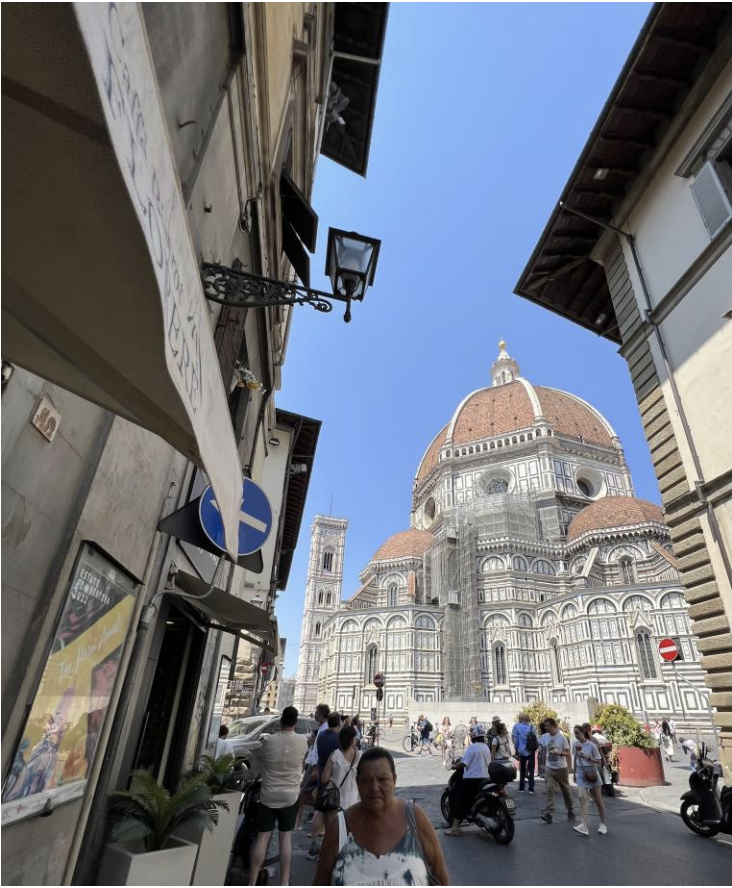
When I recall my first visit to Florence in January of 2012, there were only three main locations I thought the entire city consisted of. These included: the Duomo in all its wonder and mystique, Via Ricasoli, where my family’s bright Airbnb sat above the street, and Gusta Pizza, across the Arno.
Of course, when I was 11 years old, I knew that the city was bigger. But after our trip, the memories that stuck out were of these places. Why? Maybe because memory is always fragmented, especially at a young age. Perhaps I’m more likely to remember eating pizza in Italy at age 11 than I am to remember seeing the statue of David for the first time.
Looking back on this trip, there are very few memories of walking to and from these different locations. I figured that Via Ricasoli, which leads to the Duomo, was the only street we had been walking down each day. In my mind, we got crepes on Via Ricasoli, gelato, paninis, and pizza. Perhaps my prepubescent brain couldn’t handle the idea that nearly every street in Florence looks like Via Ricasoli.
Ten years have passed since my first visit to Florence. In those ten years, I’ve reinvented myself time and time again to reach the version of myself that now walks Via Ricasoli to attend class everyday. In the span of 10 years, I endured an adolescence of strict rules, good grades, and strong friendships. As a college student, I meandered through three years of studies, internships, and career development in college. But all the while, my sense of wanderlust was growing, lurking in the back of my mind.
My family returned to Italy in 2016 and celebrated the new year in Rome, but with the dense crowds and cold tourist-filled streets, I was saddened that our itinerary didn’t include a visit to vibrant Florence. It was only after we returned home that I had a new sense of my future. Suddenly, my primary goal was to return to Florence. I wanted to be a worldly, well-traveled person. I wanted to not just vacation in Italy, but understand the culture and customs.
When I started college in the U.S., I registered for Italian courses and began to learn the language. Soon, my favorite class was Italian. I studied hard, and declared an Italian Studies minor. I worked my way through Italian language and film courses. I was working toward a semester abroad in Florence. Throughout those years, those fragmented memories of the city drifted in and out of my consciousness.
But they came flooding back when my housemates and I walked from our apartment with fresco-covered ceilings to the Duomo in February. I was bigger than I was when I first saw it at 11, but the dome was even bigger. It was as if Florence had expanded while I was gone. But now, as I turn increasingly familiar corners on my way home from the grocery store, it feels small. Now, my memories are overlaid with new ones.
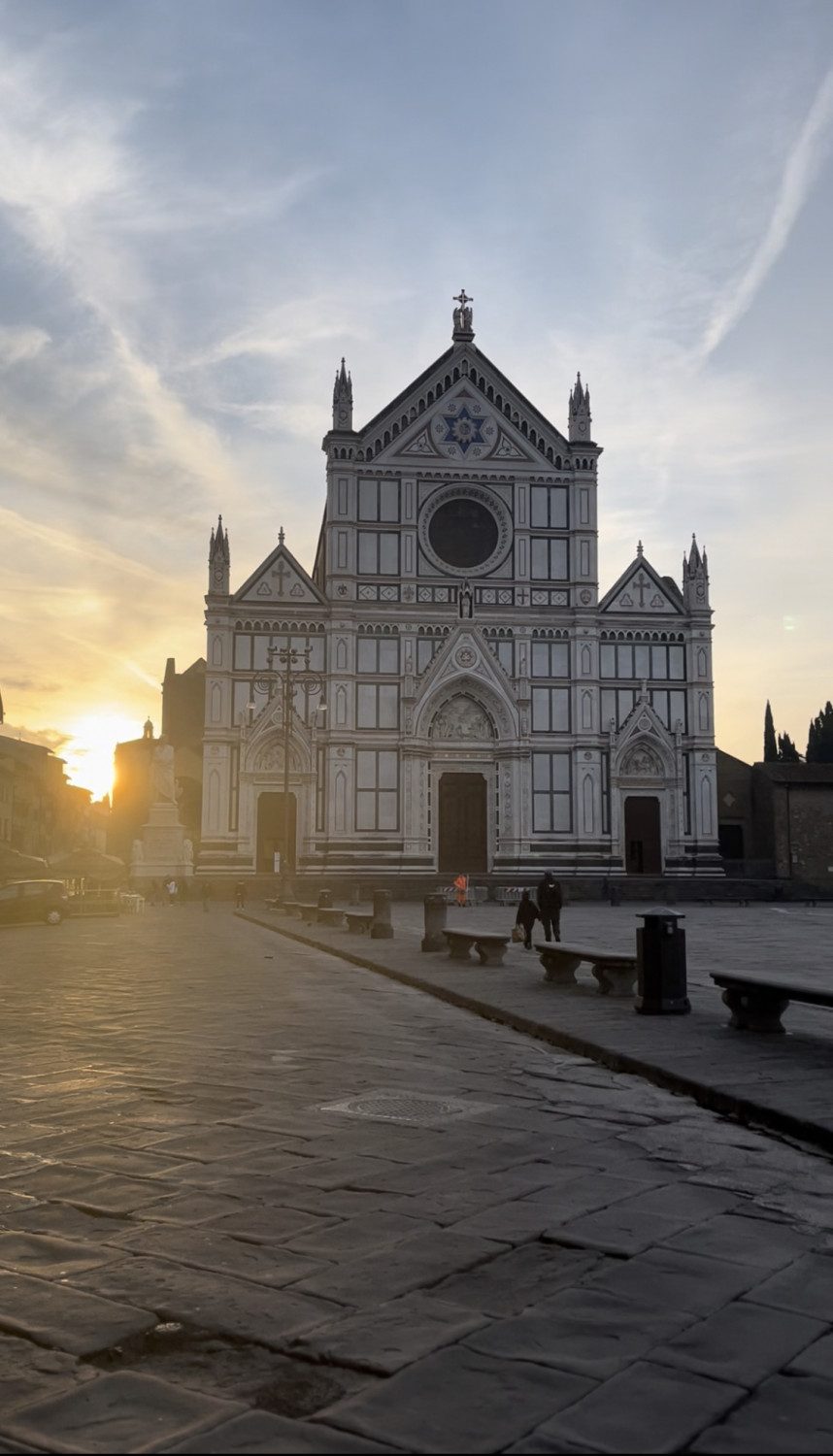
On sunny days, I’ll chase the sun through the piazzas, and one moment, find myself in Piazza della Signoria, the next on a bench in Santa Croce, people-watching. I’ll run into a friend and we’ll chat for hours in the sun. From my young eyes, Florence was the city of uneven cobblestone streets and chocolate crepes. But even in the cold winter months when the people of Florence were bundled up in trenchcoats, Florence smiled at me with its warm yellow and tan buildings and hazy blue skies. It seems that as my memories of the city expand and contract in my brain, not much has really changed after all.
Via Ricasoli, the Duomo, and Gusta Pizza are right where I left them. Now in my memory are the streets that connect them, every gelateria along the way. Places where new memories are taking shape. By the end of my stay, I hope to create a mosaic of memories, new and old, of my favorite city in the world.
To truly immerse yourself in the Florentine culture as a study abroad student, use these common Italian phrases to order your meals at local restaurants.
Down any street, you are bound to find multiple restaurants serving an array of the most. As the heart of Italian culture and food, Florence has a little something for everyone. As the heart of Italian culture and food, Florence has a little something for everyone. Down any street, you are bound to find multiple restaurants serving an array of the most delicious Italian meals, like Bistecca alla Fiorentina or Tagliatelle al Tartufo. Wafting smells of warm bread and truffle will draw you into the restaurant from the street, but the quality of each dish will bring you back to your new favorite find again.
The charm of each trattoria, osteria and ristorante in Florence is the friendliness of its employees, who will greet you with a smile and a ‘ciao’ every time. The immediate warmth that radiates off any Italian you meet is what makes Florence a truly special place for those of us that are lucky enough to study here for a semester or longer.
This never-ending kindness translates into a strong desire to provide you with the best dining experience possible, which is occasionally expressed by a complimentary appetizer or dessert. This also means that upon realizing you may be foreign, most Italians will switch to speaking English to make sure you are comfortable. I encourage you not to default to English, and instead try your hand at some basic Italian to reciprocate the kindness you’ve received.
When you first walk into a restaurant, mirror the body language and speech of the
employee who greets you, most likely responding to their hello with a smile and a ‘Ciao’ of your own. A smile transcends all language barriers and can get you a lot farther than you may think.
Don’t forget that ‘Ciao’ is used for “hello” and also “goodbye”.
To ask for a table, all you need to say is:
“Un tavolo per…” followed by the number of people in your party. If you’ve taken a romance
language class before, you may recognize similarities in the pronunciation of numbers in Italian with one being uno, two being due, three being tre, four being quattro, five being cinque and so on.
After being seated, the real test is not deciphering the Italian menu but ordering your
meal. Luckily, there are two phrases that will help you order with ease. The simplest is saying “Vorrei…” before whichever dish you’ve selected, which translates to “I would like”.
The other, more advanced phrase is to ask “can I please have?” by pairing “Posso avere…” with the meal you want and then ending the phrase with “per favore?” (please).
Water isn’t automatically given to each table at restaurants here, so you can ask for “acqua naturale” for still water or “acqua frizzante” for sparkling water. Asking for “more” is easy with the word “ancora”. The word “basta” can be used to tell your waiter that’s “enough” when beverages are being poured. If you want to ask for an item you don’t see on the menu, I would recommend using “avete…” and then describing the dish in question.
At the end of the meal, make sure to ask for the check when you are ready to go by using
the Italian translation: “il conto”. If you happen to have leftovers you’d love to have again the next day, you can ask to take a box home by requesting “da portare via” to your waiter. As you leave, make sure to say “thank you” by pronouncing “grazie” the correct way as grà·zie, making sure to annunciate the ‘eh’ at the end.
Other phrases you may hear or find useful in your conversations, include “prego” which means “you’re welcome”. If you bump into someone accidentally on the street, “excuse me” translates to “scusa”. You can also express that you’re sorry by saying “mi dispiace”.
When I’ve been asked for directions or something else I don’t have an answer for, I like to use “non lo so” to tell them “I don’t know.”
I hope this helps you the next time you order a drink at a bar, grab fresh produce at a
mercato, or a meal at the little trattoria tucked into the corner of your street. Good luck and make sure to pass along any great Florence finds!
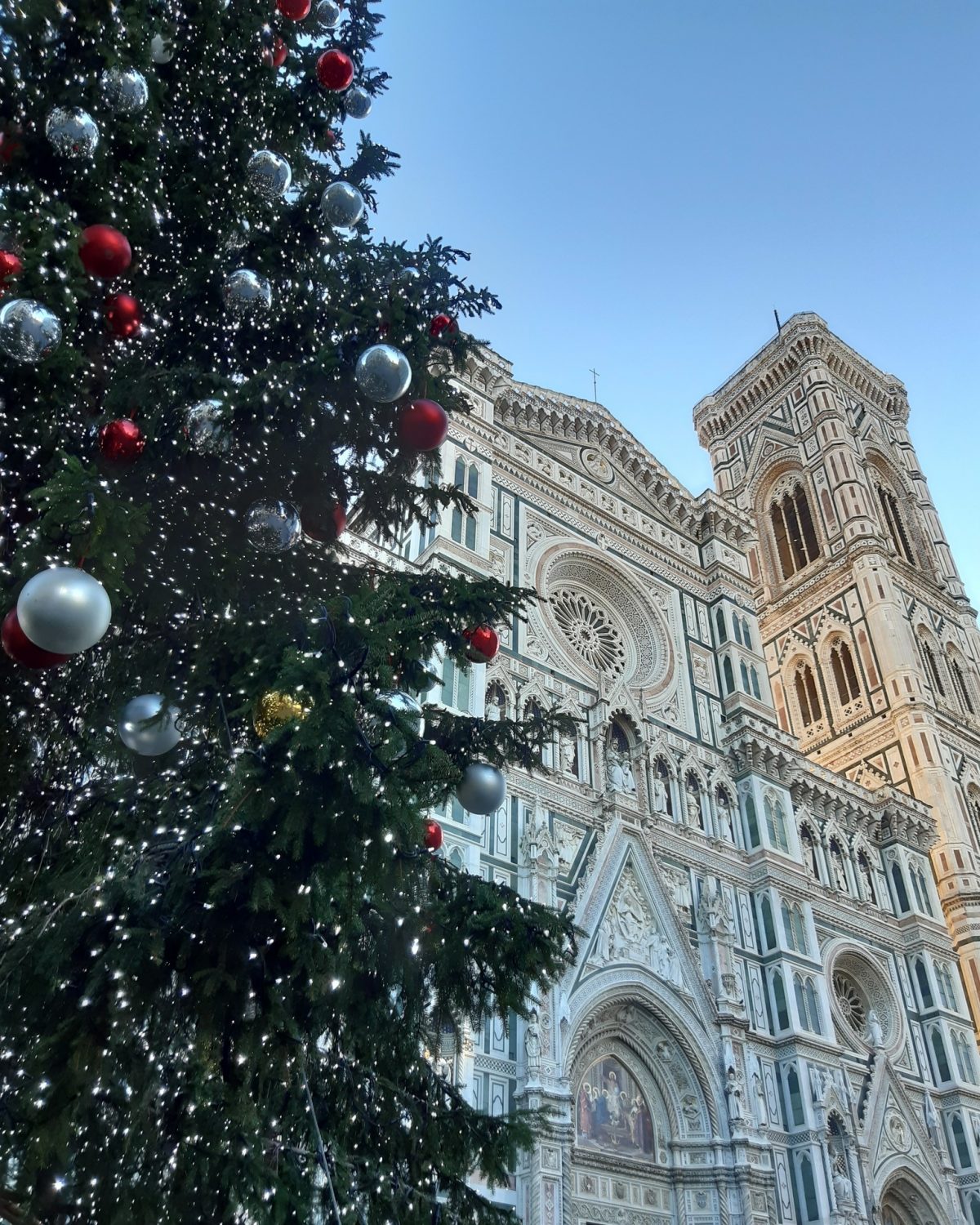
Florence is a city that makes it quite impossible to ignore the seasonal holiday cheer. Each street is lined from window to window with Christmas lights. The decorated alleyways lead to festive squares. In front of the church of Santa Croce lies a Christmas market filled with rows of wooden booths holding everything from delicious treats to hand-painted ornaments.
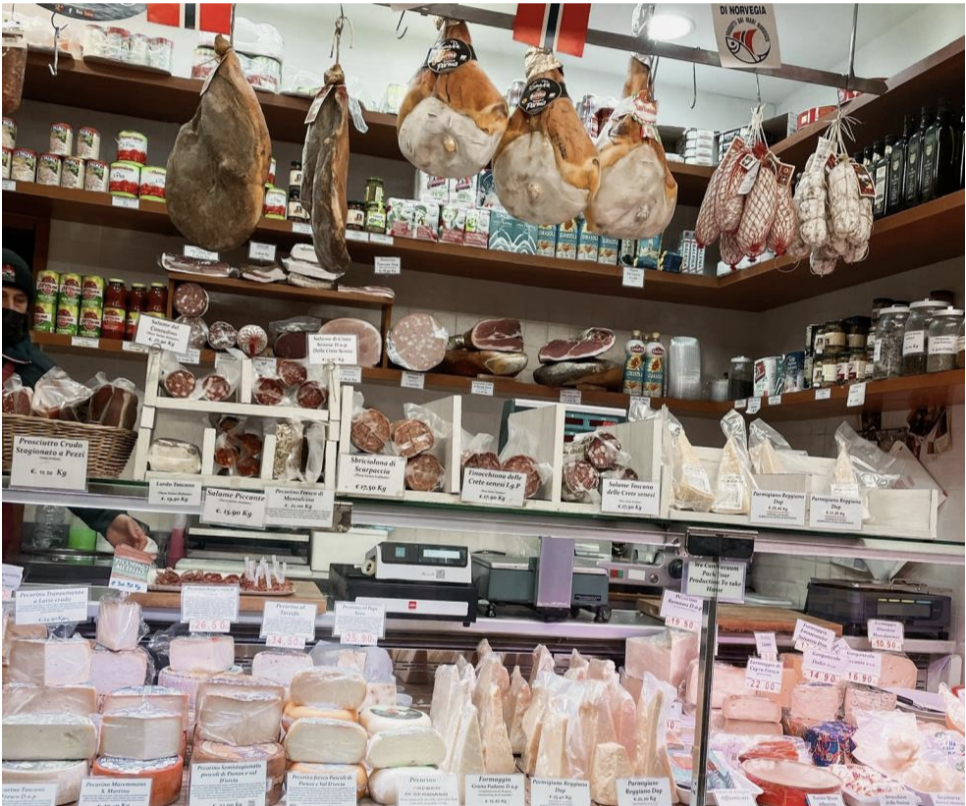
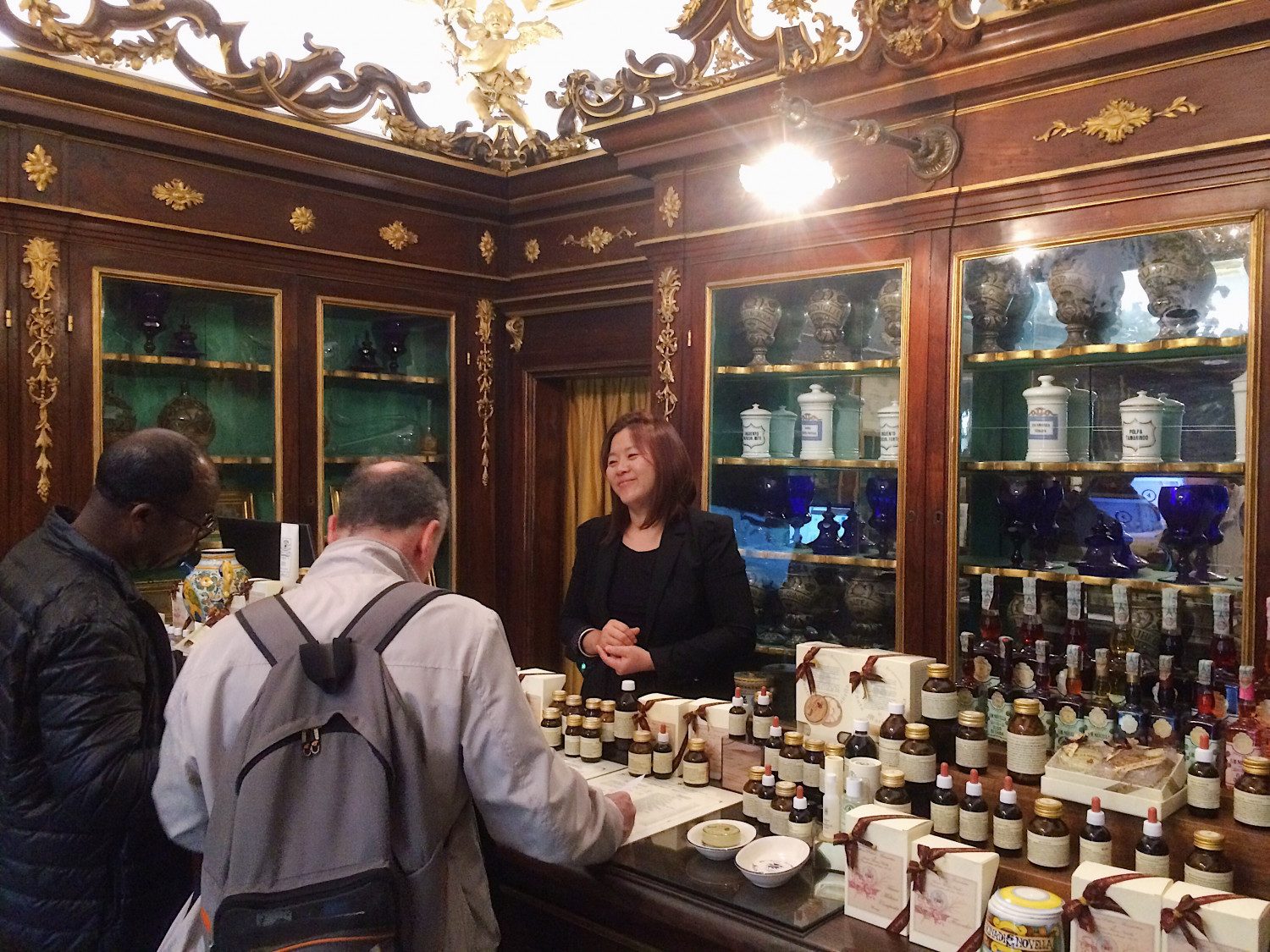
In strolling the cobblestone streets of Florence, passersby are overwhelmed with scents of savory salami, potent leather, and bitter wine. However, the city has finer smells to offer. Perfumeries are a hidden luxury of the town. Florence has turned perfume-making into an art form. It is a common misconception that perfume was invented in France. Renato Bianco opened the first ever perfume shop in Paris, however he was originally from Florence, as he was Catherine de Medici’s personal perfumer.
It is only as I walk past the exquisite Duomo in the heart of Florence that I realize I have almost made my way home without using my maps. Florence is now starting to feel like home.
As human beings we are born to one place, one culture, and one society. Many people spend most of their lives in that one place. They become that culture, conform to that society, and become completely intertwined with that place. Our emotions and behaviours are influenced by and rooted in our individual cultures more than we even realize.