by Sydney Pogue
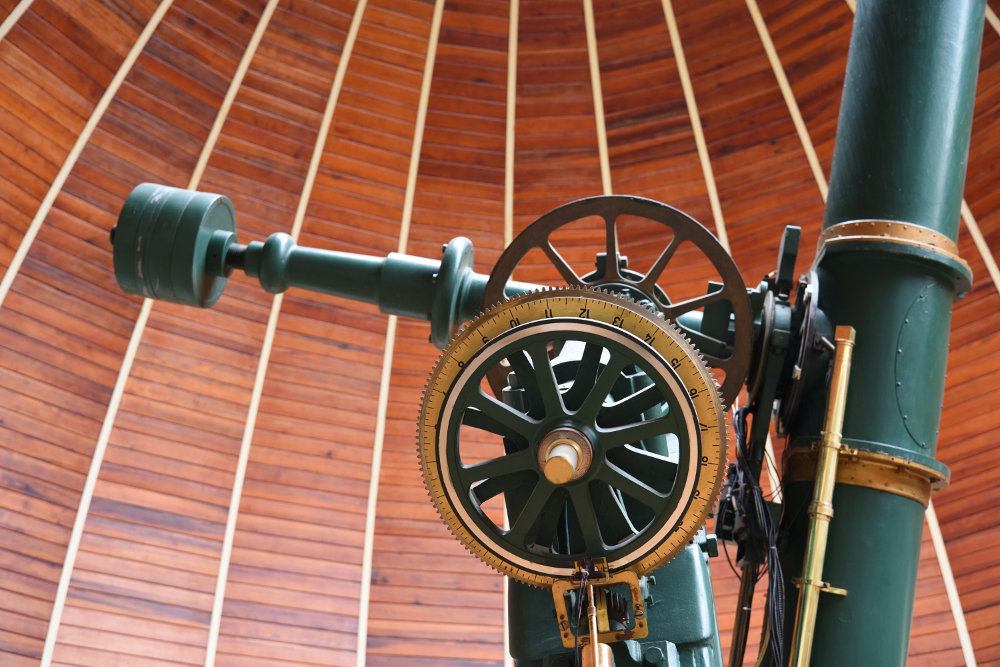
Photo by Alessandro Papi
Galileo, as many already may know, is one of the most iconic pioneers in the history of modern science, even being heralded by Albert Einstein as “the father of….modern science altogether”[1]. One of the fields most impacted by his intellectual prowess though, was that of Astronomy. In this subject, he ended up disproving Aristotle’s theory that the moon had a smooth and perfectly spherical surface, revealing how it was instead riddled with craters [2]. But his most famous discovery was what changed the scientific world; that instead of the Sun and celestial objects revolving around the Earth, the Earth instead revolved around the Sun— a concept which is otherwise known as “heliocentrism”[2]. After sharing evidence supporting this new revelation to the public, the Roman Catholic Church condemned him to live out the rest of his years on house arrest in a small villa in Florence[3].
So, why did I just give a mini-biography on one of science’s most famous historical figures? Well, there is a facility that resides in the foothills outside the Renaissance City near the house where Galileo lived out the last years of his life: the Arcetri Astrophysical Observatory. Chance of location isn’t the only thing the Observatory and Galileo have in common, however. It seems as though the Arcetri Observatory emulates similar ideals as Galileo in the pursuit of knowledge. On a deeper level, Arcetri seems to foster the very same spirit Galileo had in the curiosity and daring to explore the unknowns of the universe, even when it seemed to contrast previous conventional knowledge.
Nestled amongst the vineyards and hills encircling the heart of the city, the Arcetri Observatory seems to be a hidden gem of knowledge and intellectual curiosity within the Tuscany region. In order to reach it, however, requires an ambitious hike. After about half an hour of walking uphill along the winding and narrow road of Via di San Leonardo, with your efforts occasionally being rewarded with a breathtaking view of the city below, you would eventually find yourself standing at the gates to the entrance of the Research Center. Which, to my surprise, is a facility that encapsulates far more than just the Observatory. Along with the Arcetri Observatory, there is the research center itself, which is composed of various buildings dedicated as a “Public Center for Scientific Research”[4] and is also a member of the National Institute for Astrophysics, or INAF[4]. In these buildings, you will find students, astronomers, administrative staff, and other scientists— most all of whom engaged in lectures and meetings. Very similar in the way Galileo was known to lecture to all those who would flock to hear his discoveries, the researchers here seem to be dedicated to the very same endeavor; avidly discussing the mysteries of the cosmic universe with avid pupils. Better yet, the Arcetri Astrophysical Observatory hopes to extend these discussions beyond the classroom and with the public, offering guided tours of the facilities and every so often hosting nighttime events.
In this fashion, the Observatory explains how the research activities that they participate in are enhanced by working in tandem with the Department of Astronomy of the University of Florence[4]. Within this cooperation, a vast and complex galaxy of topics are approached including new star formations, stellar evolution, and almost anything that can be observed from the Sun to the outermost expanses of the known universe. Even more interesting are the “experimental groups” which are dedicated to technology evolution in hopes to aid the discovery of the most adept and advanced telescopes and other mechanisms in applicable science [4]. The Observatory explains the purpose of their efforts by providing the adage, “these activities seek to answer the basic questions of modern astronomy,”[4] which comes across surprisingly similar to the motives of Galileo in his time; that of questioning the knowledge placed before him in hopes to answer the most fundamental questions regarding our existence.
The theories and discoveries produced by the urge to pursue this curiosity are now stored in the Research Center’s “Arcetri Astrophysical Observatory Library”. Within this facility boasts a reported number of more than 12,000 books and periodicals [5], all documenting the advances in knowledge regarding space and recent fundamental findings regarding its nature. The Library isn’t only an ambassador of astronomical pursuits, however, but also has an appreciation of various cultural and artistic aspects. Since 2016, the Library has become the home of the piano that once was in the possession of Albert Einstein himself, something of which he bestowed upon his sister while he was in Florence[5]. The piano has even been used in multiple musical events hosted by the Arcetri! Ironically enough, Galileo too had an appreciation for music. His father was a prominent musician and Galileo had also been notably talented with musical performance, specifically with the lute[6].
Upon visiting the Arcetri Astrophysical Observatory, I unexpectedly found many ways in how the life and work of Galileo Galilei and the pursuits of the Observatory closely parallel one another. Although their respective timelines are separated by hundreds of years, it is evident in today’s world how Galileo’s findings are laced amongst the tapestry of contemporary astronomical understanding today. The Arcetri has picked up the very same string, continuing to sew into that same fabric the continuous legacy of pursuing the unknown in the world beyond our own.
See page below for footnotes and citations!
Footnotes/Citations:
- https://namnews.files.wordpress.com/2012/04/29289146-ideas-and-opinions-by-albert-einstein.pdf
- Pg. 271, Ideas and Opinions, “On the Method of Theoretical Physics”, by Albert Einstein
- Copyright. 1954, by Crown Publishers. Inc. Fifth Printing. February, 1960
- Library of Congress Catalog Card Number: 54-6644 Printed in the United States of America
- Pg. 271, Ideas and Opinions, “On the Method of Theoretical Physics”, by Albert Einstein
- http://galileo.rice.edu/lib/student_work/astronomy95/moon.html
- http://users.sussex.ac.uk/~desw/galileo/life/eands.html
- https://www.arcetri.inaf.it/en/about-us/general-information
- http://www.beniculturali.inaf.it/eng/libraries/firenze/#presentation
- http://adsabs.harvard.edu/full/2011ASPC..441…57F
- Title: Galileo and Music: A Family Affair
- Authors: Fabris, D.
- Journal: The Inspiration of Astronomical Phenomena VI. Proceedings of a conference held October 18-23, 2009 in Venezia, Italy. Edited by Enrico Maria Corsini. ASP Conference Series, Vol. 441. San Francisco: Astronomical Society of the Pacific, 2011, p.57
- Bibliographic Code: 2011ASPC..441…57F