By Leanora Karnath
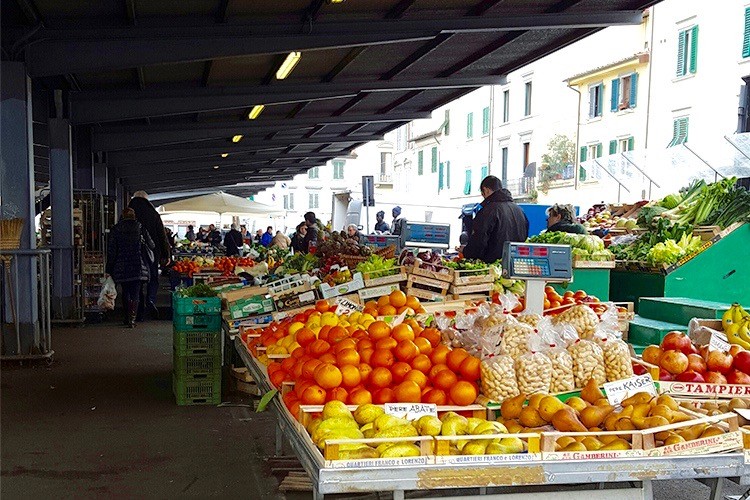
In Florence, venturing into the market isn’t simply about buying food, but it’s also about being part of an authentic experience. You’ll be surrounded by Italian speakers, vibrant colors and something new on every corner to indulge your senses. Vendors can tell you the origin of the foods whether an item comes from the northern regions of Italy or right here in Tuscany. You’ll develop a deeper appreciation and closer connection to these Italian products. Markets are also a great place to observe local life and even practice the language.
You probably heard about the popular San Lorenzo Market before even stepping off the plane to Florence, but there are many more options to purchase groceries in the in the city center.
Sant’Ambrogio
Designed by Giuseppe Mengoni and built in 1873, the Mercato di Sant’Ambrogio is home to a selection of fresh fruits, vegetables, meat and fish, breads, and pasta that may offer more advantageous prices than the San Lorenzo Market. The market is both indoors and outdoors, open every day 7am-2pm except on Sunday. It’s about 15 minutes away from the Duomo.
Santo Spirito
Every third Sunday of the month, the square hosts an organic food market from 9am to 7pm. You can browse through various stalls of local food purveyors.
Fruit and vegetable grocers: Fruttivendolo
Around the city you’ll find fruttivendoli or ortofrutta shops specialized in fruits and vegetables. Everyone has their favorite based on their neighborhood or shopping preferences, try asking professors or new acquaintances at which shops they like to buy their frutta e verdure (fruit and vegetables)!
How to Shop – An Essential Guide
- Be sustainable and bring along a reusable grocery shopper bag.
- Bring cash instead of relying on a credit card as most vendors only accept cash.
- Don’t touch the fruits and vegetables without asking. Tell the vendor what you want. They’ll either give you it or hand you a plastic bag to pick it up before it’s weighed.
- Don’t forget to keep an eye out for seasonal fruits and vegetables. Eating seasonally is key to Italian cuisine and the market is a great place to experiment with products that vary as the weather changes.
- Know how much you want and how to say it. Although some vendors will know English, this won’t be the case in all situations.
I would like… Vorrei…(i.e. I would like 2 apples. Vorrei due mele)
Can you give me..? Mi da…? (i.e. Can you give me 2 apple? Mi da due mele?)
One Uno
Two Due
Three Tre
Four Quattro
Five Cinque
1 pound= about a half a kilogram Mezzo chilo
For cured meats, the etto, or 100 grams, is a common unit of measure.
Common Food Items, Translated
Grapes Uva
Lemons Limoni
Limes Limes
Oranges Arance
Strawberries Fragole
Raspberries Lamponi
Apples Mele
Tomatoes Pomodori
Lettuce Lattuga
Spinach Spinachi
Mushrooms Funghi
Onions Cipolle
Potatoes Patate
Peppers Peperoni
Asparagus Asparago
Carrots Carote
Cheese Formaggio
Ham Prosciutto
Chicken Pollo
Turkey Tacchino
Beef Manzo
Pork Maiale
Garlic Aglio
Bread Pane
If you don’t see something on the list that you want to purchase, look up the translation and write it down. Don’t worry if you’re having trouble saying something in Italian, or indicating the item that you wish to purchase.
Shopping at local markets is a great option for making dinner at home with friends, preparing fresh packed lunches to enjoy in between classes, or to have healthy snacks on hand such as perfectly ripe fruit. In addition to shopping locally, you can also check out the Apicius CiboChat blog for student reviews of local restaurants, bakeries, gelato shops, and much more.
See more of Florence and Italy at FUA’s FB, Instagram, and Twitter.