By Charlotte Witts
I was first introduced to the Tuscan colour palette accidentally. Having noticed me meticulously editing a picture of my home city, my high school photography teacher approached my desk. With great confidence in his voice, he stated ‘you would like living in Italy’. Without further elaboration, I was baffled at the comment. However, he continued to explain that I had edited the colour scheme of the photo to enhance the warm yellow ochres and oranges, inevitably resembling the buildings of
Italy, Florence in particular. Somehow, I had managed to transform the dismal rooftops of Birmingham into a place of radiance and beauty. The infamous city, which some would say to avoid, had lost its cloak of grey, bleak concrete and gained a golden tan. I had made it look inviting.
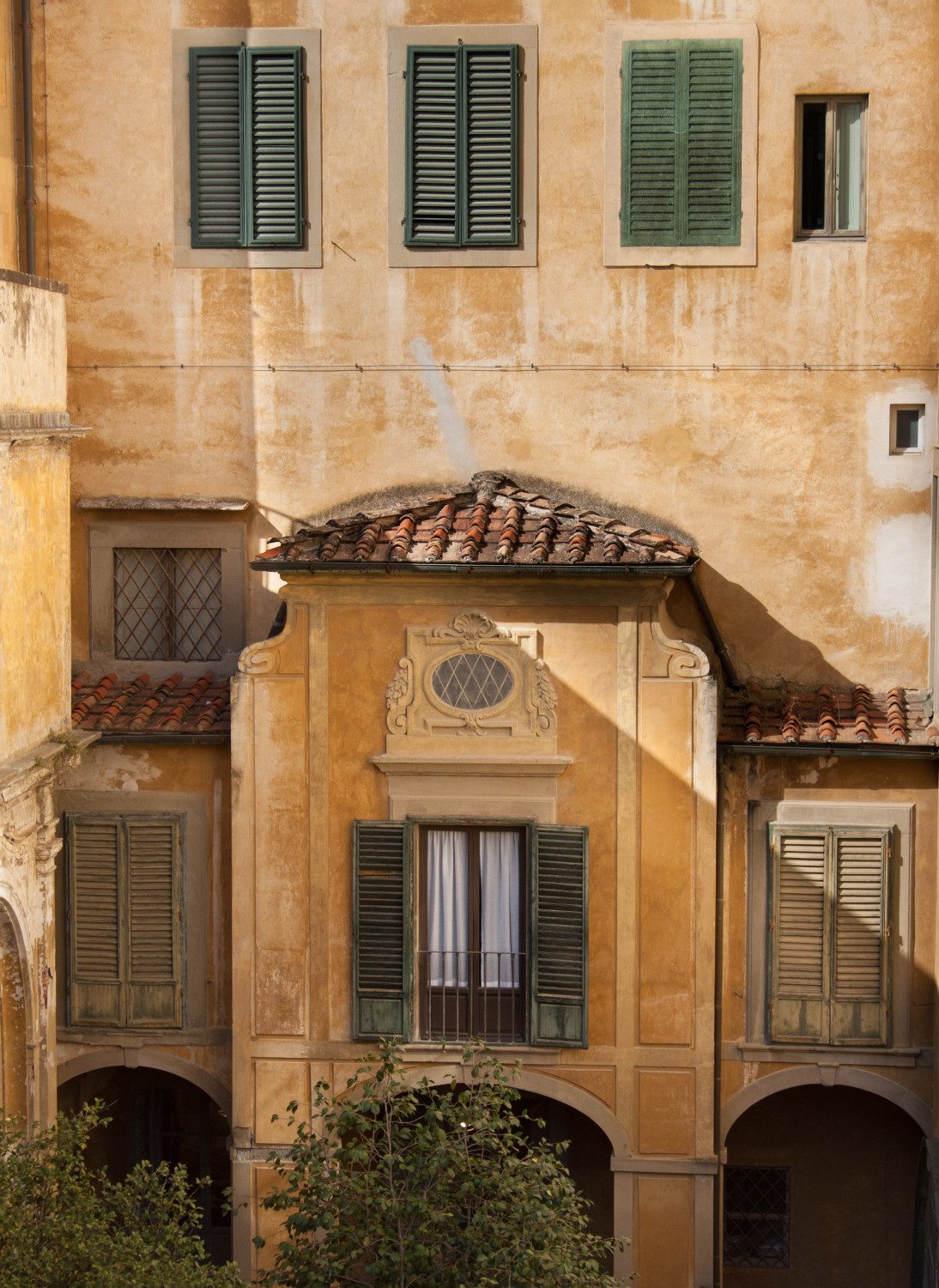
Now, years later, I understand what my photography teacher meant. The light rays bouncing off the sunflower yellow buildings encapsulates you in a blanket of warmth, one that extends throughout the entirety of Florence. The traditional architecture style of the city supports this consistency. Not only has the scenery escaped the invasion of contemporary high-rises and skyscrapers, but it also uses colours of the countryside to infuse nature into civilised area. This harmonious combination creates a glowing history, inviting us to stop and wonder where the origins of each building came from.
The majority of these origins are born from Pietra Serena, a fine-grained sandstone quarried outside of Florence. When extracted from the quarry, it has a greyish colour. Though, when in contact with the air, a chemical reaction takes place due to the iron in the stone. It is this natural process we have to thank for many of the buildings brownish ocher colour. It appears that, despite the built up area, Florence has maintained an attachment to nature through allowing the sediments to age with grace and elegance. It is no surprise that this inherent attractiveness has charmed endless onlookers, including that of Steve Jobs. After seeing the uniformly grained and coloured stone in Florence, he later incorporated it into the Apple Store’s minimalist interiors, allowing a piece of the city to be admired in 519 shops across 25 countries worldwide.
Florence’s respect for natural occurrences appears to be prevalent throughout the city. I have often came across buildings where the plasters protection has disintegrated, and the brickwork of the walls is revealed. In theory, this would be regarded as poor construction and a distasteful mark on the landscape. For anywhere in England, this would most definitely be the case. However, the Florentine buildings remain just as appealing. These perfect imperfections of exposed brickwork add an element of truth, and in that, beauty.
My photography teacher couldn’t have been more right when he said I would like living in Italy.