By Joe Barmashi
Photos By The Author
Founded in 1936, The Giorni Bookshop is one of the most notable bookstores in Firenze. A man named Giulio Montelatici founded this influential store and named it after his wife, Maria Giorni, and has been a family run business ever since. The current manager is Francesco Piatolli, who is the great grandson of Giulio Montelatici.
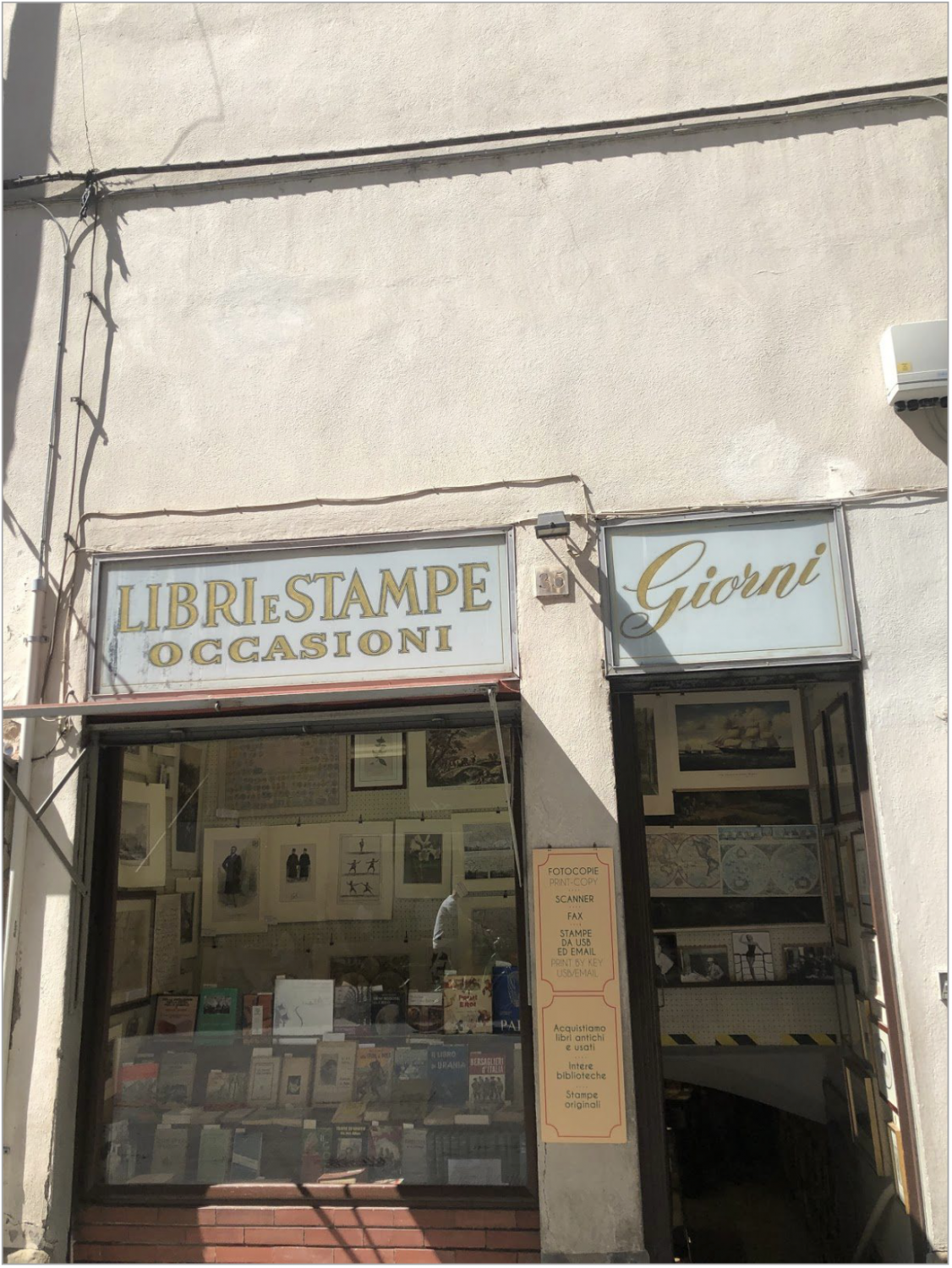
Located right near one of Florence’s most notable landmarks, the Duomo, one can find this store by looking at the sign saying “LIBRIeSTAMPE OCCASIONI”, which seems to have been there since the store relocated there in 1937. As one walks down the front staircase and into the Giorni Bookshop for the first time, they instantly get the authentic feel of older times. Like much of the city, this relic seems to be very well preserved. The walls of the store and the cabinets in the middle of the main floor are covered in paintings of cultural significance.
During the facist period in Italy’s government, one could find outlawed literature here up until 1943 when these political ideologies ended in the country. During the 1950s the downstairs of bookshop became a hotspot for notable Italian intellectuals who needed a place to study and establish their philosophies.
This includes the leader of the Italian Republican Party at the time, a man by the name of Giovanni Spadolini. It is notable that this is the oldest political party in Italy still active today, indicating the success of this man. He referred to this as his “favorite refuge of hours of rest or bibliophile searches.” Having a place like this for the sharpest minds of Firenze to go and gather their thoughts is important, because without such a place many notable figures such as Spadolini would’ve had to go somewhere else, and the history of Italy could’ve ended up differently because of that.
The Giorni Bookstore is a true relic of Firenze, and the preservation of it is impeccable. Even if one it not an Italian reader, this shop is definitely worth the visit to get a look at how many great Italian minds spent their time in the 1950s and how it influenced the country’s history today.